A few nights a week on the mats can become the reset button your schedule has been missing.
Adult Jiu-Jitsu works so well for busy adults because it does not ask you to live at the gym to see progress. You show up, train with real structure, and leave feeling like you actually did something, not just checked a box. In East Chambersburg, that matters, because consistency usually comes down to one thing: making the routine realistic.
We also like how honest the training feels. Adult Jiu-Jitsu gives you immediate feedback, in a safe, coached environment, with partners who help you learn instead of trying to “win practice.” Over time, you build fitness, confidence, and a calmer brain, which sounds like a big promise, but it usually shows up in small, repeatable moments.
In this guide, we will break down what Adult Jiu-Jitsu in East Chambersburg looks like in real life, how we keep it scalable for beginners, and how modern trends like no-gi growth, recovery tracking, and smarter conditioning are shaping the way adults train today.
Why Adult Jiu-Jitsu feels like a weekly reset
The best routines are the ones that make you feel more capable everywhere else. Adult Jiu-Jitsu does that by blending skill learning with intense, focused movement. You are solving physical problems in real time, and because your attention has to be present, stress from work and screens tends to quiet down on its own.
Sports-science observations back up how active adult divisions can be. Adult matches feature high-volume exchanges, and one study found 64.4 percent of observed attack techniques came from adult matches, with adults showing a higher median number of attack actions per match than masters competitors. You do not need to compete to benefit from that intensity, but it helps explain why adult training can be such a strong fitness driver when it is coached well.
Just as important, jiu-jitsu is increasingly framed as a lifetime activity. Plenty of adults continue training into their 40s, 50s, and 60s, and that long runway changes how we coach. We want you to train hard, yes, but also train tomorrow.
Adult Jiu-Jitsu in East Chambersburg: convenience is the real superpower
Most people do not quit because the training is not effective. People quit because the routine becomes inconvenient. A nearby academy in East Chambersburg makes it easier to keep showing up after work, between family responsibilities, or on weekends when you finally have a little breathing room.
Chambersburg has existing interest in martial arts and MMA-style training in the area, which usually means adults are already looking for structured, coached ways to get stronger, reduce stress, and learn practical skills. The difference is that Jiu-Jitsu in East Chambersburg can fit into real schedules, especially when the class plan is consistent and the culture is welcoming to true beginners.
We build our adult program around repeatable habits. When you know what class looks like, what you will work on, and how hard you will go, it becomes easier to protect that time on your calendar.
What you actually do in a class (and why it works)
A good Adult Jiu-Jitsu class is not random. Even when the room feels lively, the learning is organized. We keep sessions clear, coached, and progressive so you always know what to do next.
A simple flow you can count on
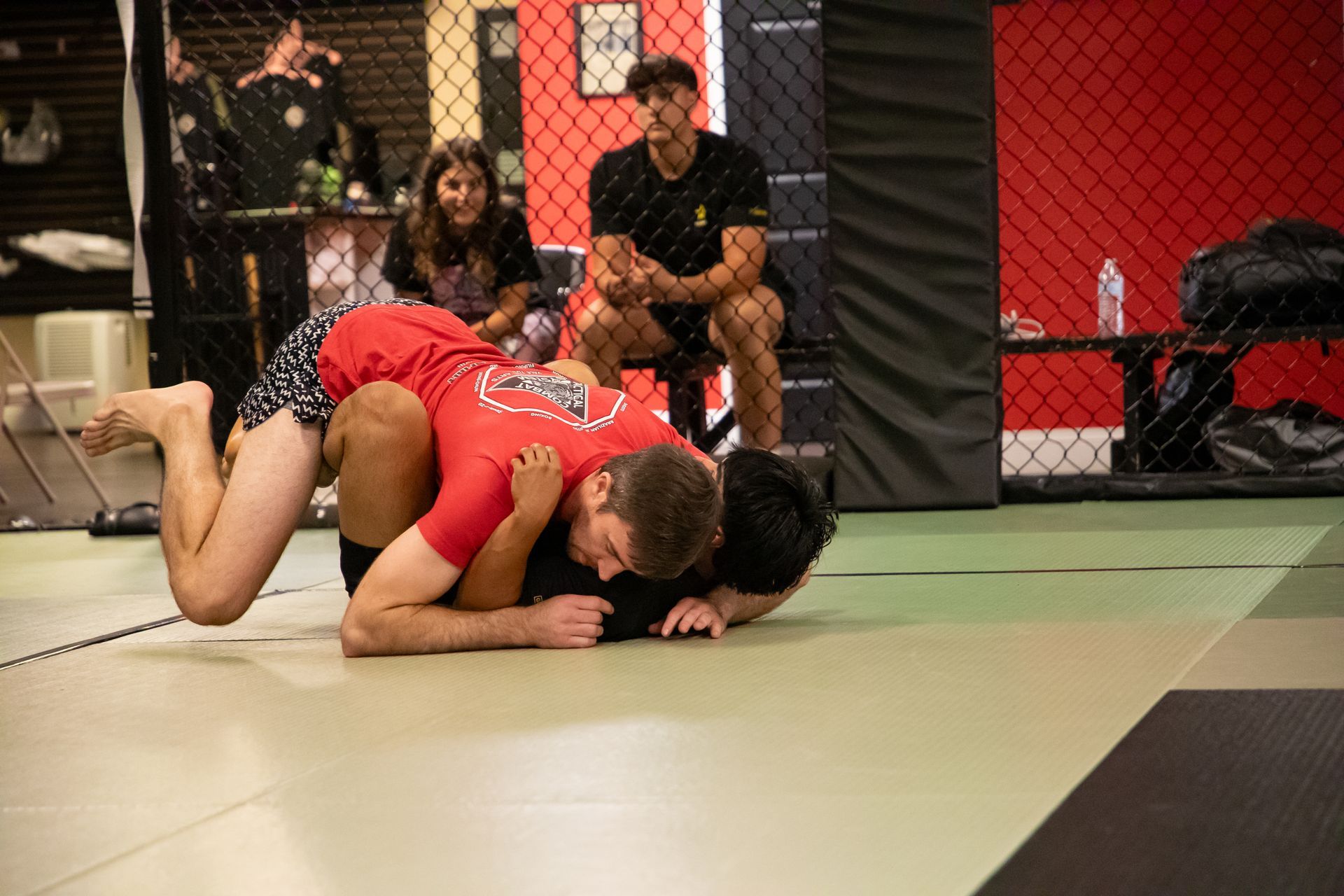
Most classes include a warm-up that supports grappling movement, technical instruction, drilling, and live training in a controlled format. Live training might be positional rounds, where you start in a specific scenario, or open rolling once you have enough comfort and control.
That structure matters because it is how you learn faster without feeling overwhelmed. You get reps, then you get resistance, then you reflect and improve. It is a loop, and it works.
Why “rolling” is not just sparring
Rolling is where Adult Jiu-Jitsu becomes real. You learn timing, balance, pressure, and composure. You also learn to breathe when something feels difficult, which is a sneaky life skill that shows up at work, at home, and in your own head.
We coach you to roll with intention, not ego. The goal is to keep you safe, help you develop awareness, and give you realistic practice at a pace that matches your experience.
Beginner-friendly does not mean watered down
If you are new, the biggest misconception is that you have to “get in shape” before starting Adult Jiu-Jitsu. In practice, getting in shape is often the result of starting. We scale training so your first month builds comfort, coordination, and basic survival skills. Then your conditioning starts to climb almost without you noticing.
Beginner-friendly also means you get guidance on the details that trip people up early, like posture inside someone’s guard, how to tap, and how to avoid using raw strength in ways that gas you out. Those are not small details. They are the difference between feeling lost and feeling like you belong.
Women’s participation and leadership in BJJ continues to rise, and that is pushing gyms to do better with onboarding and culture. We welcome that direction. A room that supports new students well is usually a room where everyone learns better.
The modern game: Gi, No-Gi, and what is changing in 2025
Jiu-jitsu has always evolved, but the current wave is especially noticeable. No-gi training continues to surge, driven by submission-only formats and faster, more dynamic grappling styles. Along with that growth, we are seeing more standing exchanges and a bigger emphasis on takedown awareness, because starting on the feet changes the pace and the demands of a round.
Another major shift is leg-lock awareness. Serious training environments treat leg entanglements and leg submissions with respect, not hype. That does not mean beginners get thrown into dangerous situations. It means we teach smart habits early: how to recognize positions, how to defend responsibly, and how to train with control.
In the gi, grips slow the tempo and create different puzzles, which is great for technical growth. In no-gi, movement and connection become more slippery and athletic. Many adults enjoy training both because it keeps things fresh while building a broader skill set.
Fitness you can feel: conditioning that actually matches the sport
Random cardio is losing ground to tactical, functional conditioning, and we agree with that trend. Adult Jiu-Jitsu already gives you intervals of effort and recovery, but adding the right kind of supplemental work can help you feel better and last longer on the mats.
We focus on fitness in a way that supports your training instead of competing with it. That usually means building an aerobic base, strengthening the neck and core, and improving hip and shoulder stability. You do not need a complicated plan, but you do need a consistent one.
Here are a few physical benefits adults commonly notice once training becomes a routine:
• Better cardio without mindless treadmill time, because rounds naturally create repeatable high and low intensity cycles
• Stronger hips, glutes, and core from bridging, posting, and maintaining posture under pressure
• More usable mobility, especially in the hips and thoracic spine, because grappling demands rotation and control
• Improved grip and upper back endurance from controlling positions, frames, and clinch style connections
• A “tougher” recovery mindset, where you learn how to stay calm and keep working even when tired
Stress relief, confidence, and the mental side of training
A lot of adults come in looking for fitness and end up staying for the mental clarity. Jiu-jitsu is hard to half-do. Your attention has to be in your body, on your breathing, and on the immediate problem. That focus is restful in a way that sitting still sometimes is not.
Confidence also grows in a practical direction. You learn how to manage pressure, how to escape bad positions, and how to keep thinking when things get uncomfortable. For self-defense, that matters, but it also matters for everyday confidence. You carry yourself differently when you know you can handle difficult moments.
We also see that community becomes part of the benefit. When you train with the same people each week, you build accountability without having to manufacture motivation. You just show up, say hi, and get to work.
Safety and coaching culture: how we keep training sustainable
As jiu-jitsu grows, safety and accountability are becoming bigger parts of the conversation, and that is a good thing. Adult Jiu-Jitsu should be challenging, but it should not be chaotic. We keep clear standards around tapping, partner selection, and intensity so you can train hard without feeling like you are gambling with your joints.
We also coach communication. If you are coming back from an old injury, if your job is physically demanding, or if you simply had a rough week, you can train in a way that respects that reality. Longevity is not an accident. It is built into the daily choices you make on the mats.
Recovery is part of the program now
Wearables and training data are increasingly common, and we like the spirit behind that trend. You do not need to obsess over numbers, but paying attention to sleep, soreness, and stress helps you avoid the classic adult trap: going too hard, too soon, then disappearing for a month.
If you want a simple rule, we use this: train consistently at a moderate pace before you chase intensity. Your body adapts quickly when you give it steady inputs.
Who Adult Jiu-Jitsu is for (and how to make it fit)
Adult Jiu-Jitsu in East Chambersburg fits a lot of different backgrounds, and you do not have to look a certain way to start. We work with people who have not played a sport in years and people who miss competition. We coach parents who need a predictable outlet and professionals who want stress relief that feels productive.
If you are wondering how often to train, here is a practical way to think about it:
1. Start with 2 classes per week to build familiarity, reduce soreness, and learn core positions
2. Add a third day when you feel recovery improve and you want faster progress
3. Keep at least one full rest day, because adaptation happens when you recover
4. If your schedule is chaotic, protect one “anchor day” weekly so you never lose momentum
5. Increase intensity slowly, especially when adding no-gi rounds or more standing work
This is how people stay in the game long enough to enjoy the real benefits.
What to wear and how to feel prepared for your first class
For gi training, you will need a gi eventually, but you do not need to overthink it on day one. For no-gi, a rashguard and athletic shorts without pockets are a solid start. Either way, basic hygiene matters a lot: trimmed nails, clean gear, and sandals off the mat.
Most first classes feel unfamiliar for about 10 minutes, and then you settle in. We will show you how to move safely, how to tap, and how to participate without feeling thrown into the deep end. If you have questions, ask them. Adults learn faster when we remove the guesswork.
Take the Next Step
If you want a routine that builds fitness, skills, and a steadier kind of confidence, Adult Jiu-Jitsu is one of the most practical choices you can make. The training is scalable, the learning never really ends, and the community side tends to grow naturally once you start showing up consistently.
When you are ready to train in East Chambersburg with a plan that respects beginners and keeps adults progressing for the long haul, we would love to help you get started at Mason Dixon Jiu-Jitsu. You can explore the program, check the class schedule, and take that first step without overcomplicating it.
Improve your fitness, build confidence, and develop your Jiu-Jitsu skills at Mason Dixon Jiu-Jitsu.