
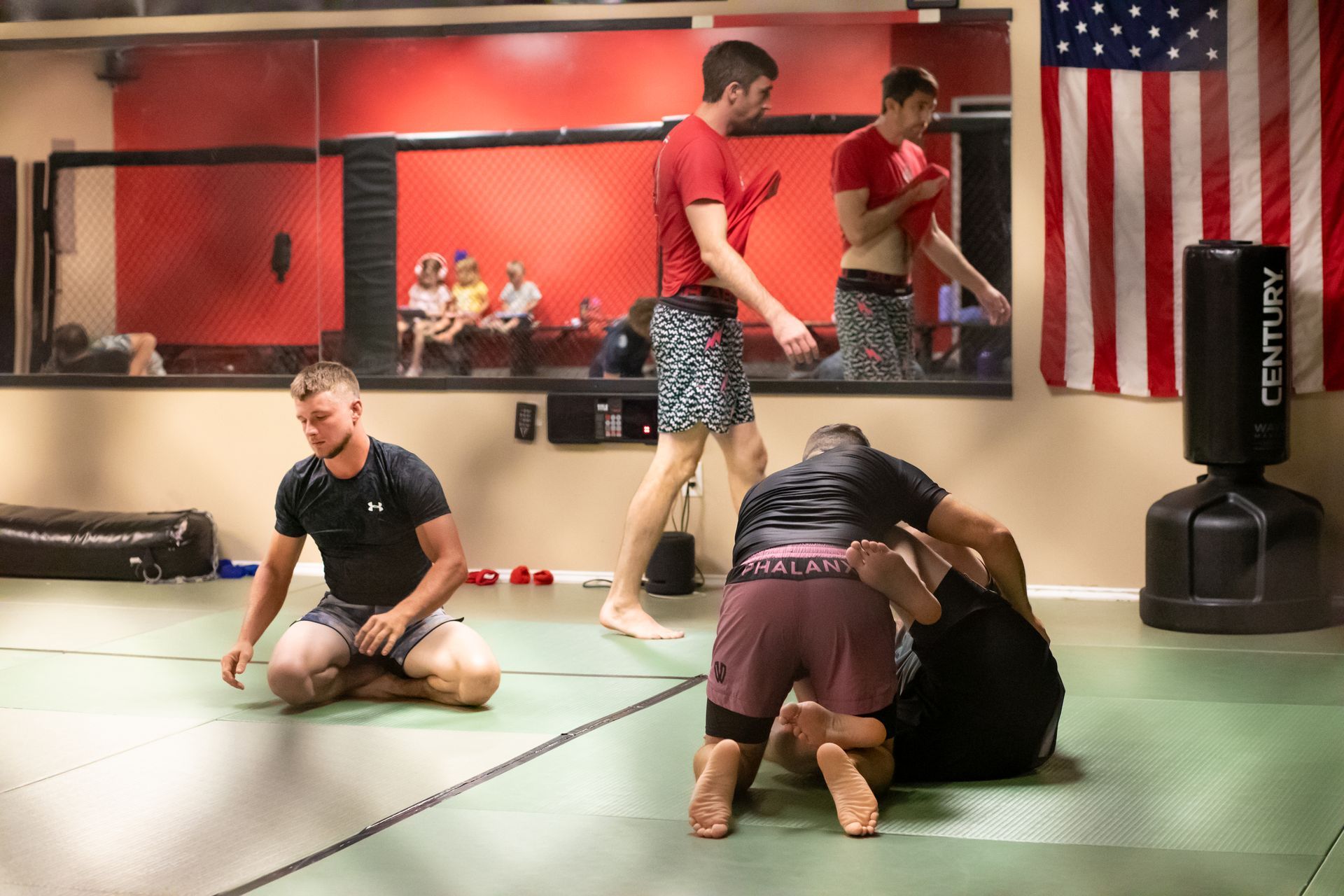
Jiu-Jitsu gives you a practical way to practice staying calm, adapting fast, and showing up stronger the next day.
Resilience is not a personality trait you either have or you do not. In our experience, it is a skill you can train, and Jiu-Jitsu is one of the most direct ways to do it because the feedback is immediate, honest, and safe. You learn what works, what does not, and how to reset when things get hard.
That matters in East Chambersburg, where many adults carry real-world pressure into the rest of their week: long shifts, family responsibilities, financial stress, and for some, the lingering effects of high-stakes work like military service or emergency response. Training gives you a routine where effort is simple and measurable, and progress is not based on talk.
Research backs up what we see on the mats. More experienced Brazilian Jiu-Jitsu practitioners consistently report higher resilience, mental toughness, and self-efficacy than beginners, with training experience correlating to better recovery from setbacks and lower aggression or anxiety. The point is not that life becomes easy. The point is that you become more capable inside it.
Why Jiu-Jitsu Builds Real Resilience, Not Just Motivation
Motivation is fragile. It changes with mood, sleep, and schedule. Resilience is different because it is what remains when motivation drops. Jiu-Jitsu builds resilience by putting you in controlled discomfort and teaching you how to breathe, think, and keep making decisions anyway.
A typical round of sparring is a small resilience lab. You start, you make a plan, you get surprised, and you adapt. Sometimes you succeed. Sometimes you tap. Either way, you learn that you can handle intensity without panicking, and that alone transfers to everyday life in a big way.
Studies have found that higher belt ranks tend to show stronger psychological profiles, including grit, mental toughness, and life satisfaction compared to white belts. We like that detail because it highlights something simple: resilience is trainable over time, and the mat rewards consistency more than talent.
The hidden lesson: losing well
One of the most useful things Jiu-Jitsu teaches is how to lose without spiraling. When you get caught, you tap, you reset, and you go again. That pattern is basically a rehearsal for real life: make a mistake, learn quickly, stay respectful, and move forward.
Emerging research discussions also point toward neuroscience-related benefits, like improved focus and emotional regulation. Even if you never read a single study, you can feel it in your body after class: your mind gets quieter, your attention narrows, and stress tends to stop bouncing around so loudly.
Jiu-Jitsu in East Chambersburg: Resilience That Fits Working Adult Life
When people look for Jiu-Jitsu in East Chambersburg, many are not chasing a trendy hobby. You are looking for something that fits into adult life and gives you a return on your time. Our adult program is built around exactly that: structured classes, progressive skill development, and a culture where you can work hard without ego.
East Chambersburg has a practical mindset. We see it every day: people want training that makes sense, instructors who can explain clearly, and a room where you can show up tired and still get something meaningful done. That is why we focus on fundamentals and repeatable habits, not flashy techniques that only work when everything goes perfectly.
Another local reality is that community matters. Consistent training reduces isolation because you share a challenging task with people who understand it. For adults balancing a lot, that kind of positive social structure can be a real buffer against stress and depressive patterns, and research has linked martial arts communities to stronger coping skills and improved mental health outcomes.
Who Adult Jiu-Jitsu is for here
Adult Jiu-Jitsu in East Chambersburg works especially well if you want:
• A structured weekly routine that improves both fitness and stress tolerance
• A skill-based outlet where progress is earned, not guessed
• A respectful environment where you can train hard without feeling judged
• A practical self-defense foundation that builds confidence through repetition
• A community where people notice when you show up and improve
You do not need a special background to start. You just need the willingness to be a beginner for a little while, which is its own kind of resilience.
What Resilience Looks Like on the Mats (and Off Them)
Resilience sounds abstract until you notice specific changes. On the mats, resilience shows up as better breathing under pressure, clearer thinking during scrambles, and the ability to keep working even after getting stuck. Off the mats, it often looks like calmer reactions, better patience, and more follow-through with the goals you set.
We also see improved self-control, which research frequently connects with longer training experience. In Jiu-Jitsu, you cannot rely on aggression alone, especially once partners get more technical. You learn to slow down, conserve energy, and choose the right moment. That habit tends to leak into normal life in a good way.
There is also something surprisingly helpful about the physical contact and teamwork. Training partners give real-time feedback, and that cooperative struggle can support social bonding. Many people report feeling more grounded after class, like the nervous system finally got a clear signal that the danger is over.
A practical example: the workday carryover
A hard day at work can feel like one long chain of problems. Jiu-Jitsu trains you to break problems down. In a tough position, you focus on one task: frame, hip escape, recover guard. That habit of focusing on the next right step is a resilience tool you can use anywhere.
How Long Until You Feel the Mental Benefits?
People ask this a lot, and it is a fair question. The short answer is that many adults start noticing mental shifts within 10 to 12 weeks when training consistently, and the effects tend to deepen after several months. Research trends suggest measurable resilience gains can appear with regular practice, especially at two or more classes per week.
We encourage you to think in seasons rather than days. Your first few weeks are about learning the environment, basic movements, and how to stay safe. After that, you start collecting small wins: lasting longer in rounds, remembering details, staying calmer when someone pressures in.
Then something clicks: you stop needing every round to go your way to feel successful. You start valuing effort, learning, and composure. That is lasting resilience, and it is not dependent on a perfect day.
What You Actually Do in Class to Build Resilience
Resilience is trained through specific behaviors, not slogans. Our classes are designed to give you the right amount of challenge, then build you up from there. You will learn how to move your body efficiently, how to protect yourself, and how to stay present under pressure.
Here is what a typical training process includes:
1. Warm-ups that build movement skills like balance, hip mobility, and coordination
2. Technique instruction with clear details you can test immediately
3. Partner drills that create repetition without chaos
4. Positional sparring that targets one problem at a time, like escaping or holding control
5. Live rounds where you apply skills and practice composure, then cool down and reset
That structure matters because it keeps stress productive. You are challenged, but not thrown into the deep end without a plan.
Safety and confidence grow together
Real resilience is not reckless. We maintain a training environment where tapping is normal, boundaries are respected, and partners help each other improve. When your nervous system trusts the environment, you can train harder and learn faster, which builds confidence in a steady, realistic way.
Beginner vs Advanced Benefits: Why Progression Matters
One of the most interesting findings in the research is how much stronger the psychological benefits appear in advanced practitioners. Black belts often report higher resilience and life satisfaction than novices, along with better emotional regulation and lower negative mental health markers. That does not mean beginners get nothing. It means the benefits compound.
Our job is to help you stay in the game long enough to experience that compounding effect. Skill progression in Jiu-Jitsu is not just about techniques. It is about how you handle pressure, how you treat training partners, and how consistently you show up when life gets busy.
We also like using belt progression as a simple framework for tracking growth. You can feel yourself becoming more patient, more strategic, and more durable mentally, even if you are not the loudest person in the room. Often, the quiet progress is the real progress.
Making Adult Training Work With Your Schedule
Adults do not need guilt-based fitness plans. You need something realistic. We recommend choosing a weekly rhythm that you can sustain, even during stressful months. Two classes per week is a strong baseline for most people, and it is enough to build momentum without burning out.
A few simple habits help:
• Put training on your calendar like an appointment, not a maybe
• Focus on consistency over intensity, especially early on
• Track small wins: better breathing, cleaner escapes, fewer panic moments
• Communicate with us about injuries or limitations so we can guide smart adjustments
The goal is to build a practice that supports your life, not one that competes with it.
Ready to Begin With Mason Dixon Jiu-Jitsu
If you want resilience that lasts, Jiu-Jitsu is hard to beat because it trains the mind and body together, in real time, with real feedback. When you practice staying calm under pressure week after week, you start carrying that steadiness into work, home, and everything in between.
At Mason Dixon Jiu-Jitsu, our focus is simple: we help you build skills you can rely on, inside a community that values steady progress and respectful training. If you are looking for Jiu-Jitsu in East Chambersburg that supports adult life and builds true grit over time, we are ready when you are.
Challenge yourself physically and mentally by joining a Jiu-Jitsu class at Mason Dixon Jiu-Jitsu.