Adult Jiu-Jitsu turns ordinary weeks into measurable progress by giving you a skill that improves your body, your mind, and your confidence at the same time.
Adult Jiu-Jitsu is growing fast for a simple reason: it works. Brazilian Jiu-Jitsu (BJJ) builds real fitness, real problem-solving, and real self-defense skill without requiring you to be an “athlete type” on day one. Around 6 million people train Jiu-Jitsu worldwide, including roughly 750,000 in the United States, and adults make up the biggest share of the market. You see it on the mats every week: adults want training that fits real life.
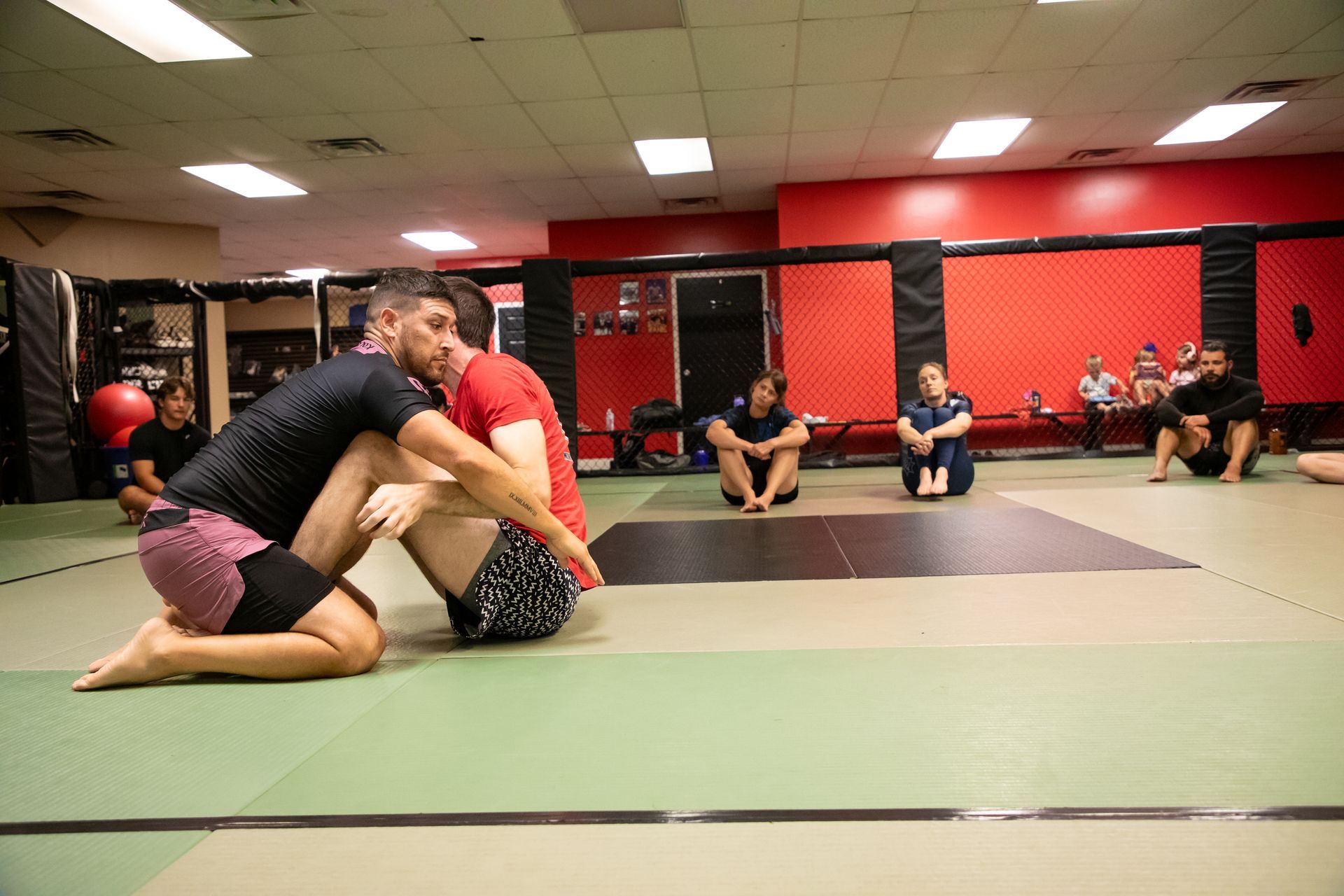
Here in East Chambersburg, our Adult Jiu-Jitsu program is built for the way adults actually learn. That means structure, clear goals, and coaching that respects your joints, your schedule, and your starting point. You can come in for fitness, stress relief, self-defense, or a new challenge, and the results tend to stack up faster than most people expect.
If you have a practical question before you begin, you are not alone. People ask about safety, time commitment, and whether they need to “get in shape first.” We will answer those directly, then walk you through what personal transformation looks like when training becomes a weekly habit.
Why Adult Jiu-Jitsu is taking off, and why adults are driving it
Brazilian Jiu-Jitsu has become one of the fastest-growing martial arts worldwide, with participation rising around 18 percent annually. It helps that BJJ shows up constantly in MMA, but the bigger reason is what you feel when you train: you learn to solve problems under pressure. That sense of capability is addictive in a good way.
The adult segment dominates more than 69 percent of the global market, and it makes sense. Adults are looking for something that is more than “just a workout.” Adult Jiu-Jitsu gives you a skill-based path where effort equals improvement, and improvement stays with you.
We also see a shift in who trains. More women, more professionals, and more adults who have not done a sport in years are showing up. When the training environment is built for adult learners, the sport becomes accessible, not intimidating. That accessibility is not an accident, either. The BJJ industry has matured, and instruction is increasingly shaped by adult learning theory, progressive coaching, and injury mitigation strategies that keep training sustainable.
The transformation starts with the body, but it does not end there
If you are choosing Adult Jiu-Jitsu in East Chambersburg for fitness, you will feel changes quickly, especially in the places typical workouts miss. Grappling develops full-body strength, grip endurance, hip mobility, and a kind of cardio that is hard to fake. You are not just moving, you are reacting, adjusting, and rebalancing constantly.
Fitness you can actually measure week to week
Most adults notice a few changes early on: better stamina climbing stairs, improved posture, stronger core engagement, and fewer “tight spots” in the hips and shoulders. You also get feedback every class. If your balance improves, you stay stable. If your conditioning improves, you think more clearly late in rounds. That cause-and-effect is motivating, and it keeps you honest.
Dedicated practitioners average about 6 hours per week, but you do not need to start there. Many adults do best beginning with 2 to 3 classes weekly, letting the body adapt and building consistency before adding more training. Consistency is the multiplier.
Strength that feels useful, not just impressive
There is a specific kind of strength that comes from grappling: squeezing, framing, pulling, bridging, rotating, and moving with someone actively resisting. It is functional and (this matters) it tends to make daily life feel easier. Carrying groceries, moving furniture, playing with your kids, getting up off the floor, all of that quietly improves when you train.
Mental resilience: learning to stay calm when it gets uncomfortable
The mental side is where many adults are surprised. Adult Jiu-Jitsu puts you in situations that are challenging but controlled, and you practice responding without panic. That is not just a sports skill, it is a life skill.
Research on experienced BJJ athletes suggests improvements in decision-making accuracy and motor response variability, which points to sharper reactions and better strategic thinking over time. Put more simply, you get better at noticing details, choosing options, and staying composed.
In class, we train this in a practical way. You learn to breathe under pressure, problem-solve from bad positions, and reset your mindset after mistakes. And yes, you will make mistakes. Everyone does. The difference is that on the mats, mistakes are information, not a verdict.
Stress relief that is not passive
A lot of adults carry stress in the body: tight shoulders, jaw tension, shallow breathing, restless sleep. Training gives that stress a place to go. You focus on grips, posture, and timing, and your brain stops looping on everything else for a while. When class ends, you leave with that clean, quiet feeling like you actually did something with your energy.
Self-defense that is realistic for real life
Adult Jiu-Jitsu is not about looking tough. It is about control, leverage, and options. BJJ teaches you how to manage distance, clinch safely, escape bad positions, and control someone without needing to rely on athleticism alone.
Because grappling often happens at close range, BJJ is especially useful for self-defense scenarios where space is limited. You learn how to protect yourself when standing, when you are grabbed, and when you end up on the ground. The goal is not to “win a fight.” The goal is to stay safe, create opportunities, and get out.
We keep the learning process progressive, which matters. Adults learn best when skills are layered: you master a base movement, then add a detail, then add resistance, then add context. That approach is also linked with injury reduction, because you are not thrown into intensity without the tools to manage it.
Is BJJ safe for adults? A clear, realistic answer
Safety is a fair concern. The good news is that BJJ has a lower injury rate per 1,000 athlete exposures compared to sports like Judo, MMA, Taekwondo, and wrestling. In survey data, about 69.1 percent of respondents report no serious injuries from training. That does not mean “no bumps ever,” but it does show that smart training works.
Here is what we do in our Adult Jiu-Jitsu classes to keep training sustainable:
• We teach tapping early and we treat tapping as good decision-making, not quitting
• We emphasize technique and control before intensity, especially for newer students
• We structure live rounds so you build composure and skill without reckless scrambles
• We coach pacing, so you do not gas out and start moving in unsafe ways
• We encourage communication, because partners who talk train longer
The most common serious issues in grappling tend to involve knees, shoulders, or ribs. We address that by teaching alignment, smart pressure, and how to move without “posting” awkwardly. Also, we will say this plainly: your training partners matter. A respectful room changes everything.
What to expect in our Adult Jiu-Jitsu program in East Chambersburg
People often imagine they will walk into class and immediately spar hard. That is not how we run Adult Jiu-Jitsu in East Chambersburg. We build skill first, then add resistance in a way that matches your experience.
Your first few weeks: foundation and comfort
Early training focuses on posture, movement, escapes, and positions that show up constantly. You learn what “base” means, how to frame safely, and how to move your hips effectively. It is not flashy, but it is the difference between feeling lost and feeling capable.
You will also get used to the pace and the etiquette: how to partner up, how to reset, how to tap, and how to stay calm when you are tired. That comfort is part of the transformation, too. Walking into something unfamiliar and learning to belong there is a big deal for adults.
The middle months: timing, pressure, and strategy
Once you have a base, training becomes more interesting. You start seeing patterns. You notice that small angle changes matter. You begin to anticipate rather than react. This is where Adult Jiu-Jitsu stops feeling like random movement and starts feeling like a language you can speak.
You will also learn how to train “at your speed.” Not every round needs to be a war. Many adults get better faster by mixing technical rounds, situational rounds, and a controlled amount of harder sparring.
Long-term: identity-level change
This is the part people rarely say out loud, but it is real. Over time, training changes how you see yourself. You become someone who shows up, learns hard things, and keeps going. That identity shift is what makes the benefits stick.
Time commitment: what actually works for busy adults
Dedicated practitioners often train about 6 hours a week, but the best schedule is the one you can repeat. If you are balancing work, family, or a commute, consistency wins.
A practical starting point for Adult Jiu-Jitsu is 2 to 3 classes per week. That frequency is enough to build skill, improve conditioning, and keep techniques fresh in your mind. If you can add an extra day later, great. If you cannot, you can still make strong progress with a steady baseline.
If you are wondering how to fit it in, we recommend using the class schedule as your anchor. Choose two days that are realistic, not idealistic. Then protect those sessions like you would any appointment that matters.
How we teach adults: the adult learning advantage
Adults do not learn the same way kids do. Adults need context, clarity, and a sense of “why” behind movements. Adult learning theory in martial arts education supports what we already see on the mats: when instruction is progressive and purposeful, adults retain more and get hurt less.
We coach with that in mind. We explain what a technique is for, what problem it solves, and what common mistakes look like. We also revisit core skills regularly, because repetition is how movements become automatic under pressure.
A simple progression that keeps you improving
Here is the basic flow we use to help Adult Jiu-Jitsu skills stick:
1. Learn the movement with clear cues and safe mechanics
2. Drill with controlled repetition to build coordination
3. Add resistance in a specific scenario so you learn timing
4. Integrate into live rounds when you can apply it naturally
5. Review and refine, because details matter more over time
That structure is how you turn class time into real ability. It is also how you build confidence without pretending confidence is a personality trait.
Jiu-Jitsu in East Chambersburg as a community practice, not just a workout
One reason Jiu-Jitsu in East Chambersburg works for adults is that it creates a positive training routine. You see familiar faces. You learn to partner with different body types and experience levels. You get coached through hard rounds and you do the same for others when you are further along.
The U.S. Brazilian Jiu-Jitsu studios industry includes over 44,000 businesses and grew at about 6.1 percent CAGR between 2019 and 2024, which signals something important: adults are choosing structured martial arts as part of how they live. Locally, we focus on making that choice feel doable, not overwhelming.
And yes, the room has its own vibe: the sound of feet on mats, the quick reset between rounds, the small nod from a partner after a tough exchange. Those details add up. They make training feel like a place you can return to, even on weeks when motivation is low.
Take the Next Step
Building real capability is a long game, but Adult Jiu-Jitsu gives you a clear path: show up, learn, practice, repeat. If you want Adult Jiu-Jitsu in East Chambersburg that respects adult bodies and adult schedules, our programs are designed to help you train safely, gain self-defense skill, and grow mentally as well as physically.
When you are ready, you can start in a way that feels straightforward. Our approach at Mason Dixon Jiu-Jitsu centers on progressive coaching, a supportive room culture, and a class structure that helps you turn effort into real, usable skill.
Train consistently and see measurable progress by joining a Brazilian Jiu-Jitsu class at Mason-Dixon Jiu-Jitsu.