You do not need more free time to feel better, you need training that gives time back by clearing your head and strengthening your body.
If your calendar is packed, fitness advice can start to sound a little unrealistic. We hear it all the time from adults in East Chambersburg: you want energy, strength, and a calmer mind, but you cannot add another complicated routine to your week. That is exactly why we teach Jiu-Jitsu in a way that fits real life, not an idealized schedule.
Jiu-Jitsu works because it is efficient. One focused class gives you a full body workout, a skill you can measure, and a mental reset that is hard to get from lifting alone or another run around the neighborhood. Research around Brazilian Jiu-Jitsu shows strong carryover into mood and life skills, with participants reporting anxiety reduction and improved confidence at high rates, plus a near universal sense of community and respect.
In other words, you can show up tired and leave clearer. And for busy families and professionals around Chambersburg, that matters.
Why Jiu-Jitsu feels like fast relief when your days are overloaded
When life is loud, your brain keeps running even when your body stops. Jiu-Jitsu interrupts that pattern because the training demands present moment attention. You cannot half-think a technique while planning tomorrow. You have to be here, breathing, moving, solving the puzzle in front of you.
That focus is not just a nice idea. Surveys of practitioners report reduced anxiety for most participants, and mood improvements for nearly everyone measured. That lines up with what we see on the mats: after class, shoulders drop, breathing settles, and people walk out with that quieter, steady feeling.
It is also not repetitive in the way many workouts become. You will drill, learn, and practice, but every training partner adds variety. That variety helps busy people stay consistent. Gyms average strong adult retention over 12 months because progress is tangible, you can track it, and the work stays engaging.
Strength, cardio, and mobility in one practice
A lot of adults come in thinking they will need to get in shape before starting. We take the opposite approach. Jiu-Jitsu is how you get in shape. The movements build usable strength: hips, back, grip, core, and legs, plus the kind of endurance that shows up in real life, like carrying groceries, working a long shift, or keeping up with your kids.
The physical benefits commonly reported in BJJ research include improved cardiovascular health, muscular strength and endurance, flexibility, and even support for injury rehabilitation when training is scaled appropriately. We keep a close eye on intensity so you can build capacity without burning out.
If you have sat at a desk all day, the mobility work alone can feel like a reset. Your spine moves, your hips open, and you start to remember what athletic movement feels like. It is not magic, but it can feel surprisingly quick.
A schedule friendly approach: consistency over intensity
Busy schedules do not fail because of laziness. They fail because the plan is too fragile. If your training requires the perfect hour, the perfect mood, and no interruptions, it will break the first time life gets messy.
Our approach is simple: we aim for repeatable training, not heroic training.
Here is a beginner friendly rhythm we see work well for adults with full lives:
1. Train 2 classes per week for the first month so your body adapts and your brain learns the basics.
2. Add a third class when you feel recovery is steady and your joints feel good.
3. Do 10 minutes of mobility at home on non training days to stay loose and reduce soreness.
4. Keep one day each week as a true rest day, even if you feel motivated.
5. Reassess every 4 weeks based on energy, sleep, and stress level.
This matters because training frequency is a real variable. Many people train 3 to 5 times weekly, but plenty build sustainable routines at 1 to 2 times weekly. We would rather you stay consistent for months than go hard for two weeks and disappear.
What you actually do in class when time is limited
Efficiency is not only about class length. It is about structure. A well run Jiu-Jitsu class should give you a warmup that prepares your joints, technical instruction you can remember, and training that matches your level.
In our classes, we keep the learning process clear:
• You learn a small set of techniques, not a confusing pile of moves
• You drill with purpose so your body learns the pattern
• You practice with resistance in a controlled way so you can apply it under pressure
• You finish with conditioning or positional work that builds endurance without turning the room into chaos
• You cool down and reset so you can walk back into work or home life feeling better, not wrecked
That last piece is underrated. People with busy schedules need to feel capable the next day. Training should build you up.
Focus and resilience you can feel outside the gym
Jiu-Jitsu has a funny way of improving your decision making. You get used to staying calm while solving problems. You learn to breathe when things feel tight. Over time, that becomes a habit, not a trick.
Studies on martial arts participation show strong life skill transfer, with discipline and respect consistently reported, and community building essentially universal among those surveyed. Another 2024 study found resilience gains for most participants training twice weekly. We like that number because twice weekly is realistic for adults with families, commutes, and full time work.
What does that look like day to day?
It can be as simple as handling a stressful meeting without spiraling, or being more patient when your kids are melting down. You still feel stress, of course, but you do not have to be owned by it.
Injury concerns and how we help you train smart
A reasonable question: is Jiu-Jitsu safe? Like any contact sport, there is risk. Data on injury rates in BJJ show a significant portion of athletes report injuries in a six month window, with novices more likely to get hurt in training and advanced athletes seeing more risk in competition. That sounds scary until you remember the controllable factors: intensity, partner selection, ego, and recovery.
We build safety into our culture and our coaching. That means we emphasize tapping early, technical control, and progressive resistance. We also encourage you to communicate. If your neck is stiff or your shoulder is cranky, we adjust what you do that day.
If you want a simple safety checklist, use this before you step on the mat:
• Sleep and hydration matter more than you think, especially for joint health
• Choose controlled training over proving a point
• Ask questions when a position feels confusing or unsafe
• Keep your training frequency stable so your body adapts gradually
• Treat soreness as feedback, not a challenge to ignore
The goal is not to train through everything. The goal is to train for a long time.
Youth Martial Arts in East Chambersburg: structure, confidence, and anti bullying skills
Busy schedules are not just an adult problem. Kids are stretched too, and not always in healthy ways. Youth Martial Arts in East Chambersburg should provide structure without turning kids aggressive. We take that seriously.
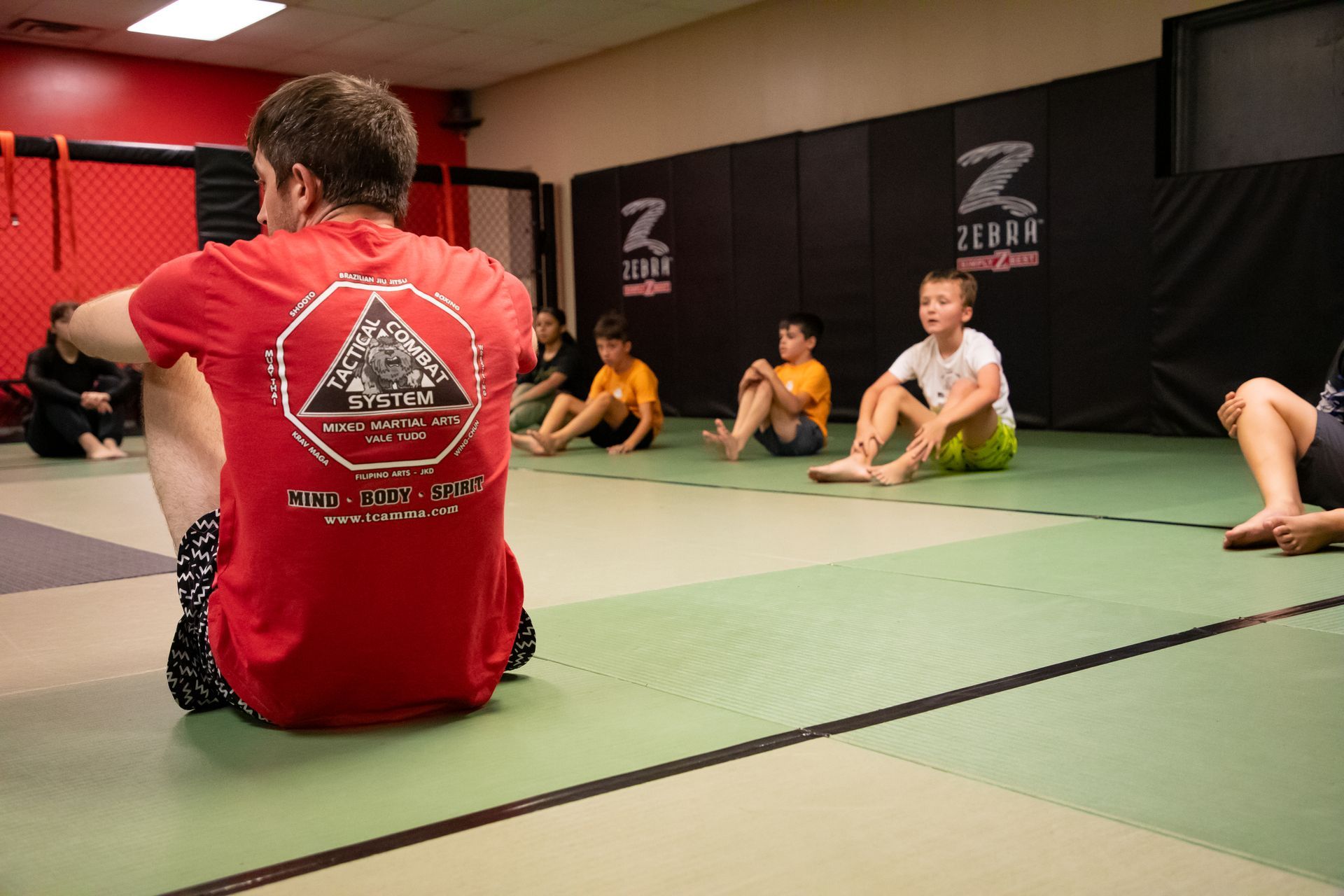
In youth classes, we keep instruction age appropriate and clear. Kids learn how to move, how to listen, and how to be a good partner. They also learn boundaries, personal space, and what to do when someone is pushing them around verbally or physically. The anti bullying piece is not about fighting. It is about posture, awareness, and confidence, plus knowing how to get safe and ask for help.
Research supports the broader value here, with life skills and respect reported at very high rates among participants. We see it show up when a shy kid starts raising a hand in school or when a high energy kid learns how to focus for an entire class. Those are real wins.
Martial Arts in East Chambersburg for adults who want practical fitness
When people search Martial Arts in East Chambersburg, the underlying goal is often simple: feel capable again. Not just fit, but capable. Jiu-Jitsu is practical because it is based on leverage and position, not size or raw strength.
That makes it a strong option for adults over 30, and for anyone returning to fitness after a long break. You can start where you are. You can train with control. You can build a foundation without needing to be the toughest person in the room.
And because progress is measurable, it stays motivating. You notice small improvements quickly: cleaner movement, better breathing, less panic in tight spots, more confidence when you are tired. Those small changes add up.
How to know you are making progress fast, even with only 2 classes a week
Busy people often worry that training twice weekly will not be enough. In reality, twice weekly can produce noticeable results if you pay attention to the right markers.
Look for these early signs of progress:
• You remember positions and names without straining to recall them
• Your grip and core endurance improve, even outside training
• You can stay relaxed in bad positions instead of freezing
• You recover faster between rounds and feel less sore the next day
• You start applying one technique reliably instead of collecting new ones
This is the real secret: you do not need more techniques. You need deeper understanding of fewer techniques. That is how limited training time becomes effective training time.
Take the Next Step
A busy schedule does not disqualify you from meaningful training, it just requires a smarter plan and a class structure that respects your time. That is what we build every day, and it is why our students often describe Jiu-Jitsu as the fastest mental reset they get all week.
When you are ready to train in a way that supports your work, your family, and your energy, we would love to help. At Mason Dixon Jiu-Jitsu, our class schedule and coaching style are designed for real people with real lives in East Chambersburg, not for perfect routines.
Ready to train? Join a Jiu-Jitsu class at Mason Dixon Jiu-Jitsu today.