Jiu-Jitsu is one of the few workouts that improves your body, your mindset, and your everyday readiness at the same time.
Life in East Chambersburg moves fast, even when it looks quiet from the outside. Between shift work, long drives, physical jobs, family schedules, and the constant mental load of keeping everything on track, it is easy to feel like your energy and focus get spent before the day is half over. We built our training to help with that, not by piling on more stress, but by giving you a practice that pays you back in real life.
Jiu-Jitsu works because it is practical and measurable. You are learning how to move, breathe, and solve problems under pressure, and your body adapts in ways you can feel at work, at home, and on the weekends. Research backs that up: consistent Brazilian Jiu-Jitsu training can improve cardiovascular health by about 15 percent after six months, and a typical session can burn roughly 700 to 1000 calories per hour at around 75 percent of your max heart rate. That combination tends to show up as better energy, better sleep, and a clearer head.
We also keep the experience grounded for real adults. Most people start as beginners (about 62 percent of practitioners are white belts), and the best progress often comes from smart drilling, not from trying to “win” every round. When you train with a plan, the benefits stack up: confidence, reduced anxiety, and the kind of focus that carries over into everything else you do.
Why Jiu-Jitsu fits everyday life in East Chambersburg
East Chambersburg has a working-class rhythm. Manufacturing, logistics, trades, healthcare, and service work demand stamina, grip strength, and a back that can make it through the week. Add family life, a few hikes, maybe coaching a kid’s team, and suddenly you are asking a lot from your body. Our goal is to make training an upgrade for your lifestyle, not a drain on it.
Jiu-Jitsu is different from “just exercising” because the movement has a purpose. You are not only lifting or running, you are learning positioning, balance, and pressure management. Those skills translate into everyday body awareness: how you get up off the floor, how you carry something awkward, how you keep your footing on a slick patch of pavement, and how you stay calm when something unexpected happens.
There is also a social piece that matters more than people admit. Rural-suburban life can get isolating, and adults do not always have a built-in place to decompress. Training builds community naturally. In surveys of practitioners, 100 percent reported a sense of community and respect, and that is not a small thing when you spend most of your day switching between responsibilities.
Energy that lasts: what your body gets from training
If your biggest complaint is feeling tired all the time, it is tempting to think you need more rest or more caffeine. Often, you need better conditioning and better recovery habits. Jiu-Jitsu supports both, as long as we train with intention.
A class blends skill practice with short bursts of effort, so your heart and lungs improve while your joints learn to tolerate movement from multiple angles. Over time, that tends to create “usable fitness” instead of fitness that only shows up in the gym. Six months of consistent practice is enough for many adults to see that cardiovascular improvement around 15 percent, and it becomes easier to do normal things without feeling winded.
We also emphasize efficiency. Beginners commonly waste energy by holding their breath, squeezing too hard, or trying to muscle through positions. We coach you to relax your shoulders, use frames, and rely on leverage. The funny part is that as technique improves, you usually feel less exhausted even though you are doing more.
Everyday ways better conditioning shows up
You do not need to be an athlete to notice the payoff. We regularly see energy gains show up in simple, practical ways:
- You recover faster after physical work, like unloading, stocking, climbing ladders, or long hours on your feet
- You feel steadier on stairs, uneven ground, and in the little awkward moments where people normally tweak a knee or ankle
- Your posture improves because your hips, core, and upper back learn to support pressure without collapsing
- Your weekend activities stop feeling like a separate “event” that requires extra rest afterward
- Your sleep quality improves because your body has a reason to downshift after training, not just stay wired
Focus under pressure: the mental side that surprises people
Many people come in looking for fitness or self-defense and end up staying because of what happens to their mindset. Jiu-Jitsu forces you to concentrate on one thing at a time: your breathing, your posture, the grip you are fighting for, the angle you need to escape. That kind of attention is rare in daily life, and it trains your brain to stay present.
Studies on practitioners show strong mental benefits: around 78.6 percent report improved concentration, 92.9 percent report improved mental flexibility, 87.5 percent report reduced anxiety, and 96.9 percent report life skill transfer such as discipline and focus. Those numbers track with what we see on the mats when people commit to training consistently.
There is also an element of healthy discomfort. You get used to being in a bad position and thinking your way out instead of panicking. That sounds small, but it changes how you handle tense conversations, deadline stress, and the pressure that comes with being the person everyone relies on.
Real-world skills you can actually use
When we talk about real-world skills, we do not mean movie-fight stuff. We mean the kind of readiness that is useful in normal life: falling safely, controlling someone without escalating, and understanding distance and balance. Jiu-Jitsu is built around leverage, control, and problem-solving, which makes it especially relevant for adults who want practical options without relying on size or strength.
One underrated skill is learning how to fall and how to get up. Breakfalls and smart movement patterns reduce the odds that a slip turns into a serious injury. This matters for parents carrying kids, workers stepping off loading docks, and anyone who spends winter in Pennsylvania.
Another important skill is de-escalation through control. Reports in law enforcement contexts have shown meaningful reductions in injuries and lower reliance on high-force tools when officers train in grappling and controlled force. For everyday adults, the takeaway is simpler: if you ever need to protect yourself, control and positioning are often safer outcomes than trading punches.
Safety and longevity: what adults over 30 should know
If you are over 30, you probably do not bounce back like you did at 18. We respect that. Our training is designed to help you build skills while keeping you healthy enough to come back tomorrow.
Globally, injury rates in BJJ are reported around 9.2 injuries per 1000 athletic exposures, and many injuries are linked to preventable behavior, including ego-driven decisions. We coach you to train with awareness and to treat tapping as normal, not as failure. Your job is not to “win practice.” Your job is to improve.
We also lean on drilling because it builds skill with less chaos. In participation trends, about 90 percent of practitioners find drilling more beneficial than intense rolling for skill-building. That matches what we teach: repetition creates muscle memory, and muscle memory keeps you safer when intensity goes up.
What a typical class feels like (and why it works)
People often worry that a Jiu-Jitsu class will be a room full of experts throwing beginners into the deep end. Our classes are structured, and we coach you through the learning curve.
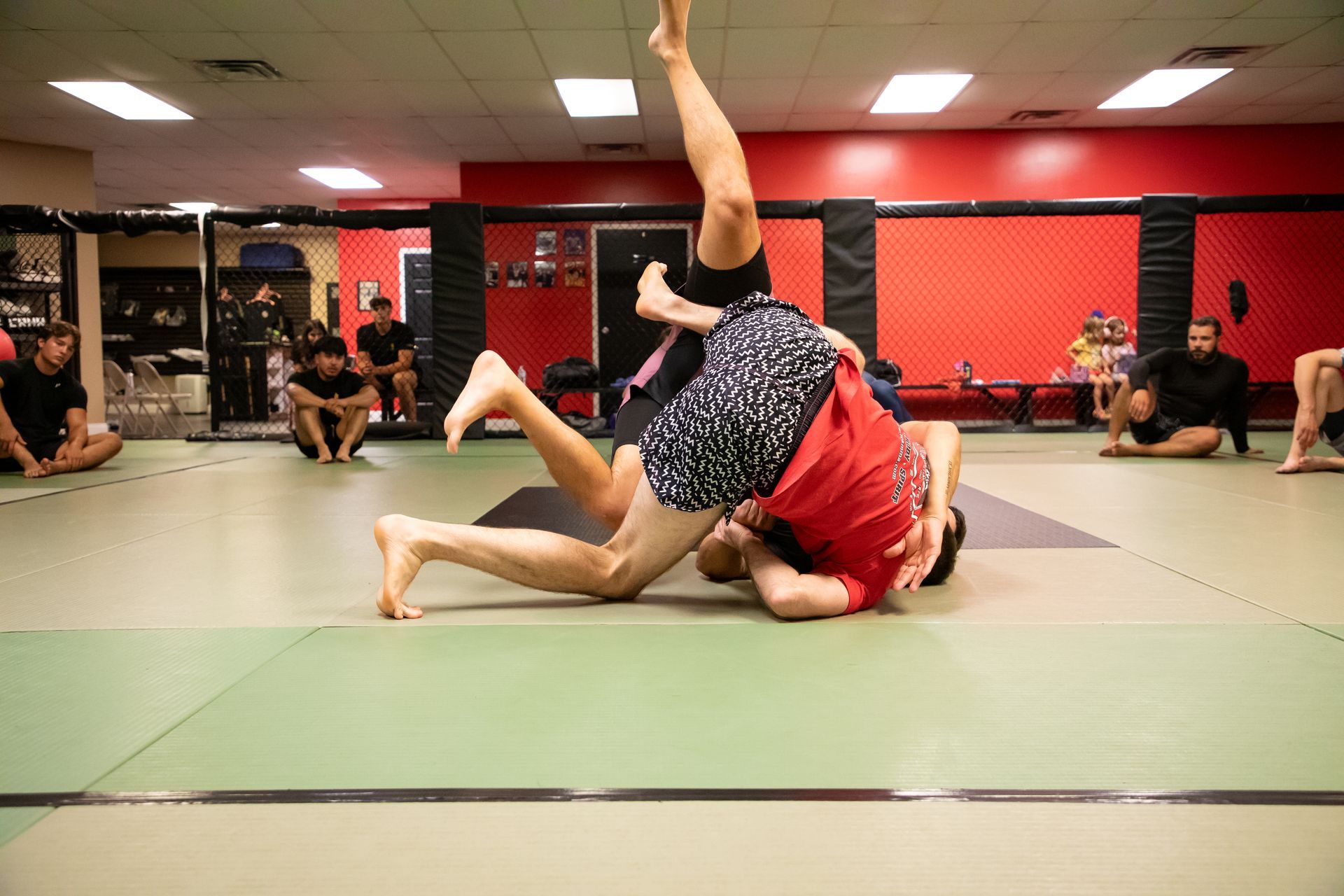
Most sessions include a warm-up that reinforces movement patterns you actually use, then technical instruction with partner drills, and optional live training that matches your experience level. We keep the room focused, but not tense. You will work hard, and you will also laugh a little when a move finally clicks, because that part is real.
We also keep the pace sustainable. The goal is for you to leave class feeling like you trained, not like you got run over. Over time, that consistency becomes the secret weapon.
A simple timeline for results you can expect
Everyone adapts differently, but patterns show up when you train regularly. Here is a practical timeline we use to help adults stay motivated without chasing unrealistic promises:
1. Week 1: You feel immediate stress relief and better mood from moving, learning, and getting out of your normal routine
2. Weeks 2 to 4: Basic movements improve, soreness decreases, and your breathing becomes more controlled
3. Month 2 to 3: Strength endurance and mobility start showing up in daily tasks, and your confidence becomes more noticeable
4. Month 4 to 6: Conditioning improves significantly, many people see that cardio jump around 15 percent, and focus transfers into work and family life
If you pair training with simple recovery habits like walking, mobility work, and a little strength training, the results come faster and tend to stick.
Training frequency, recovery, and making it fit your schedule
Most adults do best with 2 to 3 sessions per week. It is enough to build momentum without turning training into another exhausting obligation. If you are coming off an injury, working nights, or managing a physically demanding job, we can help you adjust intensity so you still progress.
Active recovery matters. Light mobility, bands, and basic strength work support your joints and help prevent overuse issues. Many practitioners combine grappling with weights, and a smaller group uses bands specifically for injury prevention. You do not need a complicated plan, just a consistent one.
We also encourage you to use the class schedule page like a tool, not a commitment trap. Pick a couple of reliable days, protect them like appointments, and let everything else be flexible.
Adult Jiu-Jitsu in East Chambersburg is more than self-defense
A lot of people search for Adult Jiu-Jitsu in East Chambersburg because self-defense is the obvious benefit. We teach practical skills, but what keeps adults training is the bigger return: better energy, better focus, and a stronger sense of capability in normal life.
You learn to stay calm while your heart rate is up. You learn to solve problems with limited options. You learn that progress comes from showing up and doing the basics well, even when you are tired. Those are life skills, and the mats are a surprisingly efficient place to practice them.
If you have been looking for Jiu-Jitsu in East Chambersburg that respects beginners and still challenges you, we have built our program to fit real schedules and real bodies. It is serious training, but it is also sustainable, and that combination is what makes it work.
Take the Next Step
Building real-world skill and real-world fitness takes consistency, but it should also feel doable week after week. That is exactly what we aim for, whether your goal is more energy for work, more patience and focus at home, or practical Jiu-Jitsu skill that helps you feel safer and more capable.
When you are ready, we would love to show you how we run classes at Mason Dixon Jiu-Jitsu and help you choose a starting point that makes sense for your experience, your schedule, and your body right now. You do not need to be “in shape” first. You just need a first class and a plan you can repeat.
Take what you learned here to the mat by joining a Jiu-Jitsu class at Mason Dixon Jiu-Jitsu.