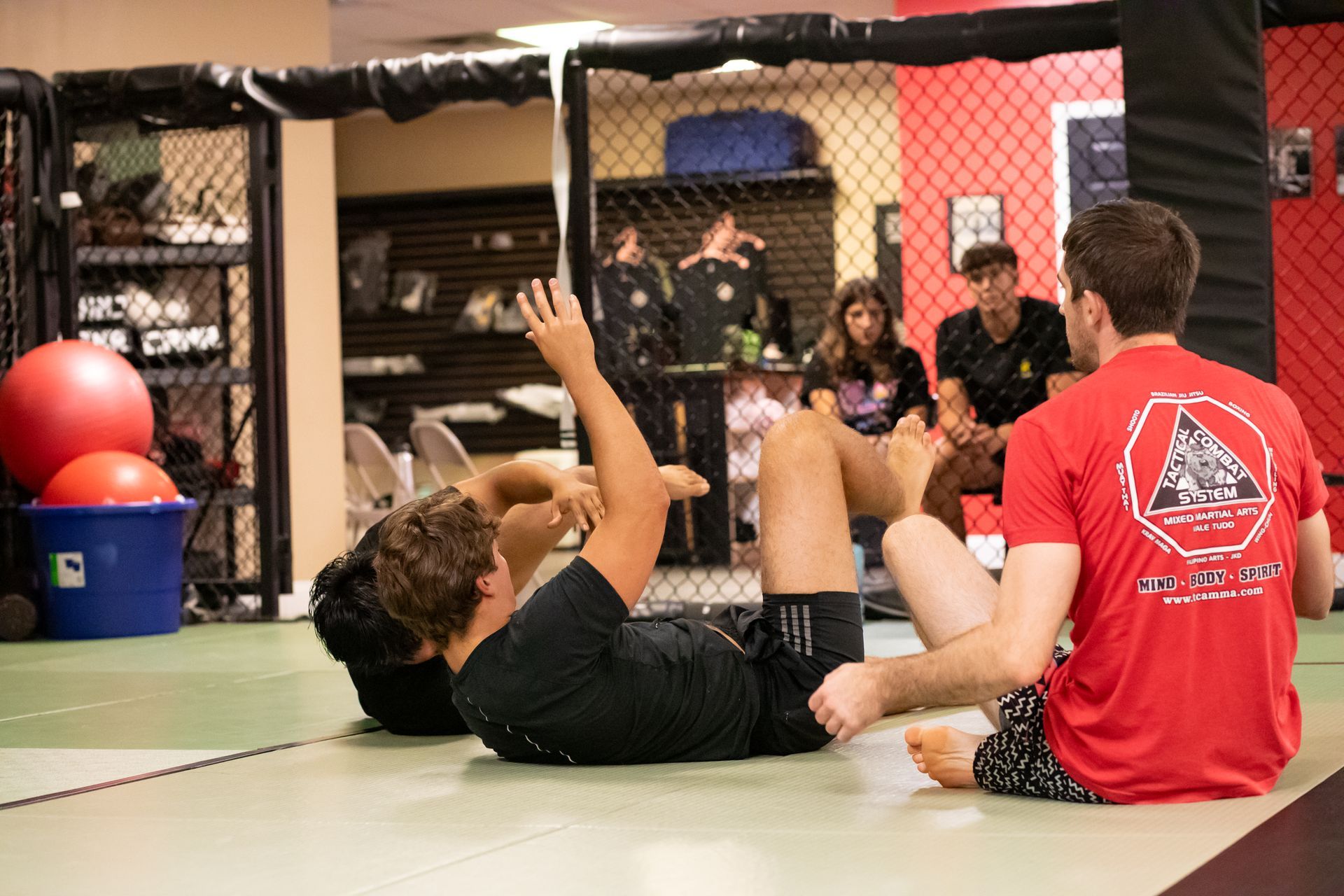
Jiu-Jitsu has a way of pulling your attention into the present so completely that stress finally gets a little quiet.
Life in and around East Chambersburg moves fast in a very specific way: early alarms, long shifts, packed calendars, and the kind of mental load that follows you home. When we talk with new students, the question we hear isn’t always about belt ranks or competition. It’s more practical than that: can training help me feel more grounded, more focused, and less stuck in my own head?
That’s where Jiu-Jitsu surprises people. Yes, you’ll learn real techniques and get a great workout, but the mental side tends to show up quickly. Rolling (sparring) demands so much attention to posture, timing, pressure, and breathing that your brain doesn’t have room to run the usual worry loop. For many adults, it’s the closest thing to a “moving meditation” that actually keeps your mind from wandering.
In this guide, we’ll break down how mindfulness shows up on the mats, why it improves focus and wellbeing, and how we structure training so you can feel those benefits whether you’re brand new or already experienced.
Why Jiu-Jitsu Feels Like Forced Mindfulness
Mindfulness can sound like a quiet-room concept, but training is where a lot of people finally understand it. In Jiu-Jitsu, presence isn’t optional. If your attention drifts for a second, you’ll lose position, give up a grip, or miss the small escape window that was right there.
That “forced mindfulness” is one reason adults often prefer this kind of practice over solo workouts. When you run or lift, your body is busy but your mind can still roam. On the mats, you’re constantly processing real-time feedback: weight shifts, frames, balance breaks, and pace. It’s immersive by design.
This isn’t just a vibe, either. Research across martial arts training has linked consistent practice with lower stress and stronger resilience, and the mechanism makes sense: repeated exposure to controlled pressure teaches your nervous system to regulate instead of panic. Over time, you learn how to stay calm while you’re working hard, and that lesson carries into everyday life.
The Focus Loop: Attention, Breath, Decision, Repeat
A typical round of training includes a simple mental cycle that builds concentration like a skill:
Attention narrows to what matters
You’re tracking grips, hips, head position, and distance. Your brain is sorting “important now” from “noise,” which is exactly what focus is in daily life too.
Breath becomes a control knob
If your breathing gets choppy, your decisions get sloppy. When you settle the breath, everything slows down enough to make better choices. That’s mindfulness in motion, not theory.
Decisions become cleaner under pressure
You learn to select one good option instead of five frantic options. The goal isn’t to be perfect; it’s to be deliberate.
Feedback is immediate
If a technique fails, you know right away. That instant feedback loop helps your mind stay engaged and improves learning speed, which is a sneaky confidence boost.
How Training Supports Wellbeing (Even If You’re a Beginner)
People sometimes assume mental benefits require years of training. In reality, beginners often feel a shift after the first class. The reason is simple: your attention finally lands in your body, in the room, in the moment.
Here are some of the wellbeing changes we commonly see adults experience as training becomes consistent:
• Reduced day-to-day stress because class becomes a predictable mental reset, not another task to “win”
• Better emotional regulation as you practice staying composed in uncomfortable positions
• Improved mood from the combination of movement, learning, and the natural brain chemistry that follows hard training
• A stronger sense of self-trust because progress is earned in small, clear steps
• Better sleep for many students, especially when training replaces late-night screen time and rumination
We also keep the environment structured and safe, which matters more than people realize. When you know you can train hard without chaos, your nervous system can actually downshift. That’s where wellbeing grows.
Rolling as Moving Meditation (What’s Actually Happening)
“Moving meditation” can sound like marketing, so let’s get specific about what’s happening during rolling.
First, your mind is anchored by constant sensory input: pressure on your frames, the mat under your feet, your partner’s movement, the sound of breathing. Second, you have a clear problem to solve in real time: improve position, protect space, create an angle, escape, or finish. Third, you can’t multitask. If you try to replay your workday while someone is passing your guard, you’ll feel it immediately.
Over time, you start recognizing a calm, alert state that isn’t sleepy and isn’t frantic. It’s focused. That state is the sweet spot for performance, and it’s also the state many adults are missing in daily life.
Stress Relief That Makes Sense for Busy Adults in East Chambersburg
If your schedule is tight, mindfulness needs to be practical. That’s why Adult Jiu-Jitsu in East Chambersburg tends to fit real lives: you show up, your phone stays off the mat, and for the length of class your attention has a job.
We also see local stress patterns that training supports well:
- Shift work and physical jobs that leave you tired but mentally wired
- Family schedules where you’re constantly “on” for everyone else
- Seasonal blues where motivation drops and routines slip
- Long-term background stress that doesn’t feel dramatic, just persistent
Class becomes a clean boundary in the week. You don’t have to “talk about stress” to benefit from training that teaches you how to function inside it.
Mindfulness Habits We Build Into Class (Without Making It Weird)
Mindfulness doesn’t have to be incense and silence. We prefer simple, repeatable habits that help you train better and feel better.
Before class: a short downshift
We often recommend 5 to 10 minutes of easy breathing before you step on the mat. Nothing fancy: slow inhale, slower exhale, relaxed jaw, shoulders down. The point is to arrive instead of rushing in mentally.
During drills: one cue at a time
When we coach technique, we emphasize one primary focus per round: posture, grip, hip angle, or pressure. This trains attention the same way strength training builds muscle: clear reps, clear feedback.
During rolling: breathe and name the goal
If your mind starts racing, we like a simple reset: breathe out fully and name your immediate goal in your head, like “frames and hip escape” or “recover guard.” That tiny mental label can stop panic spirals.
After class: a calm cooldown
A couple minutes of easy movement and steady breathing helps your body switch out of fight-or-flight. You’ll recover better, and you’ll leave feeling clearer instead of revved up.
What You’ll Learn in Our Adult Program (And Why It Improves Focus)
Our adult curriculum is designed to give you structure without overwhelming you. You’ll learn to solve problems in layers: survive, escape, control, and then submit. That progression matters for mindfulness because it teaches patience and sequencing.
In practical terms, Adult Jiu-Jitsu in East Chambersburg classes typically include:
• Fundamental movement and positional escapes so you can stay composed under pressure
• Guard and passing basics that teach timing, balance, and decision-making
• Top control concepts that reward steadiness rather than speed
• Submissions taught with safety, control, and clear tapping culture
• Live rounds scaled to experience level so you can practice presence, not panic
That “scaled intensity” is important. If training is always too intense, your brain learns tension. When intensity is progressive, your brain learns control.
A Simple Week Plan for Focus and Recovery
Consistency beats intensity for mental benefits. If you’re trying to use Jiu-Jitsu in East Chambersburg as a focus and wellbeing tool, here’s a realistic approach many adults follow:
1. Train 2 days per week for the first month to build routine and reduce soreness
2. Add a third day if your recovery and schedule allow it
3. Do 5 minutes of breathing before class and 2 minutes after class for a month straight
4. Take one short mindful walk on an off-day to loosen up and clear your head
5. Track one non-physical win each week, like “I stayed calm in a bad position”
It’s not complicated. It’s just consistent, and that’s what your nervous system responds to.
FAQs About Jiu-Jitsu and Mindfulness
How does Jiu-Jitsu improve focus outside the gym?
You practice narrowing attention to what matters, breathing under pressure, and choosing one solution at a time. Those skills transfer directly to work, parenting, and studying because the mental pattern is the same.
Can beginners feel mindfulness benefits quickly?
Yes. Even your first class tends to pull you into the present because you’re learning new movement, coordinating breathing, and responding to a partner. Many adults walk out feeling noticeably lighter mentally.
Is this helpful for anxiety or low mood?
Training can support stress reduction and emotional regulation through community, routine, and physical exertion. We’re not a medical provider, but we do see many students report fewer anxious spikes and more stable mood as training becomes regular.
Do I need to be in shape first?
No. We build fitness through training, not as a prerequisite. We’ll help you scale intensity so you can learn, breathe, and progress safely.
Take the Next Step
Building focus and wellbeing isn’t about finding perfect calm; it’s about practicing control in real situations, then realizing you can bring that control into the rest of your week. That’s what our training is designed to do: teach you how to stay present while you’re learning, working, and dealing with pressure.
If you’re looking for Adult Jiu-Jitsu in East Chambersburg that supports both skill and mindset, Mason Dixon Jiu-Jitsu is where we put those pieces together on purpose, with a class structure that welcomes beginners and still challenges experienced students.
No prior experience is needed to get started. Join a Jiu-Jitsu class at Mason Dixon Jiu-Jitsu today.