Jiu-Jitsu gives you a practical way to get stronger, calmer, and more confident, one class at a time.
Starting something new as an adult can feel like a lot, especially when it involves learning skills in front of other people. We get it. That is why our beginner-focused Jiu-Jitsu training in East Chambersburg is built to be structured, welcoming, and realistic for real schedules, real bodies, and real goals.
If you are looking for fitness that does not feel like a treadmill sentence, Jiu-Jitsu is a strong fit. A typical session can burn roughly 300 to 800 calories while building functional strength, mobility, and cardio in a way that stays interesting because you are solving problems, not just counting reps.
And the confidence piece is not just hype. Research-backed surveys on Brazilian Jiu-Jitsu show big mental health wins like major anxiety reduction and improved mood and confidence. We see those same outcomes start small: you learn how to breathe under pressure, how to move with control, and how to keep going when something feels hard but still doable.
Why Jiu-Jitsu works so well for beginners in East Chambersburg
Jiu-Jitsu is a grappling-based martial art that teaches you how to control positions, escape, and apply submissions with technique instead of relying on size or pure athleticism. For beginners, that is huge, because you can make progress quickly without needing to already be in peak shape.
In East Chambersburg, many of us work on our feet, lift, carry, drive, or do repetitive motions all day. Jiu-Jitsu complements that kind of life because it builds joint-friendly strength, grip endurance, balance, and body awareness. You are not just getting tired; you are getting capable.
It also fits the post-pandemic reality where stress is high and free time is limited. Training gives you a scheduled mental reset. You show up, focus on one task at a time, and leave feeling like your brain got rinsed out in the best way.
The beginner skills that build confidence fast
Confidence comes from evidence. In class, you collect small pieces of proof that you can learn, adapt, and handle pressure. For beginners, we focus on skills that are immediately useful, repeatable, and safe to drill.
Base, posture, and balance
Before fancy techniques, we teach you how to stay stable. Posture and base are the foundations that keep you safer and make everything else easier. You will learn how to distribute your weight, how to avoid getting folded up, and how to move without panicking.
This is one of those skills that sneaks into daily life. Better posture, better balance on slick winter sidewalks, better confidence walking into unfamiliar situations. Not dramatic, just real.
Escapes and survival fundamentals
Beginners often worry about getting stuck. That is normal. We teach you how to frame, shrimp, bridge, and recover guard, plus how to protect your neck and keep your breathing steady when pressure shows up.
Escapes build a specific kind of confidence: the calm belief that even if something goes wrong, you have options. That mindset is a big reason so many adults report reduced anxiety and improved mood through consistent training.
Guard, top control, and basic submissions
We introduce core positions like closed guard, half guard, side control, and mount in a way that does not overload you. You learn what the position is for, what your job is there, and how to improve step by step.
Submissions are part of Jiu-Jitsu, but our beginner path emphasizes control and safety first. Tapping is normal. Learning to tap early and often is part of training smart.
Fitness benefits you can measure without obsessing
Jiu-Jitsu changes your body, but it does it in a way that often feels like a side effect of learning skills. You sweat because you are moving with purpose. You get stronger because you are supporting your weight and someone else’s weight. You improve your cardio because rounds force you to manage effort, recover, and go again.
A few benefits beginners commonly notice within the first month or two include improved stamina on stairs, better hip mobility, stronger grip, and less stiffness in the morning. People also tend to sleep better, partly because training is demanding and partly because stress drops when your mind has a place to go.
What a first class feels like (so you are not guessing)
Most beginners worry about two things: getting hurt and feeling awkward. We design the first class to lower both of those.
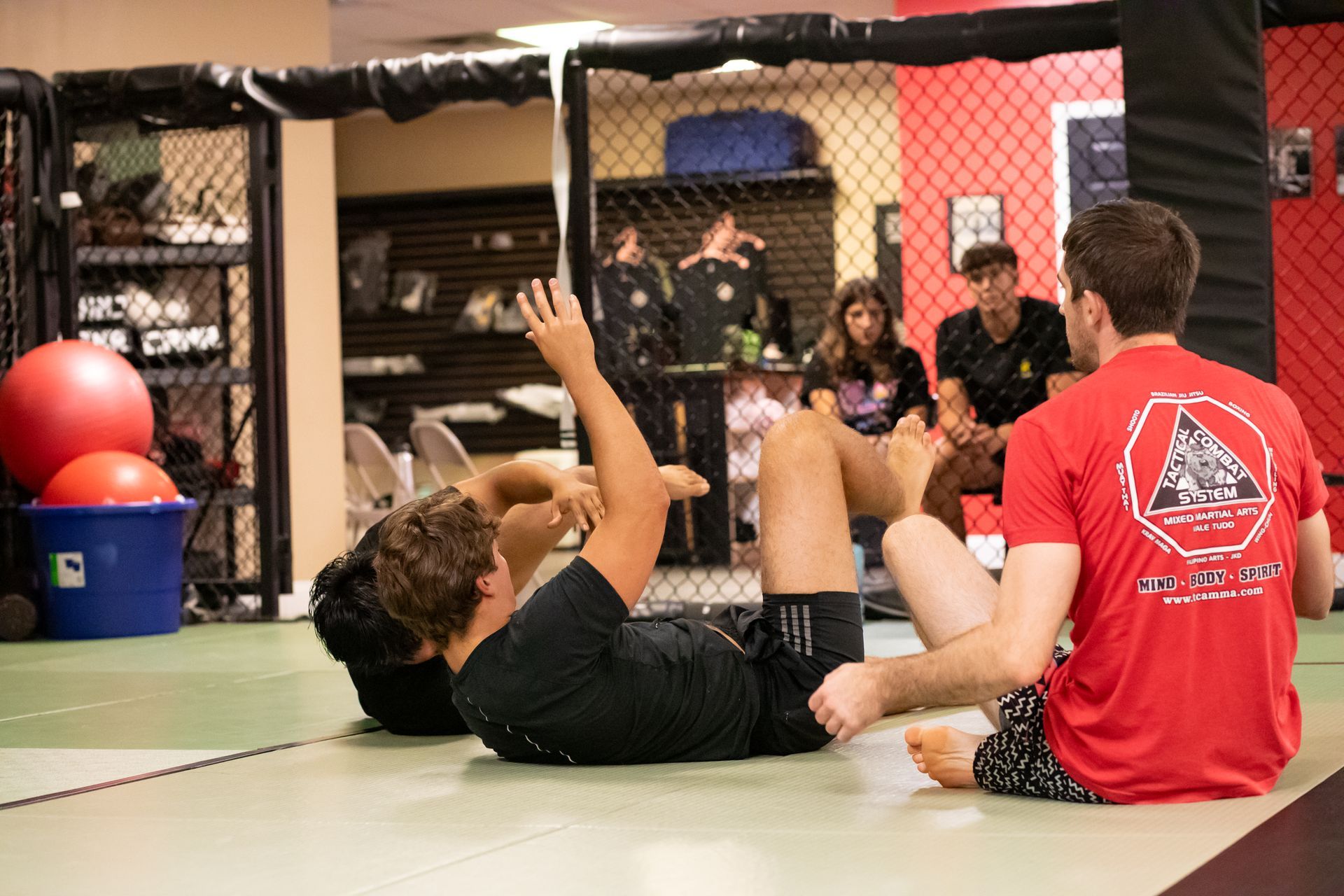
You will start with a warm-up that is meant to prepare your joints and muscles for grappling movements. Then we teach a small set of techniques and give you time to drill them with a partner at a controlled pace. If there is sparring, it is introduced in a structured way, often with positional rounds so you are not thrown into chaos.
You will get cues like where to place your hands, where to keep your elbows, how to angle your hips, and when to reset. You will also hear reminders to breathe. Everyone needs that reminder sometimes, including experienced students.
Safety for beginners and adults over 30
If you are over 30, you are not “too late.” You might be smarter, actually, because you listen to your body and you understand consistency. Jiu-Jitsu can be safe for beginners when training is supervised, partners communicate, and intensity is matched appropriately.
We focus on controlled technique, gradual progression, and tapping early. You do not win practice by muscling through. You win practice by learning, staying healthy, and coming back.
A few common-sense safety habits we coach from day one:
• Communicate with your partner about pace, injuries, and comfort level before rounds start
• Tap early and reset without ego, because joints heal slowly and pride does not help
• Learn positioning before speed, so your body moves efficiently instead of explosively
• Take rest rounds when needed, especially early on while your cardio adapts
• Keep hygiene simple and consistent, since clean gear and trimmed nails prevent most avoidable issues
Why Adult Jiu-Jitsu in East Chambersburg is more than a workout
A lot of adults come in for fitness. Then something else happens. You start noticing you handle stress differently at work, at home, and in traffic. You get less reactive. You make better decisions under pressure.
That is one of the most valuable “hidden skills” in Jiu-Jitsu: problem-solving while tired. You are constantly making small choices, adapting to feedback, and building mental flexibility. Studies point to improvements in mood and mental flexibility in a large share of practitioners, and that matches what we watch happen over months of steady training.
For East Chambersburg in particular, we see Jiu-Jitsu meet people where they are. Shift workers, parents, folks getting back into exercise after years away, people who never liked gyms. The training gives you structure, community, and a way to progress that is not based on comparing yourself to anyone else.
How to get the most out of your first 90 days
The first 90 days are where beginners either build momentum or drift. Our goal is to help you build a routine that feels sustainable. Two to three sessions per week is a sweet spot for most adults: enough repetition to improve, not so much that you burn out.
Here is a simple plan that works well for new students:
1. Pick two class days you can protect on your calendar, then add a third day when recovery feels good
2. Focus on one theme per week (escapes, guard, top control) instead of trying to learn everything
3. Keep a short note after class about what clicked and what confused you
4. Ask one question each session, even a small one, so you stay engaged and guided
5. Track consistency, not perfection, because showing up is the real multiplier
If you do that for three months, you will feel different. Stronger, yes, but also more settled. Your body learns that pressure is information, not an emergency.
Jiu-Jitsu for families and kids, and why parents like the structure
While this article focuses on beginners broadly, many adults start because they want a positive activity for the whole household. Research on youth training shows parents commonly report confidence gains, better concentration, and improved respectfulness, plus safer training dynamics compared to collision-heavy sports.
Our approach to fundamentals translates well for younger students because it is skill-based and structured. Kids learn how to listen, how to practice with control, and how to handle frustration without melting down. That is a life skill, not just a martial arts skill.
For parents, it also helps to know that progress is visible. You can see your child getting more coordinated, more focused, and more comfortable around peers.
Start Your Journey with Mason Dixon Jiu-Jitsu
Progress in Jiu-Jitsu is built from small wins stacked over time: a better escape, a calmer breath, a stronger base, a little more energy at the end of the day. If you are ready for a beginner path that improves fitness and confidence without beating you up, we are set up for exactly that in East Chambersburg.
Mason Dixon Jiu-Jitsu is where you can train with a clear plan, supportive coaching, and a community that values steady improvement. If you want to explore Adult Jiu-Jitsu in East Chambersburg for stress relief, strength, or practical self-defense, we will help you start at the right pace and keep moving forward.
No experience is required to begin. Join a Jiu-Jitsu class at Mason Dixon Jiu-Jitsu today.