Your first Jiu-Jitsu class should feel structured, safe, and surprisingly doable, even if you have zero experience.
Walking into your first Jiu-Jitsu class can feel like stepping into a new world: different terminology, unfamiliar movements, and a room full of people who seem to know exactly what to do. We get it, and we plan for it. Our beginner experience is built to lower the stress, answer the awkward questions before you have to ask, and help you leave class feeling like you actually learned something real.
If you’re looking for Jiu-Jitsu in East Chambersburg because you want self-defense skills, a better workout, a new challenge, or just a healthier routine you’ll stick with, your first class is the starting line. The goal is not to “prove” anything. The goal is to show up, learn the fundamentals, and train in a way that keeps you safe and improving.
This guide breaks down what to expect from the moment you arrive to the moment you walk out the door. We’ll cover what to wear, how class is structured, how we keep beginners safe, and what progress looks like in the early weeks, because clarity makes everything easier.
Before You Arrive: What to Wear, Bring, and Know
Your first win is simply getting in the door prepared. You do not need fancy gear, and you do not need to be “in shape” first. We build fitness as a byproduct of training, and we teach skills from the ground up.
For most first-time students, comfortable athletic clothing is perfect. If you’re starting in a no-gi style class, think fitted training shirt or rash guard and athletic shorts without zippers. If you’re starting in a gi class, we often have loaner options available, which takes a lot of pressure off that first visit.
Here’s what we recommend bringing:
• A water bottle you actually like drinking from, because you’ll use it
• A small towel for sweat, especially in warm months
• Sandals or slip-on shoes, so you can step off the mats without going barefoot
• A clean change of shirt if you’re heading somewhere afterward
• A good attitude and a willingness to ask questions, even basic ones
If you’re nervous, arrive 10 to 15 minutes early. That little buffer matters. It gives us time to introduce you to the space, answer quick questions, and make sure you’re comfortable before class starts.
Checking In and Getting Oriented
When you walk in, we’ll help you get settled without making it a big production. You’ll meet an instructor, we’ll confirm what you’re training that day, and we’ll point you toward where to store your gear and where to line up.
A lot of beginners worry about not knowing the “rules.” You don’t need to memorize anything. We’ll guide you through it. In general, we keep the training area clean, we respect training partners, and we focus on safety first. If something hurts in a sharp or wrong way, you tap and we reset. No ego required.
This is also where we start matching you with a good partner. Pairing matters in Jiu-Jitsu. For your first class, we aim to put you with someone controlled, helpful, and calm, so you can learn without feeling rushed.
The Structure of a Typical Beginner Class
Beginner classes follow a reliable rhythm, and that’s a good thing. Predictability makes learning faster, and it keeps the room safer. While each class has its own theme, the flow is usually consistent.
Warm-Up: Movement Skills That Make Jiu-Jitsu Work
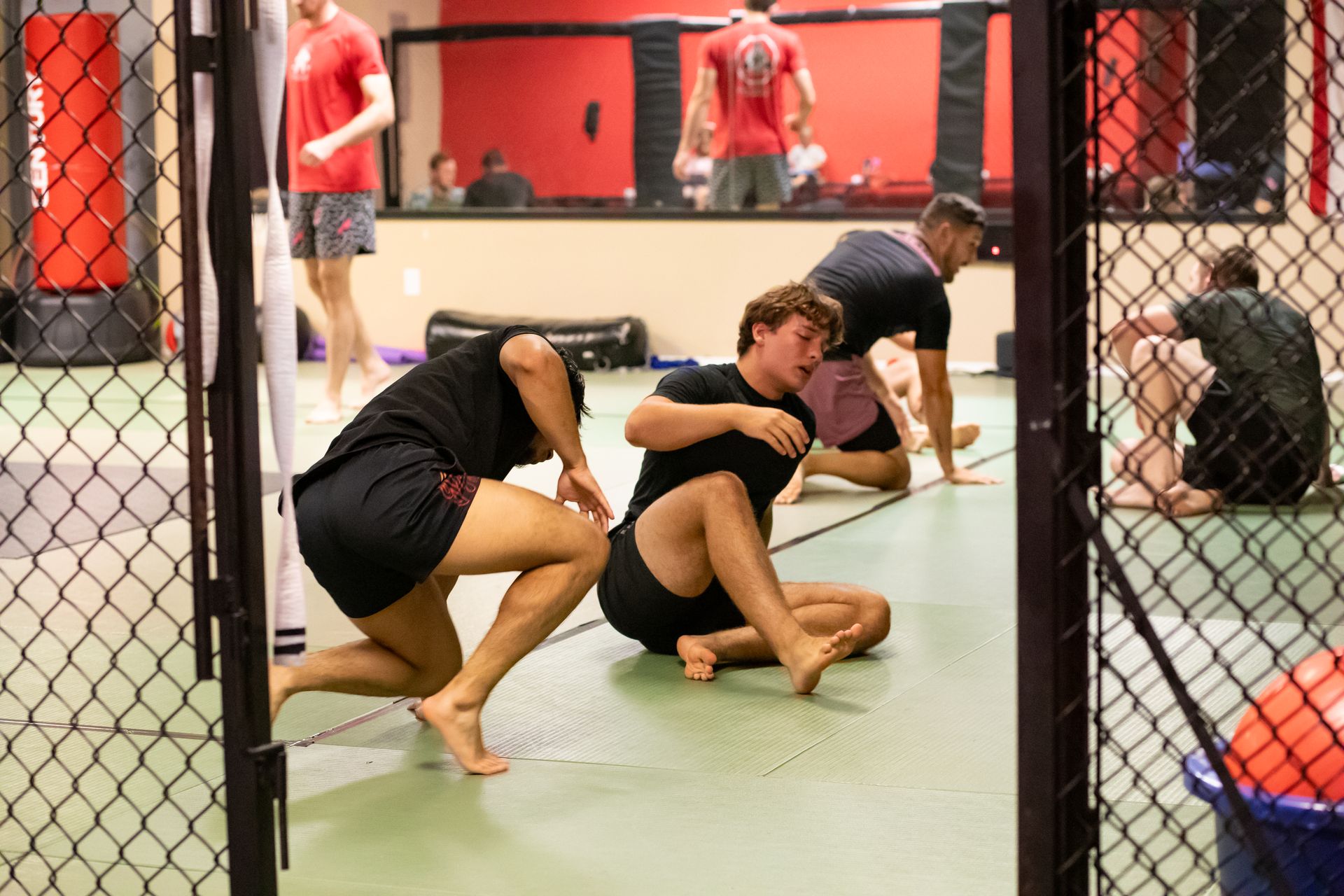
Warm-ups in Jiu-Jitsu are not just “get your heart rate up.” We use warm-ups to teach foundational movement patterns that show up in real technique. You’ll see drills like hip escapes (often called shrimping), bridging, forward rolls, and controlled crawls. They might feel odd at first, but there’s a reason we do them: these movements help you create space, recover position, and protect yourself under pressure.
You can expect a mix of:
Light jogging or movement around the mats
Dynamic stretching to open hips and shoulders
Fundamental ground movements like shrimping and bridging
Simple coordination drills that build balance and body awareness
If you need to slow down, slow down. We’d rather you move well than move fast.
Technique Instruction: What You’ll Learn in the First Class
After warm-ups, we teach technique. In a first class, we usually focus on a small number of high-value skills, not a giant list of moves. That might mean learning a basic guard position, a simple escape, a stable top position, or a safe way to control someone without muscling through it.
We demonstrate techniques step by step, including the “how” and the “why.” The “why” matters, because Jiu-Jitsu is more like problem-solving than memorizing. When you understand the goal of a movement, you improve faster and you feel less lost.
You might learn things like:
How to maintain posture and base so you don’t get easily swept
How to frame with your arms safely instead of pushing with straight arms
How to hip escape to recover guard or create distance
How to move from a bad position to a safer one
And yes, if you’re in a gi class, you may learn how to tie your belt. It’s a small thing, but it makes you feel more at home.
Drilling: Repetition With Coaching
Once you’ve seen the technique, you’ll drill it with a partner. Drilling is where the learning locks in. We’ll have you repeat the movement at a controlled pace, switching roles so both people practice.
This is also where you’ll hear the most coaching. We walk the room, correct details, and help you adjust. Sometimes it’s a tiny fix that changes everything, like moving your hips two inches or turning your wrist the right way. That’s the fun part, honestly: small changes, big improvement.
If you forget steps, it’s normal. Beginners forget constantly. We expect it, and we teach in a way that makes it easier to remember.
Will You Spar in Your First Class?
In many beginner sessions, sparring is optional or introduced in a very controlled way. If we include it, it’s usually positional sparring, not full free rolling. Positional sparring means you start in a specific position and work a specific goal, like escaping side control or holding a stable top position for a short round.
The emphasis is control, not “winning.” We care more about you staying safe, breathing, and learning what pressure feels like than we do about intensity.
If you do roll, here are two important truths:
Tapping is normal and encouraged. It’s how you train safely for years.
Going slow is a skill. Speed can come later, once your mechanics are sound.
Safety, Hygiene, and What We Expect From Everyone
We keep safety simple and consistent: train under control, respect taps, and prioritize good technique over force. Jiu-Jitsu should challenge you, but it should not feel reckless.
We also take hygiene seriously because close-contact training demands it. Come in clean, wear clean gear, keep nails trimmed, and remove jewelry. If you have a scrape, cover it. If you’re sick, rest and come back healthy. That’s part of taking care of the room.
If you’re worried about getting hurt, it helps to know what “normal” feels like. Mild soreness is common, especially in the first couple of weeks. Minor bruises can happen too. What should not be normal is sharp pain or joint pain that lingers. We’ll help you learn how to train in a way that keeps your body in the game.
What Progress Looks Like in the First Few Weeks
A beginner’s biggest challenge is often not physical. It’s mental overload. There’s a lot to learn: positions, terminology, timing, and how to move with another person. Give yourself permission to be new.
In the first few weeks, progress usually looks like:
You recognize positions faster, even if you can’t “solve” them yet
You breathe more steadily and panic less when you’re pinned
You remember one detail that actually works in live movement
You start to feel balance, base, and leverage instead of pure strength
That’s real progress. And it adds up quickly when you train consistently.
Adult Jiu-Jitsu in East Chambersburg: What Adults Usually Want Most
Most adults who come in are juggling work, family, and a body that does not recover like it did at 18. We design training with that reality in mind. Adult Jiu-Jitsu in East Chambersburg should be challenging, but sustainable.
Adults often tell us they want three things:
A practical skill set that builds real confidence
A workout that’s engaging, not repetitive
A community that feels supportive without being intense or cliquey
That’s the environment we aim to maintain every day on the mats. You should be able to train hard, laugh a little, learn a lot, and still show up for the rest of your life outside the gym.
Quick Timeline: Your First Class From Start to Finish
If you like knowing what’s coming, here’s a simple timeline you can keep in your head:
1. Arrive 10 to 15 minutes early, check in, and get oriented
2. Warm-up focused on fundamental movement and mobility
3. Technique instruction with step-by-step details and key concepts
4. Partner drilling with coaching and plenty of repetition
5. Optional positional sparring or controlled rounds, depending on the day
6. Cooldown, quick questions, and a clear next step for your training
You don’t need to be perfect at any of it. You just need to show up and try.
Common First-Class Questions We Hear (and Our Straight Answers)
Do I need to get in shape before starting Jiu-Jitsu?
No. Training is how you get in shape. You’ll scale the pace, and we’ll help you build a base safely.
What if I’m worried about being the newest person there?
Everyone starts somewhere, and we run beginners through a structure that makes “new” feel normal. You’ll get guidance and a partner match that supports you.
Is Jiu-Jitsu mostly strength?
Good technique beats strength over time. Strength helps, sure, but leverage, timing, and positioning matter more, especially as you learn.
What if I don’t want to spar yet?
That’s okay. We can keep your first experiences controlled and focused on learning fundamentals.
Take the Next Step
If you want to try Jiu-Jitsu in East Chambersburg without guessing what you’re walking into, we’ve laid out the reality: structured classes, clear coaching, and a pace that makes room for beginners. You’ll warm up with purpose, learn techniques that connect to real positions, drill with guidance, and build confidence through consistent practice, not chaos.
When you’re ready, Mason Dixon Jiu-Jitsu is here to help you start the right way. We keep the first class welcoming and practical, and we’ll guide you toward a training routine that fits your goals and your schedule, whether you’re brand new or returning after time away.
New to Jiu-Jitsu? Start your journey by joining a Jiu-Jitsu class at Mason Dixon Jiu-Jitsu.