Jiu-Jitsu gives your stress a job to do: focus, breathe, solve, repeat.
Life in East Chambersburg moves fast, and stress tends to show up in familiar ways: tight shoulders, restless sleep, a brain that will not turn off, and a body that feels like it is always “on.” We see it every week when new students walk in carrying the weight of work schedules, family responsibilities, and the quiet pressure to keep it all together.
Jiu-Jitsu is one of the most practical ways we know to convert that stress into something useful. On the mat, you get a clear problem in front of you, immediate feedback, and a safe way to practice responding instead of reacting. That process is simple, but it is not easy, and that is exactly why it builds resilience.
The sport is also growing for a reason. With millions of practitioners worldwide and U.S. interest roughly doubling over the last decade, more adults are choosing training that challenges the mind as much as the body. Our goal is to make Jiu-Jitsu in East Chambersburg approachable, structured, and sustainable, so you can train for months and years, not just a few intense weeks.
Why stress feels different on the mat
Stress in daily life is often vague. It is an email you cannot answer quickly, a deadline that keeps shifting, or a conversation you keep replaying. On the mat, stress becomes specific: someone is trying to control you, you are trying to escape, and you must choose a solution right now.
That clarity matters. When the problem is clear, your brain stops spinning on everything else. You get a single task: posture, frames, breathing, hip movement, angle, timing. It is surprisingly grounding, and after class many people tell us they feel calmer, even if they are physically tired.
We also control intensity with purpose. You can train hard without turning every round into a “win at all costs” situation. We pace training so you build confidence in your ability to handle pressure, because stress tolerance is a skill like any other.
Resilience is a trained skill, not a personality trait
Some people assume resilience is something you either have or you do not. We see the opposite. Resilience is trained through repeated exposure to manageable challenge, recovery, and reflection.
Jiu-Jitsu gives you that cycle in a clean format. You attempt a technique, it works or it does not, you adjust, and you try again. Over time, you stop treating mistakes like emergencies. You start treating them like information.
That mindset carries into work, parenting, relationships, and fitness. It is not magic. It is simply practice: staying present under pressure and choosing the next best step.
What you can expect in Adult Jiu-Jitsu in East Chambersburg
Adult Jiu-Jitsu in East Chambersburg should not feel like you are being thrown into the deep end. We structure our classes so you learn fundamentals in a way that stacks, week after week, and we keep the room welcoming for beginners without watering down the art.
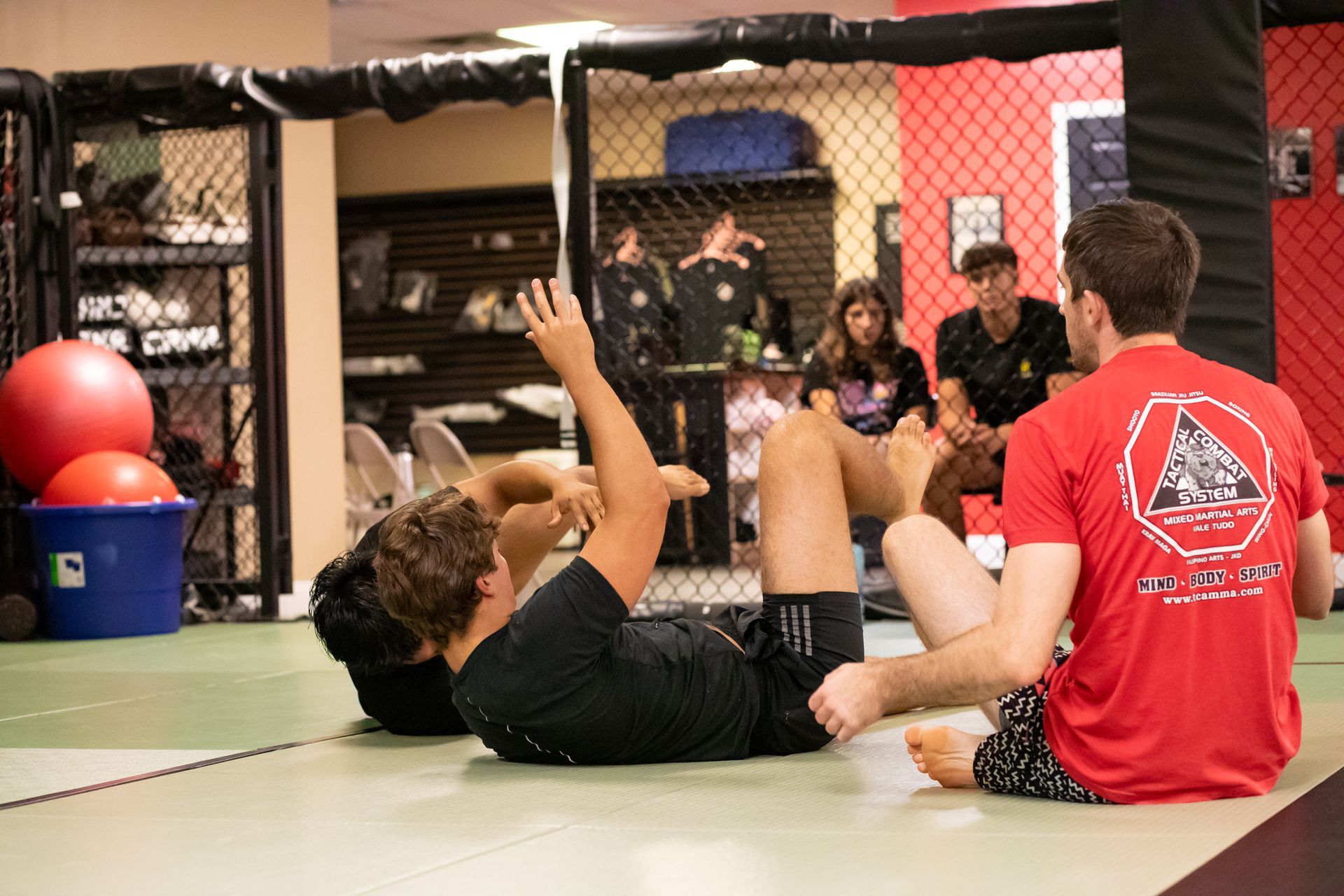
You can expect a blend of technical instruction and live practice. Technique is where your tools come from. Live training is where the tools become reliable. Both matter, and we make sure you get both at the right pace.
If you are worried about being “out of shape,” you are not alone. Most adults start that way. The good news is that training builds conditioning in a realistic way: you improve your movement, your balance, and your ability to stay calm while working.
The real stress transformer: controlled problem solving
A big reason Jiu-Jitsu works for stress is that it demands your attention, but it does not punish you for being human. You will forget steps. You will get stuck. You will tap. That is normal, and honestly it is part of the relief. The mat is a place where you can practice imperfection without consequences beyond learning.
We coach you to focus on small wins: survive longer in a bad position, escape with better timing, recognize a grip before it becomes a problem, breathe instead of holding your breath. Those tiny improvements add up faster than you think.
And because the feedback is immediate, progress feels real. You are not guessing whether you are improving. You can feel it in your reactions and your recovery.
A simple look at how class usually flows
Our format stays consistent enough that you can relax into it, but varied enough that you keep learning. A typical session includes warm-ups that prepare your joints and movement patterns, technical instruction with key details, and controlled rounds where you apply what you learned.
To make the process concrete, here is what we prioritize in most classes:
- Movement fundamentals that protect your body, including safe ways to fall, base, and recover guard
- Core positions and escapes so you can stay calm when you are pinned or pressured
- High-percentage submissions taught with control, so safety stays non-negotiable
- Positional sparring that isolates one problem at a time, which speeds up learning
- Full rounds where you connect the pieces, reset, and build composure under fatigue
This structure is where the resilience comes from. You are repeatedly practicing the act of solving a problem while staying steady.
Safety, culture, and training smart as an adult
Most adults are not trying to be “tough” for its own sake. You want to train, feel better, and still be able to work the next day. We get it. Our coaching emphasizes safety and good training etiquette, because a strong room is built on trust.
We also encourage you to communicate. If your neck is stiff, if your shoulder feels off, if you are returning after time away, tell us. We can adjust intensity, match you with an appropriate partner, and keep you progressing without unnecessary wear and tear.
Tapping is part of the language of the sport. It is how you train hard without getting hurt. When you treat tapping as information, not failure, training becomes sustainable.
Sport, self-defense, and what most adults actually want
The jiu-jitsu world has shifted over time. More people train for sport performance and personal development than for pure self-defense, and that is reflected across the broader community. We still believe self-protection matters, but we also know most adults want a well-rounded practice: fitness, confidence, stress relief, and the satisfaction of mastering a difficult skill.
Our approach supports both paths. If you want to compete, we can help you sharpen timing, decision-making, and strategy. If you want training that makes you feel capable in real-world situations, we build fundamentals that hold up under pressure.
Either way, the process is the same: learn technique, practice it with resistance, and develop composure.
Modern training elements we bring into the room
Jiu-Jitsu keeps evolving. No-gi continues to grow, wrestling integration is more common, and serious students pay more attention to recovery and smart training. We keep our teaching aligned with what works now, while staying anchored in fundamentals that never stop mattering.
You will see takedown entries, clinch work, and the kind of scrambling awareness that helps you feel less “stuck.” You will also see careful attention to positional control, because control is what makes technique repeatable. And in a practical sense, repeatable technique is what lowers stress. When you know you have options, you breathe differently.
We also encourage a data-driven mindset without making it weird. Pay attention to sleep. Track how your body feels. Notice which positions spike your heart rate and which ones you can manage. That self-awareness becomes part of your training intelligence.
How stress becomes strength, one month at a time
In the first few weeks, most people feel mentally overloaded. There are new terms, new movements, and a lot of “wait, what just happened?” moments. Then something shifts. You begin recognizing patterns: where your hands should go, how to protect your neck, how to keep your hips active, how to escape without panicking.
By the one to three month mark, you usually notice better posture, improved conditioning, and a calmer response to pressure. That does not mean you never feel stress. It means you recover faster.
By six months and beyond, resilience shows up in small, daily ways. You handle conflict with more patience. You stop spiraling as easily when plans change. You feel more ownership over your body. And yes, you start seeing technique choices instead of chaos when you roll.
Getting started without overthinking it
The hardest part for many adults is simply walking in the first time. We keep the process straightforward, and you do not need to be “ready” before you start. Training is what gets you ready.
Here is a simple way to begin:
1. Check the class schedule page so you can pick a day and time that fits your week
2. Show up a little early so we can get you oriented and answer quick questions
3. Wear comfortable athletic clothing if you do not have a gi yet, and bring water
4. Focus on learning a few core movements, not memorizing everything at once
5. After class, we will help you choose a training plan that matches your goals and pace
Consistency beats intensity for adults. Two to three classes a week done steadily will change your life faster than one big burst followed by a long break.
Ready to transform stress into resilience with Mason Dixon Jiu-Jitsu
Building real resilience requires a training environment where you can work hard, stay safe, and keep showing up even when life gets busy. That is what we aim to provide every day at Mason Dixon Jiu-Jitsu, right here in East Chambersburg.
If you are looking for Jiu-Jitsu in East Chambersburg that helps you manage stress, strengthen your body, and sharpen your mindset, we would love to have you train with us. The next step is simple: find a class time that works, come in, and let the process do what it does best.
Strengthen both your body and mind through consistent Jiu-Jitsu training at Mason Dixon Jiu-Jitsu.