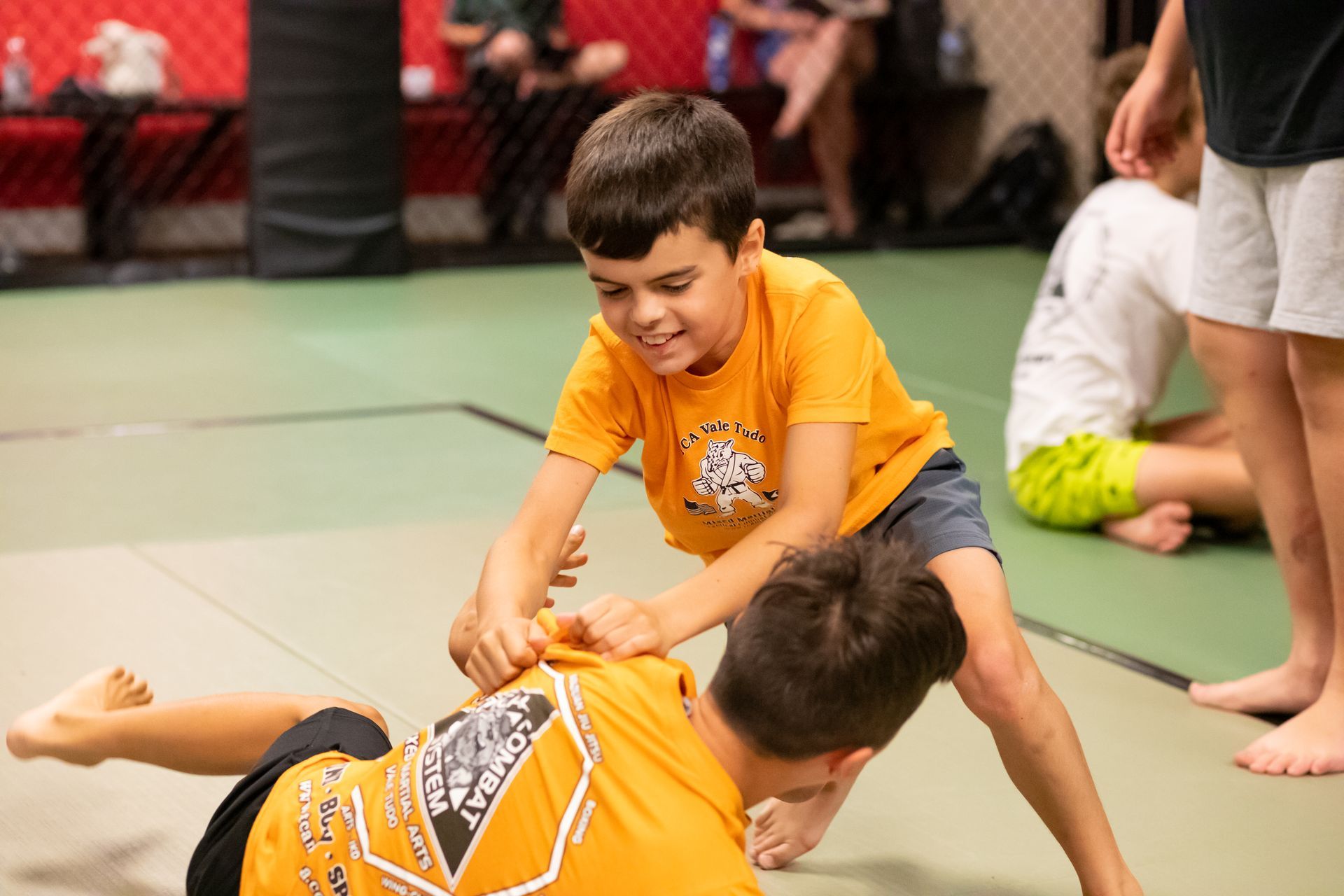
When you replace idle scrolling with structured training, your child gets stronger in ways you can actually see at home.
If you are like most parents we talk with, you are not looking for another activity that adds chaos to the week. You want something that gets your child moving, builds confidence, and helps with focus, all without turning every afternoon into a battle. Youth Martial Arts can do that, especially when the training is structured, age-appropriate, and consistent.
We have also noticed a shift in the bigger picture. Youth participation in martial arts has climbed in recent years, and industry summaries repeatedly point to kids and teens making up a major share of overall enrollment. Parents are driving that growth because the goals are practical: discipline, fitness, self-protection, and a healthier alternative to constant screen time.
In our program, the emphasis is not on turning kids into fighters. It is on building capable, calm, coordinated young people. The physical skills matter, of course, but the real win is watching a child learn how to try hard, listen well, and stay composed when something feels difficult.
Why Youth Martial Arts works when other activities fizzle out
Plenty of activities are fun for a month and then the motivation drops off. Youth Martial Arts tends to stick because progress is built into the process. Kids can feel improvement week to week, and that momentum matters.
Here is what we see make the difference:
• Clear structure: class has a beginning, a plan, and an end, so kids know what to expect
• Small, achievable goals: learning a movement or a position is a win your child can repeat
• Built-in accountability: showing up, lining up, paying attention, and finishing the round are part of training
• Real feedback: kids get coaching in the moment, not vague encouragement after the fact
• Measurable growth: confidence rises as skills become reliable under pressure
There is also a bigger trend supporting this. Research interest in youth-focused martial arts has expanded sharply, with recent analysis showing growing attention to youth development, health, pedagogy, and safety. In other words, serious people are paying attention to how training affects kids, not just how it looks in a highlight clip.
From screen time to strong bodies: what changes first
Most parents come in thinking about fitness, and that is a good place to start. Modern kids sit a lot. Even active kids often have long stretches of homework, car rides, and screens. Training gives the body what it is missing: crawling patterns, pushing, pulling, gripping, rotating, and controlled falling.
Early physical changes often show up as:
Better posture and balance
Kids learn to stand with stability, move with control, and keep their base, which reduces the clumsy tumbles that happen when bodies grow faster than coordination.
Improved conditioning without the misery
Class works the heart and lungs, but it rarely feels like traditional cardio. Drills and games keep the effort high while attention stays engaged.
Stronger core and hips
Grappling movements demand stability through the trunk and control through the hips. That strength carries into everything from running to sitting at a desk.
Healthier relationship with effort
Kids discover that hard work is not a punishment. It is just part of learning.
Why Jiu-Jitsu is an especially smart fit for kids
Brazilian jiu-jitsu works well for youth because it rewards control, leverage, and decision-making more than raw force. That is a big deal for children who are smaller, shy, or still figuring out their bodies.
Jiu-Jitsu teaches kids to:
Stay calm under pressure
When a position feels uncomfortable, kids learn how to breathe, think, and solve the problem instead of panicking.
Use technique over strength
Leverage is not just a slogan. When kids learn frames, posture, and angles, the lightbulb moment is real.
Build body awareness and safe movement
We spend time on how to fall, how to base, and how to move around partners without crashing into people.
Practice boundaries and respect
Training requires consent, control, and awareness. Kids learn to work hard without being reckless.
This is one reason Brazilian jiu-jitsu fits the modern Youth Martial Arts market so well. Parents want real-world skills, but also want safety, maturity, and emotional growth built into the program.
Safety and supervision: what responsible training looks like
A fair question we get all the time is, is jiu-jitsu safe for kids. The honest answer is that any sport has risk, but a well-run program reduces that risk through smart coaching and consistent rules.
Our safety approach is simple and strict:
We match training partners by size and maturity as much as possible
We keep techniques age-appropriate and focus on control
We teach tapping early and treat it as a normal, respectful habit
We coach closely during drills and live rounds
We keep the room culture calm so kids do not feel pressure to prove something
Youth Martial Arts should never feel like chaos. The class should feel organized. Your child should know what the rules are, and you should be able to see that our staff takes them seriously.
Confidence, discipline, and behavior: what parents actually notice
The confidence that comes from training is not just about self-defense. It is about competence. When kids repeatedly practice something hard and improve, they start to trust themselves.
We often hear parents describe changes like:
A child raising their hand more at school
Less emotional blow-ups when something is frustrating
Better routines around homework or chores
More willingness to try a new activity without quitting immediately
Improved social comfort, especially for kids who struggle to find their place
Discipline in Youth Martial Arts is not harshness. It is consistency. It is learning to pay attention, follow directions, and keep going when the novelty wears off. Over time, those habits show up in everyday life.
What to expect in a kids class
The first day is usually what makes parents nervous. That makes sense. You want to know what the room feels like, how instruction is handled, and whether your child will be singled out or overwhelmed.
A typical class includes:
Warm-up that looks like movement practice
We use age-appropriate drills that build coordination: shrimping, bear crawls, rolls, and basic positional movement.
Technique of the day
We teach one main concept and a few details, then give kids time to practice with coaching.
Partner drills with clear rules
Kids repeat the movement with a partner in a controlled way, focusing on safety and good habits.
Games or positional sparring
This is where training gets fun and practical. We use structured rounds that limit intensity and keep learning on track.
Cool down and wrap-up
We reinforce what the kids learned and highlight effort and attitude, not just who “won.”
If your child is shy, we help with gentle entry points. If your child is high-energy, we channel that energy into focus and leadership. Either way, your child gets a role and a path forward.
Ages, readiness, and how often to train
What age can a child start? Readiness matters more than the number. In general, kids do best when they can follow basic instructions, stay on task for short periods, and respect personal space. If you are not sure, that is exactly what a trial class is for.
We also get asked whether kids need to be athletic before starting. No. Youth Martial Arts is often where kids become athletic. Training builds the fundamentals first: balance, coordination, strength, and confidence moving with another person.
For training frequency, we usually recommend:
1 to 2 classes per week for beginners
This builds routine without burnout and gives kids time to recover and absorb new skills.
2 to 3 classes per week for steady progress
This is a sweet spot for many families because kids improve faster and feel more connected.
More than 3 classes per week for highly motivated students
This works best when sleep, nutrition, and school stress are managed well.
Competition vs recreational training: what you should know
Some parents worry that joining means immediate pressure to compete. That is not how we approach it. Competition can be a great teacher, but it is optional. Our priority is helping your child become healthier, more confident, and more capable.
When kids do choose to compete later, we treat it like a learning project. We focus on preparation, sportsmanship, and safety. A good Youth Martial Arts experience should benefit your child whether competition is part of the plan or not.
Why staying local matters for families in East Chambersburg
Consistency is what makes training work. And consistency is hard when driving time is long, schedules are tight, and the day has already been a lot. Families looking for Youth Martial Arts in East Chambersburg often tell us the same thing: being close to home makes it easier to show up, and showing up is what changes everything.
Staying local also helps kids feel rooted. They see familiar faces. They build friendships. They learn to be part of a room where effort is normal and respect is expected. Over time, that community becomes a steady influence, especially during the middle-school and teen years when confidence can wobble.
If you have been searching for Martial Arts in East Chambersburg that feels structured, safe, and growth-focused, the right fit will feel obvious once you see how class is run.
FAQ: quick answers for busy parents
What should my child wear to the first class?
Comfortable athletic clothes are fine for a first visit. If you have questions about uniforms, the website has guidance, and we will walk you through the next step after class.
How is youth training different from adult training?
Kids classes use simpler progressions, more supervision, and a heavier focus on movement quality, safety, and attention skills.
Is Jiu-Jitsu only for tough kids?
No. Many kids start out quiet or unsure. Training builds toughness the right way: through skill and self-control.
How much does Youth Martial Arts cost?
Pricing depends on membership options and how often your child trains. We keep it straightforward and are happy to help you match a plan to your schedule.
Ready to Begin
The best part about Youth Martial Arts is that the benefits are not theoretical. When training is consistent, you will notice changes in posture, energy, confidence, and follow-through. Those changes add up fast, especially when screen time starts getting replaced by a routine your child actually enjoys.
If you are ready to see what that looks like in person, our youth program at Mason Dixon Jiu-Jitsu is built for families in East Chambersburg who want safe structure, real skill development, and a positive place for kids to grow.
Build stronger fundamentals and sharpen your technique through Jiu-Jitsu training at Mason Dixon Jiu-Jitsu.