Youth Martial Arts is not just an after-school activity, it is a practical way to help your child stay calm, try again, and grow stronger through challenge.
If you are searching for Youth Martial Arts in East Chambersburg, you are probably looking for more than a place where your child can burn energy. Most parents we meet want the same core outcomes: better listening, more confidence, improved focus, and a healthier way to handle big emotions when life feels loud.
Resilience is the thread that ties those goals together. In a good program, kids learn how to get uncomfortable safely, how to keep showing up, and how to recover quickly after a mistake. Research reviews on youth martial arts and child development repeatedly connect structured training with gains in self-control, emotional stability, confidence, mindfulness, and stress reduction, especially when coaching emphasizes respect and self-regulation.
In our Youth Martial Arts classes, we focus on building those skills on purpose. The techniques matter, but the bigger win is what happens when your child learns, week after week, that progress is built in small steps.
What Resilience Really Means for Kids
Resilience is not toughing it out or pretending something does not bother you. For kids, resilience is the ability to feel frustration, disappointment, or nerves and still choose a useful next step. That can look like raising a hand instead of melting down, trying again after losing a game, or taking a breath before reacting to a comment from a classmate.
Youth Martial Arts creates a training environment where resilience can be practiced in tiny, repeatable moments. Kids learn how to follow instructions under mild pressure, how to accept feedback, and how to keep moving even when they do not get it perfect right away.
A lot of parents notice changes outside the gym first. Morning routines get smoother. Homework battles get shorter. Kids carry themselves differently, with a little more steadiness. That is resilience showing up in real life.
Why Youth Martial Arts Supports Self-Control and Emotional Regulation
One reason Martial Arts in East Chambersburg has become such a popular choice for families is that it combines physical movement with clear behavioral expectations. That blend matters. When kids move their bodies with structure, their nervous systems settle. When expectations are consistent, kids know what to do when emotions spike.
Well-structured training is consistently associated in the literature with improved self-control and self-esteem in youth, with outcomes depending heavily on program design, teaching philosophy, and instructor quality. In other words, martial arts is not automatically beneficial just because it is martial arts. It works best when the class is safe, organized, and guided with a calm, respectful tone.
In our program, we coach kids to pause and think. We teach how to recognize intensity in the body, then respond with a skill instead of a reaction. Sometimes that is a breath. Sometimes it is asking for help. Sometimes it is resetting posture and trying again.
The Hidden Skill: Practicing Calm While Moving
Kids do not learn calm by being told to calm down. They learn it through repetition in situations that are slightly challenging but still controlled. Grappling-based training is great for this because it requires patience and problem-solving while the body is working hard.
A child who tends to panic when things feel difficult gets a chance to practice staying present. A child who gets irritated quickly gets coached to slow down, make a decision, and keep it respectful. Over time, those patterns become more natural.
Confidence That Is Earned, Not Hyped
Confidence is not a speech. It is a history of keeping promises to yourself. Youth Martial Arts builds confidence because progress is visible. Kids feel the difference in their balance, coordination, and timing. They remember the first day something felt impossible, and then one day it clicks. That is a powerful moment for a kid.
Research summaries and expert commentary frequently link martial arts participation with increased self-confidence and self-esteem, particularly when instruction is supportive and values-based. We take that seriously. Our coaching is firm, but it is never demeaning. Kids can work hard without feeling embarrassed for being new.
Confidence also grows through simple responsibilities: lining up correctly, paying attention during instruction, and treating partners with respect. Those are small acts, but they change how a child sees themselves. Capable starts to feel normal.
Anti-Bullying Skills Without Turning Kids Into Bullies
Parents often ask whether Youth Martial Arts helps with bullying. The best answer is nuanced, and that matters. Evidence suggests martial arts programs that emphasize respect, self-regulation, and positive instructor relationships may reduce bullying-related behaviors and improve pro-social outcomes. Programs that glorify dominance or aggression can miss the point.
Our approach is simple: we teach kids to be harder to intimidate and less likely to intimidate others. That starts with boundaries, awareness, and self-control. We want your child to feel comfortable saying, Stop, and getting help from an adult. We also want your child to understand how to manage impulses, because being resilient includes being responsible.
What We Mean by Practical Safety
Practical safety for kids is rarely about getting into fights. It is about posture, voice, attention, and decisions. It is knowing how to stay calm and create space. It is understanding that the goal is to get safe, not to win an argument.
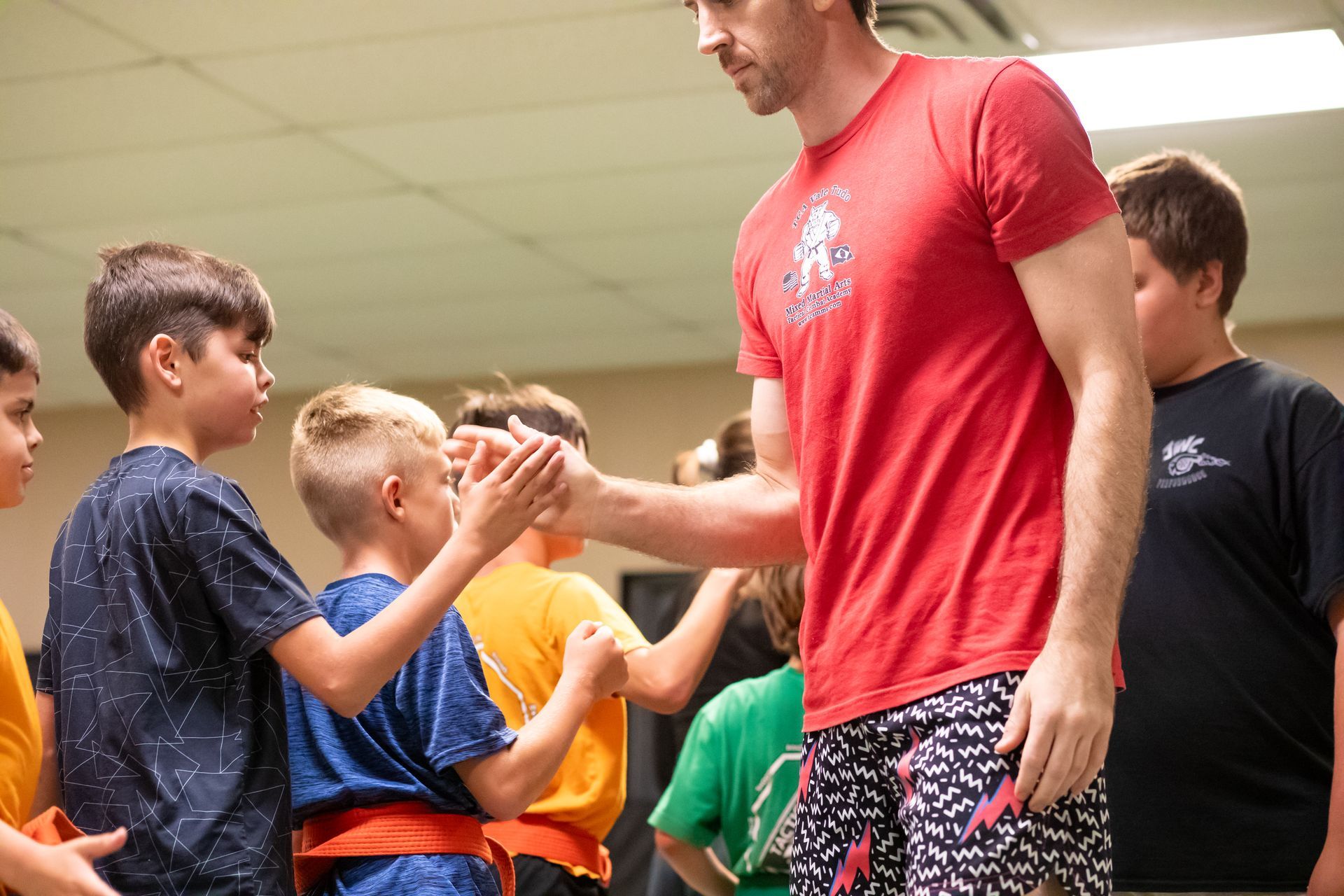
In class, we reinforce respect constantly. Partners are not opponents. They are teammates who help your child learn. That culture makes a difference.
How Grappling Builds Problem-Solving and Recovery After Setbacks
Resilience is built in the recovery, not the win. In jiu-jitsu-style training, kids spend a lot of time learning what to do when something does not go their way. They get stuck. They lose position. They try a move and it fails. Then we coach them to reset and solve the next piece.
This kind of learning teaches a specific mindset: mistakes are information. That is a life skill that shows up in school, sports, friendships, and eventually work. A 2026 scoping review of karate interventions reported repeated findings of improvements in resilience, self-efficacy, stress management, attention, and even academic-related outcomes, though the overall evidence base remains mixed and program-dependent. The takeaway for parents is that structure matters and consistency matters.
We build that structure into how we teach. Kids are not thrown into chaos. We explain the goal, demonstrate the movement, let kids practice in a guided way, then layer in a little more resistance as skills improve.
What Parents Usually Notice First
Sometimes parents expect the biggest changes to be physical, like strength or coordination. Those happen, of course. But the first changes we hear about are often behavioral and emotional, especially once a child has enough classes to feel oriented.
Here are a few common wins families mention after starting Youth Martial Arts in East Chambersburg:
• Better frustration tolerance when something is hard, like math homework or learning to ride a bike
• Stronger listening skills, especially when directions include multiple steps
• More confident body language, including eye contact, posture, and speaking clearly
• Healthier routines, because class days create rhythm in the week
• Improved social comfort, since kids practice partnering, taking turns, and showing respect
None of this happens overnight. But it also does not require years before you see a difference. Small improvements stack up fast when your child is training consistently.
What Makes a Youth Martial Arts Program Actually Work
Since outcomes vary by style, instructor, dosage, and teaching philosophy, we do not treat Youth Martial Arts like a magic button. We treat it like a craft. The details of the environment shape the results.
A strong program usually has:
Clear structure
Kids know what is coming next. Warm-ups, drills, partner practice, and wrap-up follow a rhythm. Predictability helps kids feel safe, and safety makes learning easier.
Age-appropriate coaching
A five-year-old and a twelve-year-old learn differently. We adjust language, expectations, and activities so kids stay engaged without being overwhelmed.
Positive discipline
We correct behavior without humiliating kids. Respect is required, and so is kindness. This creates the kind of training room where kids can take healthy risks.
Mindfulness baked into training
Current research trends, including summaries linking martial arts with mindfulness and social-emotional learning, point to the strongest developmental benefits when kids are taught to notice emotions and choose responses. We build that in through breathing cues, resets, and coached reflection.
Your Child’s First Month: What to Expect
Starting something new can be a little bumpy. That is normal. A child might be excited one day and unsure the next. Our job is to make the on-ramp welcoming while still holding standards.
In a typical first month, we aim to help your child:
1. Learn basic class routines like lining up, listening, and partnering safely
2. Practice foundational movements that improve balance, coordination, and body awareness
3. Understand simple positional concepts and how to stay composed under light pressure
4. Build comfort with appropriate contact in a supervised setting
5. Feel early wins through repetition and encouraging, specific feedback
Progress is not perfectly linear. Some kids pop quickly, some need a few weeks to feel comfortable. Either way, consistency is what creates results. We would rather see a child build steady habits than rush through skills.
Practical Parent Guide: What to Bring and How to Support Progress
Parents appreciate simple clarity, so here is the practical stuff. For Youth Martial Arts, your child should come in comfortable training clothes and bring a water bottle. If your child has long hair, tying it back helps. Showing up a few minutes early reduces stress for everyone, including you.
At home, you can support progress without turning training into another pressure point. Ask specific questions like, What was one thing you improved today or What was the hardest part and what did you do next. Those questions reinforce resilience. They also help your child connect effort to growth.
If your child is shy or anxious, that is okay. The broader martial arts research points toward potential benefits for confidence and coping skills, particularly in supportive environments. We keep introductions simple and help kids feel included without forcing them to be loud.
FAQ: Youth Martial Arts in East Chambersburg
Will Youth Martial Arts make my child more confident?
In many cases, yes. Structured programs are often associated with improved self-esteem and self-confidence, especially when kids experience steady progress and supportive coaching.
Can training help with bullying?
Evidence and expert discussions suggest it can, particularly when the program emphasizes respect, self-control, and strong instructor-student relationships. We focus on boundaries, awareness, and responsible choices.
What age should my child start?
There is no universal age that fits every child. What matters more is readiness for a structured class and a program that is age-appropriate and closely supervised. If you are unsure, we can help you decide based on your child’s temperament.
Is this only physical, or does it help mentally too?
Both. Youth Martial Arts involves movement, coordination, and fitness, but it also trains attention, emotional control, and stress management through coached repetition and reflection.
Take the Next Step
If you want an activity that builds real resilience, Youth Martial Arts is one of the most practical options because kids practice coping skills in motion, not just in theory. At Mason Dixon Jiu-Jitsu, we keep classes structured, safe, and beginner-friendly so your child can build confidence without feeling thrown into the deep end.
When you are ready, we will help you choose a starting point that fits your child’s age and personality, then guide progress with patient coaching and clear expectations at Mason Dixon Jiu-Jitsu.
Challenge yourself physically and mentally through consistent Jiu-Jitsu training at Mason Dixon Jiu-Jitsu.