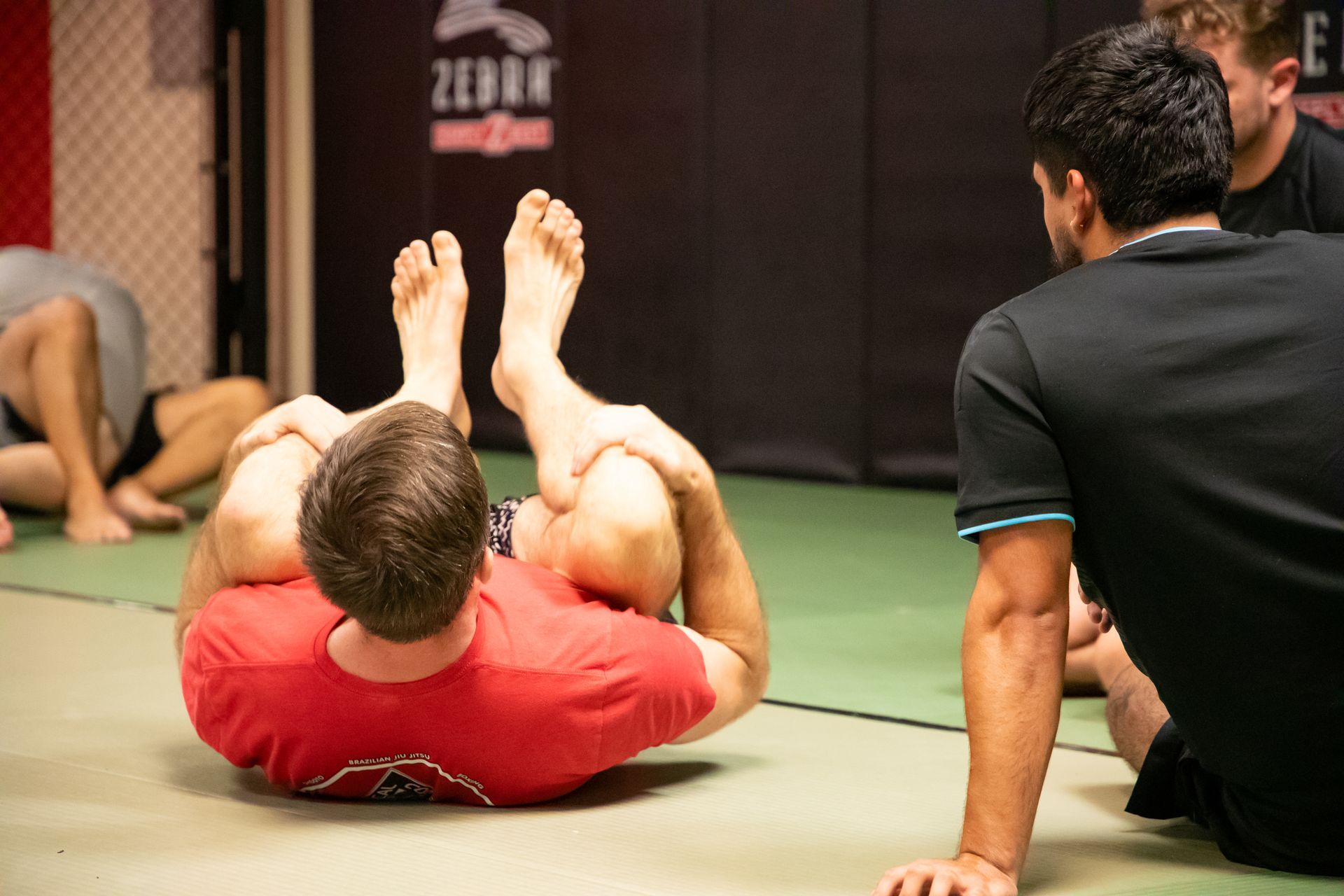
Adult Jiu-Jitsu gives you a full body workout that feels like learning a skill, not grinding through another routine.
If you want to get stronger and move better, most fitness advice points to lifting and stretching, then hoping it all “carries over” to real life. Adult Jiu-Jitsu is different: we build strength and flexibility while you’re solving physical problems with a partner, in real time. That’s why so many adults stick with it, because it stays interesting, even after the first few weeks.
Around East Chambersburg, we also see a common pattern: adults who are busy, a little stiff from desk time or long shifts, and tired of workouts that feel repetitive. Adult Jiu-Jitsu can be the missing piece because it develops practical athleticism. You pull, frame, rotate, balance, and breathe under pressure, and those demands add up fast.
This article breaks down how Adult Jiu-Jitsu in East Chambersburg supports strength and flexibility, what class actually looks like, and how we keep training progressive so you can build momentum without feeling wrecked.
What Adult Jiu-Jitsu actually trains (and why it feels different)
Adult Jiu-Jitsu is a grappling based practice where you learn to control distance, balance, posture, and position. Some days look technical and detail heavy. Other days feel like a chess match with your whole body involved. Either way, you’re not just exercising. You’re learning how to move.
Because you’re working with a live partner, your body has to produce force in messy, unpredictable angles. That’s where the “real” strength comes from: grip endurance, core stability, hip power, and the ability to stay composed while you’re being pushed, pulled, and off balanced.
The bonus is that you don’t need to show up in shape to start. We build capacity in layers. The first win is simply moving well and finishing class feeling better than when you walked in.
Adult Jiu-Jitsu in East Chambersburg: strength gains that come from leverage and repetition
Strength in Jiu-Jitsu doesn’t look like a single max lift. It’s repeated effort, often isometric, often awkward, and surprisingly specific. You might hold a frame to protect your space, keep posture while someone tries to break you down, or squeeze your knees to control a position while your upper body stays relaxed.
Over time, that adds up to strength that shows up outside the gym too: carrying, bracing, getting up off the floor, moving with control, and staying stable when life gets a little chaotic.
Grip and forearm endurance without a “grip workout”
In Adult Jiu-Jitsu, your hands and forearms work constantly: gripping sleeves or wrists, controlling head position, fighting for inside ties, and adjusting as your partner moves. That’s why many new students notice their forearms first. Not in a bodybuilder way, but in an endurance way, like your hands can “stay online” longer without giving out.
A 2024 study on female Brazilian Jiu-Jitsu practitioners included grip strength and flexibility among the tested qualities, which fits what we see on the mats: grip is a foundational limiter, and it improves through consistent practice, not random squeezing tools.
Upper back and shoulder stability that supports everyday posture
A lot of adults in Jiu-Jitsu in East Chambersburg come in with shoulders that feel tight and a back that feels tired from work. Grappling encourages strong scapular control because you’re constantly retracting, protracting, and stabilizing while you pull or frame.
This is not about muscling everything. It’s about learning to connect your shoulder blades to your ribcage and your ribcage to your hips. When that starts to click, your posture and “carry” often improve, even if you never think about posture directly.
Core strength that is more than crunches
Core in Jiu-Jitsu is bracing, rotating, and resisting rotation. You’ll feel it in your obliques during guard retention, in your trunk during bridges and hip escapes, and in your whole midsection when you’re keeping alignment under pressure.
We also like that this kind of core strength is honest. If your hips and ribs disconnect, positions fall apart. Technique becomes immediate feedback, which is a lot more useful than doing 100 reps and guessing if it helped.
Hips, glutes, and legs that learn to produce force from weird angles
Adult Jiu-Jitsu in East Chambersburg trains your lower body through squatting, kneeling, stepping, and driving with the hips. Even in groundwork, your legs are working: clamping, pushing, pummeling, elevating, and framing.
The hips are the engine in Jiu-Jitsu. When you learn to bridge with timing, shrimp with purpose, and stand up with control, you’re building strength that’s connected to movement, not just “strong in place.”
Flexibility and mobility: why Jiu-Jitsu improves how you move, not just how far you stretch
A lot of people assume you must be flexible before starting. We see the opposite: beginners get more mobile by practicing specific shapes repeatedly, with control, and with a reason. Flexibility in Jiu-Jitsu is rarely passive. It’s usable range of motion under balance and tension, which is closer to what your body needs day to day.
The same 2024 research that measured flexibility also noted relationships between flexibility and explosive force, which reinforces a practical point: mobility is not separate from performance. In Jiu-Jitsu, better mobility often means better options, smoother transitions, and less strain.
Where Adult Jiu-Jitsu typically improves mobility
Most adults feel changes in a few key areas first. Not overnight, but noticeably across consistent weeks.
• Hips: rotation for guard work, hip escapes, and maintaining angles
• Thoracic spine: rotation for framing, underhooks, and posture changes
• Shoulders: reaching, framing, and maintaining safe joint alignment
• Ankles and knees: kneeling, changing levels, technical stand ups, and base
• Neck and upper back: learning to carry tension safely and relax on cue
We coach these positions with progression. You don’t force the range. You earn it through repetition and better mechanics.
Functional flexibility: the difference you feel in daily life
One reason Adult Jiu-Jitsu feels so helpful is that mobility improvements show up in normal moments: getting up off the ground, turning and reaching without feeling stuck, moving your hips without your low back doing all the work.
If you sit a lot, Jiu-Jitsu tends to “wake up” the hips and mid back. If you stand all day, it often helps you learn to breathe and move with less stiffness. Either way, your flexibility becomes something you can use, not just measure.
Conditioning without the treadmill vibe
We treat conditioning as part of learning, not a separate punishment at the end. A typical class blends movement prep, technique, drilling, controlled rounds, and sometimes short conditioning blocks depending on the day’s plan.
The U.S. Army even describes Brazilian Jiu-Jitsu as exercise that can improve cardiovascular health, muscular strength, flexibility, and overall fitness. That matters because it highlights what we see in practice: you can scale intensity. You can train hard, but you can also train intelligently, which is what most adults actually need.
If you’re newer, your lungs often improve simply because you learn to breathe under pressure and relax when you can. That skill alone reduces fatigue. It also makes training feel more sustainable.
What a typical Adult Jiu-Jitsu class looks like in East Chambersburg
If you’ve never tried it, walking into your first class can feel like stepping into a new language. We keep the structure simple so you can focus on learning.
Here’s the rhythm you can expect most days:
1. Warm up with movements that show up in grappling, like hip escapes, bridges, and stand ups
2. Learn a small set of techniques with clear goals, like how to maintain posture or recover guard
3. Drill with a partner at a controlled pace, focusing on clean reps instead of rushing
4. Add resistance gradually, often starting from specific positions rather than free for all sparring
5. Cool down and reset, with time to ask questions and clarify details
This matters for strength and flexibility because you’re not just “working out.” You’re practicing movement patterns repeatedly, with feedback, until your body starts doing them naturally.
Safety and longevity: getting strong and flexible without getting reckless
Adult Jiu-Jitsu is a contact activity, so we never pretend it’s risk free. What we can do is train with a safety first culture: controlled tapping, respectful partners, and progression that matches where you are.
A 2025 cross sectional study of 881 practitioners reported an injury incidence of 5.5 injuries per 1,000 training hours and 55.9 per 1,000 matches, with many injuries occurring during training, especially sparring, and with knees and shoulders commonly affected. That research supports what responsible coaching already emphasizes: intensity and exposure matter.
How we approach safer progress in Adult Jiu-Jitsu
We keep beginners learning and improving by being specific about the behaviors that protect your body and your training time.
• We teach tapping and safe release mechanics early, so you know exactly when to stop and how to stop
• We use progressive sparring, often starting with positional rounds that limit chaos and reduce strain
• We warm up the neck, shoulders, hips, knees, and ankles because those areas take real load in grappling
• We match partners thoughtfully, especially when you’re new, returning after time off, or managing an old injury
• We encourage you to speak up about pain versus normal effort, and we adjust training when something feels off
Strength and flexibility gains mean nothing if you can’t train consistently. Longevity is the real goal.
Who Adult Jiu-Jitsu is for (and what you don’t need before starting)
Adult Jiu-Jitsu in East Chambersburg attracts all kinds of people: parents with tight schedules, shift workers, adults returning to exercise, and people who want training that keeps them mentally engaged.
You don’t need to be strong first. You get stronger by training. You don’t need to be flexible first. You get more mobile by practicing the positions, gradually, with coaching.
You also don’t need to want to compete. Many adults train for fitness, stress relief, self defense skill, and a sense of progress that feels real. Showing up twice a week and learning steadily is a win, and that is often how the biggest changes happen.
Frequently asked questions about strength and flexibility in Adult Jiu-Jitsu
Will I get stronger if I never lift weights?
You can build significant grip strength, pulling strength, core stability, and isometric strength through Jiu-Jitsu alone. If you enjoy strength training, it can complement Jiu-Jitsu, but it’s not required to see progress.
Can I start if I feel stiff or inflexible?
Yes. We start with fundamentals and work toward more demanding movements over time. Most mobility improvements come from consistent practice, not pushing extreme stretches on day one.
How often should I train to notice changes?
Two or three sessions per week is a realistic starting point for many adults. Consistency matters more than going all out once in a while.
What should I wear to class?
Most beginners can start in athletic clothing without zippers, buttons, or hard objects. If a gi is required for a specific class, we’ll help you understand what to bring and when.
Take the Next Step
If you want a program that builds real world strength and flexibility together, Adult Jiu-Jitsu gives you a clear path: learn fundamentals, practice them with partners, and add intensity only as your skill and conditioning catch up. The result is a kind of fitness that feels earned, because it comes from doing, not just from doing reps.
When you’re ready to try Adult Jiu-Jitsu in East Chambersburg, we’ll help you start comfortably and progress at a pace you can sustain. At Mason Dixon Jiu-Jitsu, our goal is for you to leave class feeling challenged, capable, and excited to come back.
Build strength, discipline, and confidence through Jiu-Jitsu training at Mason Dixon Jiu-Jitsu.