Jiu-Jitsu gives you a rare kind of calm: the kind you earn by focusing hard, breathing on purpose, and leaving the day’s noise on the mat.
Life in and around East Chambersburg can feel like a constant juggling act. Work schedules shift, family needs stack up, and the “I’ll deal with it later” stress has a way of showing up in your shoulders, your sleep, and your patience. In our experience, Jiu-Jitsu helps because it doesn’t just burn energy - it reorganizes it.
That’s the part many people don’t expect. Yes, you’ll get a great workout, but you’ll also practice staying steady under pressure. You learn how to breathe when you want to tense up, how to think when you’d normally rush, and how to reset your headspace when your day feels loud.
If you’re looking for Martial Arts in East Chambersburg that support both your body and your mind, our training is built to do exactly that - in a way that’s challenging, structured, and still welcoming for beginners.
Why stress relief from Jiu-Jitsu feels different than “just working out”
A run or a lifting session can be incredibly helpful, and we respect any movement that gets you feeling better. But Jiu-Jitsu creates a specific kind of focus: you can’t scroll, multitask, or mentally replay your to-do list while someone is actively trying to improve position on you. Your attention snaps into the present.
That presence is a big deal for stress relief. Research on Brazilian Jiu-Jitsu points to measurable mental-health benefits, including reduced anxiety in 87.5% of adult participants and improved mood in 96.9% after practice. Those numbers match what we hear all the time: people walk out of class feeling lighter, clearer, and more “back in their body.”
Physically, the exertion helps regulate stress chemistry. Intense, skill-based training supports endorphin release and can help calm the cortisol spike that comes with long workdays and constant responsibility. Mentally, the learning process demands problem-solving, which turns the brain away from rumination and toward action.
Balance isn’t just physical - it’s decision-making under pressure
When most people say “balance,” they picture not falling over. We do train physical balance, of course: posture, base, hip movement, and pressure are everything in grappling. But the bigger payoff is everyday balance - the ability to respond instead of react.
On the mats, you practice tiny moments of choice. Do you tense or do you frame and breathe? Do you try to explode out or do you create a smarter angle? Over time, that pattern carries into real life. When stress hits at work or home, you’ve rehearsed staying composed while your heart rate climbs.
That transfer is one reason martial arts research keeps highlighting resilience and life-skill carryover. In fact, twice-weekly martial arts training has been associated with resilience gains for the vast majority of participants. Consistency matters, and we’ll talk about that in a practical way later.
The “mental reset” effect: focus, breathing, and a quieter mind
One of our favorite moments is right after warmups, when the room settles. Breathing syncs, people start moving with purpose, and the day’s chaos fades into the background. It’s not magic. It’s just attention being used the way it was designed to be used: on one thing at a time.
Jiu-Jitsu forces your mind to prioritize what matters right now:
- Where is your base?
- Where are your frames?
- What is your opponent trying to build?
- What is the safest next step?
That kind of focus functions like mindfulness with feedback. You don’t have to “try to relax” as a concept. You practice it through reps, timing, and problem-solving, and your nervous system learns that calm is something you can create.
Neuroplasticity: why learning techniques improves everyday clarity
There’s a neuroscience angle that doesn’t get enough attention in local conversations about Martial Arts in East Chambersburg. When you learn new movement patterns, transitions, and sequences, you’re training your brain to adapt. That process supports neuroplasticity - your ability to build new pathways through practice.
In plain terms, you’re teaching your mind to:
- recognize patterns faster
- stay flexible under pressure
- improve recall and decision-making
- recover from mistakes without spiraling
This is why beginners often feel mentally tired after class even if they don’t feel “destroyed” physically. Your brain is working. And over time, that cognitive workload can translate into better focus at work, calmer communication at home, and less mental scatter.
Confidence and self-control that shows up outside the gym
Confidence in Jiu-Jitsu is different than hype. It’s quiet. You don’t get it from motivational speeches. You get it from surviving hard rounds, learning what you can handle, and realizing you can stay respectful and steady even when something is difficult.
Studies reflect that, too: about 87.6% of participants report improved confidence from BJJ training. We see that in small moments: students speaking up more at work, handling conflict without escalating, and walking around with posture that looks more grounded.
Self-control is part of it as well. You’re training with real resistance, but you still have to manage intensity, protect your partner, and make smart choices. That ability to regulate power translates directly into everyday patience.
A realistic path to stress relief: what to expect in your first month
Most people don’t need a dramatic overhaul. You need something you can actually keep doing. Here’s what a grounded first month can look like if your goal is everyday balance and stress relief through Jiu-Jitsu.
1. Week 1: You learn the room, the basic movements, and how to tap early and often
2. Week 2: You start recognizing positions and feeling less “lost” during drilling
3. Week 3: Your breathing improves because you realize tension wastes energy
4. Week 4: You notice better sleep, improved mood, and a calmer response to daily stress
Twice per week is a strong target for most adults. It’s enough frequency to build skill and resilience without making life feel like one more obligation. And yes, you’ll still be sore sometimes - but it’s usually the “good sore” that reminds you you’re building something.
Youth Martial Arts in East Chambersburg: structure, confidence, and calmer energy
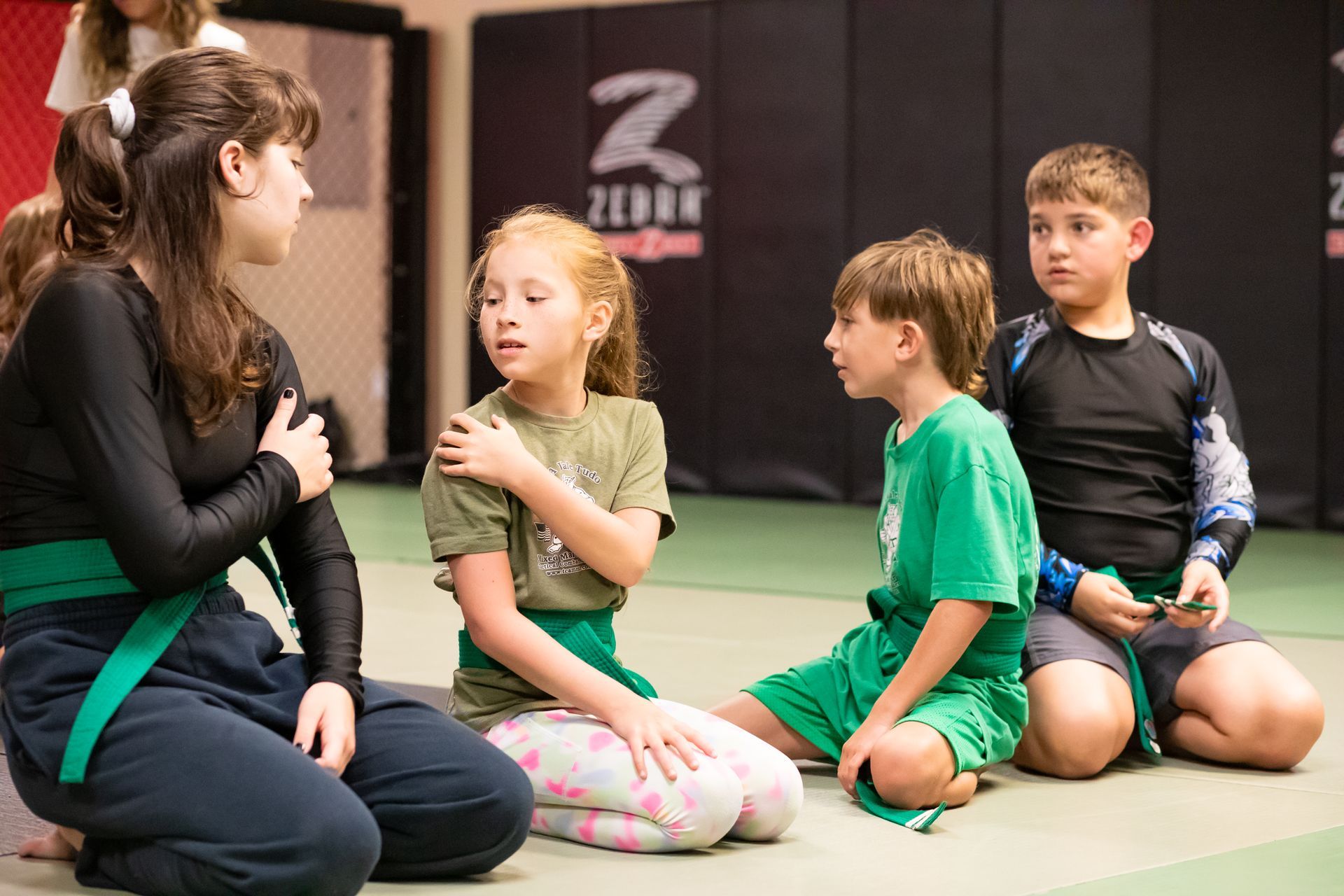
For parents, stress relief often looks like helping your child regulate emotions, build confidence, and find a positive place to belong. Youth Martial Arts in East Chambersburg should do more than teach moves. It should teach attention, respect, and self-management.
Youth programs in grappling-based martial arts show promising outcomes for hyperactivity reduction and improved emotional control. We also prioritize the social side: kids need community, and we keep the environment supportive while still holding standards. Research even notes that participants report increased respect and a stronger sense of community through martial arts training, and that’s not a small thing in a busy family schedule.
What kids often gain quickly:
- A routine that rewards consistency
- A safe way to test limits and learn boundaries
- Better focus through guided, goal-based drills
- Confidence built through effort, not comparison
- Respectful behavior practiced in real time, not just talked about
And for many families, there’s a quiet bonus: the ride home feels calmer. Not every day, sure. But often enough that you notice.
The community effect: why training partners matter for mental health
Stress thrives in isolation. One reason Jiu-Jitsu is showing up in mental-health conversations is because it combines exertion with belonging. You train next to people who are working through their own challenges, and you learn to cooperate even while you’re competing in drills.
That social connection has real weight. It can be especially meaningful for veterans, first responders, and anyone carrying high responsibility. Research on grappling and related martial arts points to substantial, sustained reductions in PTSD symptoms and decreased overall psychopathology in several populations. While we never treat training as a replacement for professional care, we do see how a consistent, respectful training room supports stability.
In day-to-day terms, community looks like:
- partners who notice when you’re improving
- coaches who help you adjust without judgment
- a place where you can work hard and still feel safe
- a shared language of effort that doesn’t require a long explanation
Everyday balance for working adults in East Chambersburg
East Chambersburg has plenty of people doing demanding work: physical labor, shift work, driving, warehouse roles, service industry hours, and the mental load that comes with keeping a household running. The stress isn’t imaginary, and it isn’t always solvable with “just relax.”
Jiu-Jitsu helps because it gives you a practice space for pressure. You learn how to carry your body efficiently, how to stay calm when you’re uncomfortable, and how to keep moving forward in small steps. That’s a useful skill set when your life requires steady effort.
We also keep our training progressive. You don’t have to be in top shape to start, and you don’t have to “prove” anything on day one. You show up, you learn, and you build.
Safety, pacing, and how we keep training sustainable
Real stress relief doesn’t come from getting smashed into the ground every class. It comes from training you can repeat. That’s why we emphasize fundamentals, controlled intensity, and a pace that matches your experience level.
We’ll guide you through how to tap, how to protect your neck and joints, and how to choose rounds that make sense for your body that day. Some days you’ll push hard. Some days you’ll focus on technique and breathe through it. Both are part of long-term progress.
If you’re coming in with anxiety, our approach matters even more. You should feel challenged, not overwhelmed. You should leave feeling like you did something difficult and handled it well.
Take the Next Step
Building a calmer, more balanced life usually starts with one practical habit you can keep. That’s what we aim to deliver every day: skill-based Jiu-Jitsu training that helps you regulate stress, strengthen your body, and think clearly under pressure.
When you’re ready, Mason Dixon Jiu-Jitsu is here in East Chambersburg with a program built for beginners, experienced grapplers, and families who want Youth Martial Arts in East Chambersburg that actually supports daily life. If you want details, the website and the class schedule make it easy to map out a starting point that fits your week.
Take the next step in your training by enrolling in a Jiu-Jitsu program at Mason Dixon Jiu-Jitsu.