
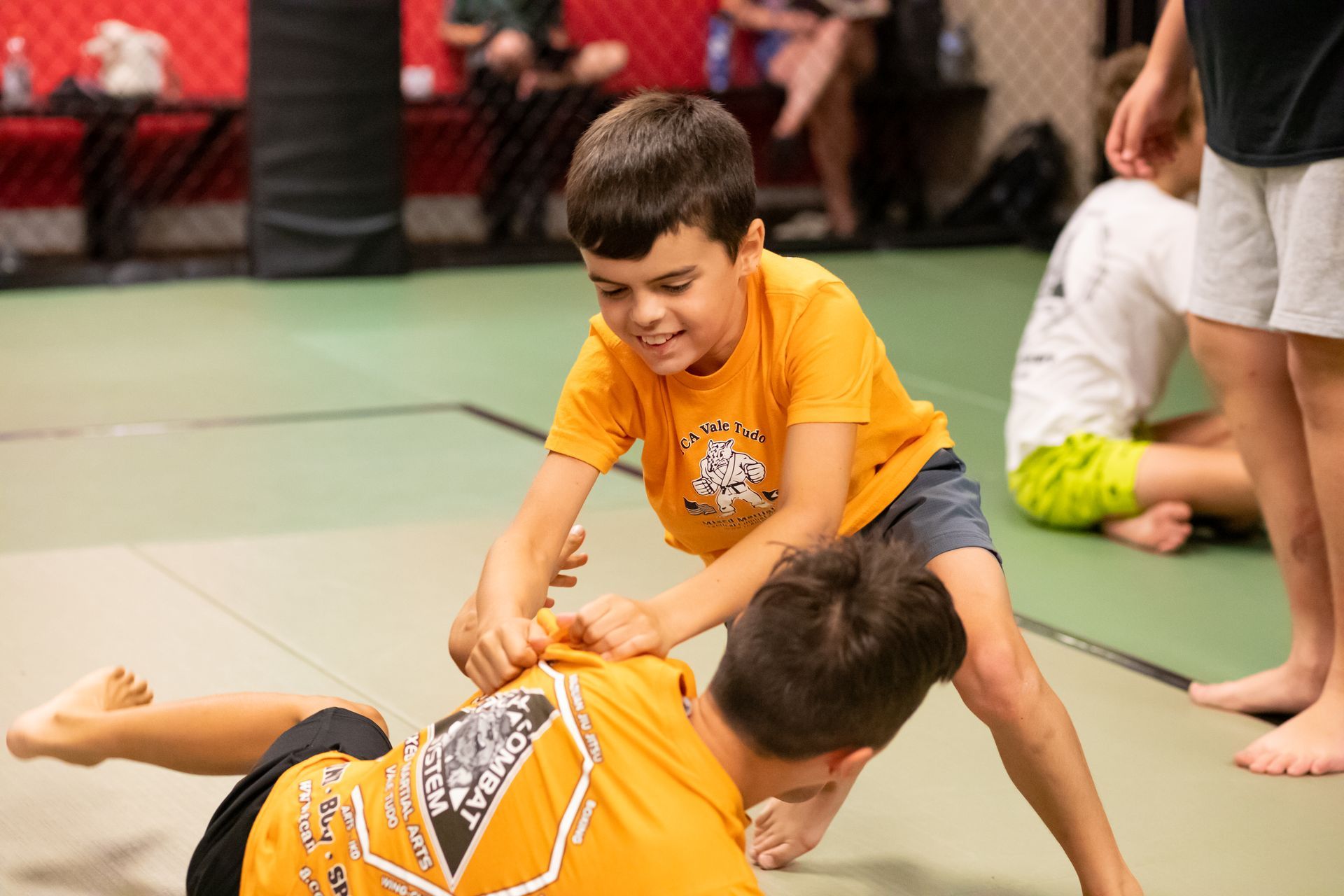
Jiu-Jitsu trains you to stay calm, solve problems, and keep showing up, even when life feels heavy.
In East Chambersburg, resilience is not an abstract idea. It is getting through long workdays, handling family stress without snapping, and finding healthy ways to reset when your mind is running hot. We see it every week: people come in for Jiu-Jitsu because they want to feel stronger, but what keeps them training is how much steadier daily life starts to feel.
There is a reason this happens. Research on Brazilian Jiu-Jitsu training shows adult practitioners commonly report higher confidence and lower anxiety, plus major improvements in mood and the ability to transfer life skills like discipline and focus into everyday routines. Consistent training also builds a real sense of belonging, which matters more than people expect until they feel it.
Below are the habits we coach in class that turn training into everyday resilience, especially for our neighbors looking for Martial Arts in East Chambersburg that actually carries over into real life.
Why resilience is a skill, not a personality trait
Resilience gets mislabeled as something you either have or you do not. In training, we treat it more like balance or cardio: it improves with the right reps, the right pace, and the right feedback.
Jiu-Jitsu is unusually effective here because it constantly presents you with small problems under pressure. You get pinned, you frame, you recover. You get stuck, you breathe, you try a new angle. Those moments look simple from the outside, but your brain is practicing a powerful loop: notice stress, stay present, choose a response.
Over time, that loop becomes familiar. And what is familiar becomes usable at work, at home, and in the middle of a stressful day when you would normally spiral.
Habit 1: Show up with a minimum schedule, then protect it
Resilience loves consistency. Not perfection, just consistency. A recent trend in martial arts research points to meaningful benefits with training twice per week, including improvements in focus and mental “rewiring” for staying on task. That frequency also fits real life for many adults in East Chambersburg who are balancing commutes, kids, and unpredictable schedules.
We encourage you to pick a realistic baseline, then guard it like an appointment. If you can do two classes per week, start there. If you can do one, do one. The key is that you keep the promise to yourself, because that promise quietly becomes your backbone.
A practical way to make it stick
Link training to something you already do. For example, if you always grocery shop on a certain day, train before or after. When Jiu-Jitsu becomes part of an existing routine, it stops feeling like “extra” and starts feeling normal.
Habit 2: Drill one small sequence until it feels boring
A lot of people want novelty, but resilience comes from basics you can rely on when you are tired. Drilling is where you build that reliability.
We like short, focused drilling blocks that let you repeat a movement pattern many times without burning you out. Studies on BJJ participation show high levels of life-skill transfer and improvements in mental flexibility. Drilling supports that because it teaches you to stay engaged even when progress feels slow, which is basically the same skill you need for hard seasons in everyday life.
If you are new, “boring” is often a good sign. It means your nervous system is calming down and the technique is starting to belong to you.
Habit 3: Practice breathing under pressure, on purpose
In live rounds, the body does what it has practiced. If you hold your breath when things get tight, you will feel panicky faster. If you can breathe, you can think.
This is one of the simplest resilience habits we coach, and it is one of the most transferable. Research on practitioners commonly reports reduced anxiety and improved mood, and breathing is a big part of why. When you learn to exhale while you are stuck in a bad position, you are training your body to stop treating discomfort like an emergency.
A simple cue we use
When you feel your shoulders creep up and your jaw tighten, try this:
- Exhale slowly through your nose
- Drop your shoulders
- Move one inch at a time, not ten
That “one inch” mindset shows up later when you are dealing with a stressful email, a tough conversation, or a long day that will not quit.
Habit 4: Treat tapping as a decision, not a defeat
Tapping is not failure. It is feedback. It is how you train hard without being reckless, and it is how you learn faster without getting stubborn.
When you tap early and clearly, you are practicing a grown-up form of resilience: recognizing reality and choosing a better next step. That might sound philosophical, but it is practical. People who build everyday resilience are not the ones who never struggle. They are the ones who notice the struggle sooner and respond sooner.
Jiu-Jitsu gives you a safe place to practice that response in real time, with clear boundaries and supportive coaching.
Habit 5: Keep a simple training log that tracks the right things
A training log is not just for athletes. It is for anyone who wants proof that effort is working, especially when motivation comes and goes.
We recommend tracking a few markers that actually connect to resilience:
1. What position felt stressful this week, and what did you try?
2. What is one small improvement you noticed, even if it is just staying calmer?
3. How many classes did you attend?
4. What do you want to repeat next week?
Research comparing rank levels in BJJ suggests that experience correlates with higher mental strength, self-control, and resilience. You do not need to chase belts to benefit from that trend, but you do need a way to see your progress. A log makes your progress visible.
Habit 6: Use positional sparring to build calm problem-solving
Hard rolling has value, but positional sparring is where many people build the most usable resilience. You start from a specific position, you solve one problem, you reset, and you repeat. That repetition builds confidence fast because you are not guessing what is happening.
It also reduces the mental clutter that can make new students feel overwhelmed. Instead of “everything at once,” you focus on “this one moment.” In daily life, that is a superpower.
Here is what positional training tends to teach you, even if you do not label it:
- You can be uncomfortable and still make good decisions
- You can lose a position and still recover
- You can stay patient and wait for the right opening
- You can handle intensity without escalating emotionally
Those are resilience skills, not just sport skills.
Habit 7: Build community on purpose, not by accident
One of the strongest patterns reported by practitioners is the sense of belonging and mutual respect that comes from training. That matters in East Chambersburg, where plenty of people feel isolated even when they are surrounded by others.
Community in Jiu-Jitsu is not forced. It is built through shared effort: learning names, asking questions, helping newer students, and showing respect during rounds. When you train in a room where people want you to improve, you start to expect that kind of environment elsewhere, too. You also become the person who helps create it.
If you are returning to fitness after a long break, or if you are navigating a stressful job, that supportive structure can be the difference between quitting and continuing.
Habit 8: Train smart for longevity, especially over 40
Resilience is not just mental. It is physical durability: joints that move well, a back that feels stable, lungs that recover quickly, and a body that handles stress without breaking down.
For adults over 40, we emphasize training that keeps you progressing without unnecessary wear:
- Warm-ups that prioritize hips, shoulders, and spine mobility
- Technical pacing that keeps rounds productive, not chaotic
- Controlled intensity, so you leave class feeling better, not wrecked
- Recovery habits that match your schedule and your life
Research trends highlight benefits for aging populations, including mobility, circulation, stress relief, and mental sharpness. We see it in real life when students start sleeping better, moving better, and feeling less “wired” after work.
Habit 9: Let your youth build resilience through structure and respectful challenge
If you are looking at Youth Martial Arts in East Chambersburg, you probably care about more than self-defense. You want your child to handle frustration, follow directions, and keep going when something is hard.
Jiu-Jitsu can be a strong fit because it rewards patience and technique. There is no striking, and the training environment is built around control and safety. Kids learn how to listen, how to partner, and how to try again after a mistake without melting down.
We also like how clearly the lessons transfer. Research on practitioners shows a very high rate of life-skill transfer into daily life, including discipline, focus, and respect. For youth, those skills show up in school routines, sports, and family life. And honestly, it is a relief for many parents to see their child gain confidence in a way that is earned, not just talked about.
What everyday resilience looks like after 10 to 12 weeks
You do not have to wait years to feel benefits. Research suggests measurable increases in resilience can appear after about 10 to 12 weeks of training, especially with consistent attendance.
In practical terms, many students notice changes like:
- Less anxiety when something unexpected happens
- Better emotional control during conflict
- More confidence in their body and decisions
- Improved mood and stress relief after class
- A stronger sense of routine and follow-through
That is why we treat Jiu-Jitsu as more than a workout. It is a practice for how you want to live.
Take the Next Step
If you want Martial Arts in East Chambersburg that builds calm, capable resilience, we have designed our classes around habits that carry over into the rest of your week. The best part is that you do not need to be in shape to start, and you do not need to be fearless, either. You just need a willingness to learn, breathe, and keep showing up.
When you are ready, Mason Dixon Jiu-Jitsu is here in East Chambersburg with a welcoming room, structured coaching, and a clear path from day one to long-term growth. You can use the website to see how our schedule and programs fit your life, then come experience a class for yourself.
Challenge yourself mentally and physically by joining a Jiu-Jitsu class at Mason Dixon Jiu-Jitsu.