Jiu-Jitsu turns ordinary stress, setbacks, and “not today” moments into a skill you can practice and keep.
Jiu-Jitsu is often described as a martial art, but in our East Chambersburg classes, we see it land closer to a life skill. It is a full-body workout, yes, but it is also a way to build the kind of steady grit that shows up when your week gets heavy, your schedule gets tight, or your confidence feels a little wobbly.
We work with adults, teens, and kids who want practical self-defense, better fitness, and a healthier mental reset. What surprises many new students is how quickly the wellness benefits show up, not as a dramatic overnight change, but as small wins that stack: better sleep, calmer focus, and a stronger sense of control in your own body.
If you have been searching Martial Arts in East Chambersburg with a real-world purpose, our goal is simple: give you training you can use, and a process you can stick with.
Why grit matters more than motivation
Motivation is great, but it comes and goes. Grit is what you lean on when motivation does not show up, which is most weekdays. In Jiu-Jitsu, we practice that on the mat in a controlled way: you try a skill, it does not work, you adjust, and you try again. That loop is the point.
In a typical class, you will feel moments of discomfort, then problem-solving, then progress. We keep the environment structured so you can push yourself without feeling thrown into chaos. Over time, that teaches a very grounded form of resilience, because you get used to being a beginner, being challenged, and still showing up.
And that “still showing up” piece translates. Many practitioners report that skills transfer into daily life at very high rates, including confidence and mood improvements. When you are practicing under pressure in a safe setting, your nervous system learns that stress is workable, not overwhelming.
The wellness side of Jiu-Jitsu: fitness that does not feel like a treadmill
A lot of people want to get in shape, but do not want another routine that feels like a chore. Jiu-Jitsu training gives you intensity with variety. You are learning, moving, and adapting, which makes the workout feel more like a craft than a grind.
Research and real-world observations align on the physical benefits: improved cardiovascular endurance, muscular strength, mobility, flexibility, and serious calorie burn. Intense sparring can reach roughly 500 calories in 30 minutes, and even drilling-only classes build conditioning because you are constantly bracing, moving, and recovering.
We also like the “functional” nature of it. You are not just lifting weight in one direction. You are learning to base, balance, grip, hip escape, bridge, and breathe under load. For many adults, that carries into fewer aches and better day-to-day movement.
What you are training physically, even on day one
You do not need to be in shape to start. We build your capacity as you go, and you will notice the benefits in places you did not expect. In our beginner-friendly approach, the physical gains tend to show up in a few clear buckets:
• Cardiovascular stamina that improves through rounds, pacing, and controlled breathing
• Stronger legs, core, and back from posture, base, and resistance in close range
• Mobility and flexibility from guard movement, hip work, and positional transitions
• Better coordination and balance from learning how to move with another person’s weight
• Practical body awareness that helps you recognize risky positions before they become injuries
That last one matters. Better body awareness and controlled force are big reasons grappling-based training has been associated with safer outcomes in high-stress environments, including documented injury reductions in police training contexts.
Everyday safety: why control beats chaos
Most people are not looking for a fight. You are looking for the confidence that if something goes wrong, you can protect yourself or your family without panicking. Jiu-Jitsu is uniquely suited to that because it teaches control: how to frame, how to create space, how to escape, and how to stabilize.
We do not train reckless intensity. We train progressive intensity. That means you learn positions and escapes first, then you pressure-test them in controlled sparring as your comfort and skill grow. The result is a calm kind of confidence, the kind you can carry without needing to prove anything.
This is also why many first responders and high-stress professionals are drawn to grappling for wellness. You get stress exposure with safety rails: clear rules, tapped-out boundaries, and partners who are there to learn, not to win at all costs.
Mental wellness: the quiet benefits people do not expect
The mental health side of training is real, and it tends to show up in a few practical ways: stress relief, mood improvement, and a sense of belonging. Studies have reported that 87.5% of practitioners experience reduced anxiety, and 96.9% report mood improvements. Those numbers make sense when you consider what happens in class.
You focus on one thing at a time. You breathe. You solve a physical puzzle with immediate feedback. And then you leave the mat feeling worked, not wired. That can be a powerful reset if your brain spends all day switching tabs between work, family logistics, and the general noise of life.
We also see confidence grow in a very earned way. Reported confidence boosts sit around 87.6% in some surveys, and that tracks with what we observe: you learn a skill, you test it safely, and you realize you can handle pressure. Confidence stops being a pep talk and becomes a record of evidence.
Grit is a skill, and you can measure it over time
One of the most encouraging trends in recent research is that resilience, self-control, and mental toughness correlate with training experience. More experienced students consistently score higher on grit and self-efficacy than brand-new students. That is not because those students were born tougher. It is because they practiced being uncomfortable and staying composed.
We like that because it makes progress feel concrete. Your belt matters less than your consistency, but the overall path gives you landmarks: you can look back and see how your reactions changed, how your breathing changed, and how quickly you recover after a bad round.
Youth Martial Arts in East Chambersburg: structure, confidence, and better focus
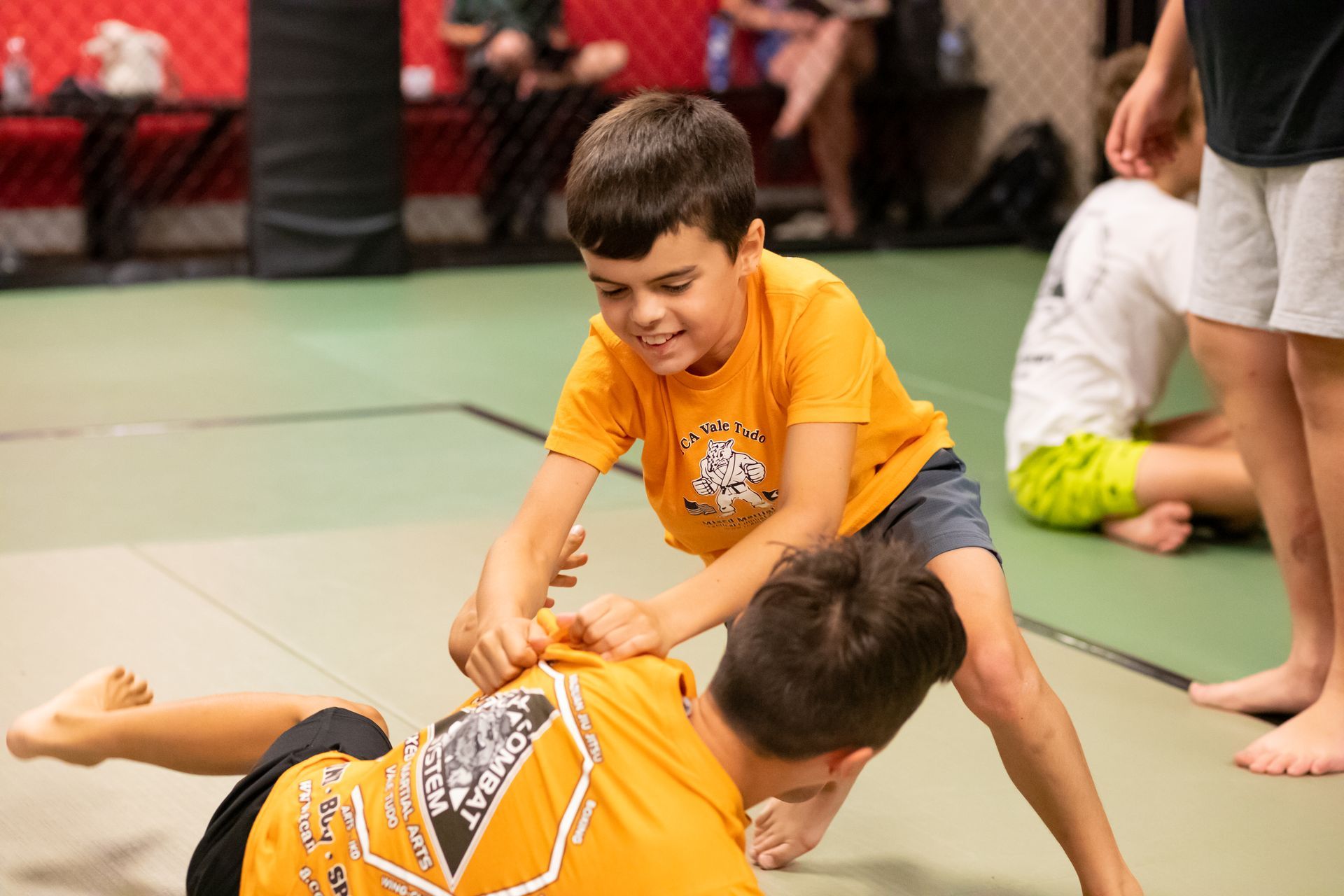
Parents often come to us for three reasons: confidence, discipline, and a healthy outlet. What we aim for is broader than “good behavior.” We want kids to learn emotional regulation, respectful communication, and what it feels like to work through frustration without quitting.
Youth Martial Arts in East Chambersburg should not be a babysitting service or a chaos sprint. We keep youth classes structured, goal-oriented, and age-appropriate, with clear boundaries and positive coaching. Over time, kids learn how to listen, how to practice a skill, and how to reset after mistakes, which is basically a blueprint for school and sports.
There is also growing support for the idea that youth programs can reduce emotional symptoms and hyperactivity after a consistent training period, such as 12 weeks. That does not mean every child becomes instantly calm, but it does mean the right routine can help kids feel more organized inside their own heads.
What parents usually notice first
Progress in kids often looks like small household moments, not dramatic speeches. After a few months, parents commonly tell us they notice:
• Better follow-through on tasks because “finish what you started” is practiced in class
• More respectful tone under stress, especially after being corrected or redirected
• Improved confidence in new situations, like trying out for a team or speaking up
• Healthier physical outlet that reduces restless energy and supports sleep routines
• A stronger sense of responsibility, because training only works if you show up
We also emphasize safety. Kids learn how to move with control, how to tap, and how to keep partners safe. That alone is a meaningful life lesson.
What a typical class looks like at our academy
People sometimes picture nonstop sparring. In reality, most classes are a mix of learning, drilling, and then controlled live rounds depending on level. We keep the flow consistent so you always know what you are walking into.
The usual structure
1. Warm-up with movement that supports Jiu-Jitsu mechanics, not random calisthenics
2. Technique instruction with clear details you can actually remember later
3. Partner drilling to build timing, balance, and confidence
4. Positional training or live rounds scaled to your experience and goals
5. Cool-down, quick notes, and a chance to ask questions without feeling rushed
That structure is part of how we build grit without burnout. You get enough intensity to grow, but enough guidance to stay safe and make progress.
Getting started: gear, pacing, and expectations that keep you consistent
You do not need a perfect plan. You need a start that is realistic. For most adults, training two to three times per week is a sweet spot. It gives you repetition without beating you up, and it fits real schedules.
For gear, we will guide you based on whether you start in a gi class or a no-gi class. Most beginners do fine with a simple setup: a gi or a rashguard and shorts, plus basic hygiene essentials. We keep the learning curve friendly, because your first goal is consistency, not looking like you have trained for ten years.
A small tip that helps: track how you feel before and after class for a month. Mood, sleep, stress, and energy are all part of wellness, and you will often see a pattern that reinforces why you keep training.
Martial Arts in East Chambersburg for the long run, not the quick fix
East Chambersburg has the same pressures as anywhere: busy workdays, family responsibilities, and the lingering stress many people still feel post-COVID. Add in statewide concerns like youth obesity rates around 20% in Pennsylvania, and it is clear why an engaging, repeatable fitness practice matters.
Jiu-Jitsu works long-term because it stays interesting. There is always another detail to learn and another puzzle to solve. That keeps people coming back, which is the real secret behind wellness: the best program is the one you will still be doing six months from now.
We also believe community matters. Many adults report a strong sense of community through training, and we intentionally build that through partner work, respectful culture, and an environment where you can be new without feeling exposed. You are not doing this alone, even though the progress is yours.
Take the Next Step
If you want training that strengthens your body, steadies your mind, and builds real everyday grit, we have built our classes around exactly that, and we do it right here in East Chambersburg. You can come in as a complete beginner, learn at a smart pace, and develop skills that support your fitness, confidence, and overall wellness.
When you are ready, Mason Dixon Jiu-Jitsu is where we put those principles into practice, with a clear class structure, supportive coaching, and programs for adults and Youth Martial Arts in East Chambersburg that prioritize growth you can actually feel.
Experience what makes Mason Dixon Jiu-Jitsu unique by joining a class today.