The fastest progress comes from simple fundamentals practiced consistently, with coaching that keeps you safe and motivated.
Jiu-Jitsu is growing fast across the U.S., and we feel that momentum here in East Chambersburg too, especially among families looking for a practical skill that also builds calm confidence. One reason it keeps expanding is that it works for a wide range of bodies and backgrounds: you can learn how to control distance, balance, and timing without needing to be the biggest or strongest person in the room.
We also know the first questions you might have are about safety, pace, and whether you will feel lost on day one. That is normal. Grappling has real contact, and injuries can happen in any sport, but smart structure makes a big difference. Our classes are built around progressive learning, clear coaching cues, and training partners who understand that good practice is controlled practice.
If you are exploring Martial Arts in East Chambersburg for fitness, self-defense, or a healthier routine, the best place to start is with a plan you can actually stick to. In this guide, we will walk you through practical tips that help you learn faster, train safer, and get more confident week by week.
Why Jiu-Jitsu fits East Chambersburg life
East Chambersburg is busy in the way real life is busy: work schedules, school events, family responsibilities, and the occasional week where everything runs late. Jiu-Jitsu works well in that environment because meaningful progress does not require marathon workouts. Two focused sessions per week can reshape your coordination, cardio, and decision-making under pressure, and that adds up quickly.
Another reason it fits is the mental reset. When you train, you cannot multitask. You are solving a physical puzzle in real time, and that single-point focus tends to carry over into the rest of your day. Many students notice better stress management, improved sleep, and a steadier sense of confidence, even before they feel “good” at the techniques.
Finally, Jiu-Jitsu has a unique way of teaching self-defense without relying on striking. You learn how to keep yourself safe through position, posture, and control. For many people in our community, that feels like a practical, responsible approach.
Start with the fundamentals that win matches and build real control
If you watch high-level tournaments, you will see trends that matter for everyday students too. Chokes consistently account for the majority of submissions at the elite level, and positional control is what makes those finishes possible. That does not mean we rush anyone into risky situations, but it does tell us where the “return on practice” is highest.
Tip 1: Treat positions like destinations, not speed bumps
A lot of beginners think the goal is to do moves. The real goal is to arrive in a stable position where you can breathe, think, and act. When you can hold a position, you can slow down a stronger opponent, protect yourself, and choose your next step instead of scrambling.
We focus heavily on the positions that give you the most control:
- Guard variations that let you manage distance and balance
- Side control and mount for top pressure and stability
- Back control because it offers strong safety and finishing options
- Escapes and frames so you can recover when you are underneath
Positions are your home base. Techniques are the roads between them.
Tip 2: Learn one escape per bad spot and make it reliable
Escapes are confidence builders. When you know how to get out, you stop panicking, and you start learning faster. We would rather see you do one escape with clean timing than ten different escapes that only work when your partner is “letting you.”
Pick a simple pattern, drill it, and track small improvements:
- Can you create a frame faster?
- Can you turn to your side sooner?
- Can you recover guard without holding your breath?
That is real progress you can feel.
Takedowns without the chaos: how we approach standing safely
Many people in East Chambersburg come in with zero wrestling background, and that is fine. Standing work can look intimidating, but it does not have to be. We introduce takedowns in a way that prioritizes posture, balance, and safe falling mechanics before intensity rises.
High-level competition data also supports the value of takedowns. Wrestling-style takedowns show up repeatedly as successful actions at the top of the sport, and the practical takeaway is simple: if you can decide where the fight goes, you gain options.
Tip 3: Make breakfalls and base your first “takedown” skill
Before you worry about shooting or throwing, learn how to land. Breakfalls and base are not glamorous, but they protect you. When you trust your ability to fall safely, your movement gets smoother, and your nerves settle down.
Tip 4: Choose two takedowns that match your body type
You do not need ten takedowns. You need a couple you can hit with good mechanics. We help you find options that fit your stance, flexibility, and comfort level, then we build up from there with drilling and controlled rounds.
Why gi training matters, even if you like no-gi
We love seeing students explore both gi and no-gi, but there is a reason gi training stays a powerful foundation. The gi slows things down just enough for you to feel where leverage is working. You also get clearer feedback: grips either hold or they do not, posture either breaks or it does not.
At elite events, athletes with gi backgrounds have shown strong performance even in no-gi rulesets. For everyday students, the takeaway is that gi classes often sharpen fundamentals: posture, grip fighting, escapes, and pressure. Those skills translate.
Tip 5: Focus on grips as a skill, not a battle
New students tend to squeeze grips until their forearms burn out. Instead, think of grips as steering wheels. Grip with purpose, move your feet, and let your body position do the heavy lifting. When you learn to re-grip calmly, you stop gassing out so fast.
Training smart: how to reduce injury risk and keep momentum
Injury rates in grappling are real, with many athletes reporting at least one injury in a six-month period. The encouraging part is that training structure and decision-making can lower your risk, especially when you are new.
Our goal is simple: you should leave class feeling worked, not wrecked. Progress that you can repeat beats intensity that you can only survive.
Tip 6: Use the “two notches down” rule for sparring
When you roll, aim for about two notches below your maximum intensity. You will still learn timing, pressure, and problem-solving, but you will have enough control to protect yourself and your partner. If your breathing is wild and your limbs are flailing, that is usually a sign to slow down and simplify.
Tip 7: Tap early, reset fast, learn more
Tapping is not losing. It is how you stay healthy long enough to get good. Tap early, reset, and ask a quick question if you need to. The room improves when everyone treats training as practice, not a contest.
Tip 8: Build consistency before adding extra days
If you are brand new, start with two classes per week. Let your joints adapt, let your cardio catch up, and let the techniques settle in. After a few months, adding a third day can feel amazing, but only if your recovery is solid.
Youth Martial Arts in East Chambersburg: confidence that shows up at school and home
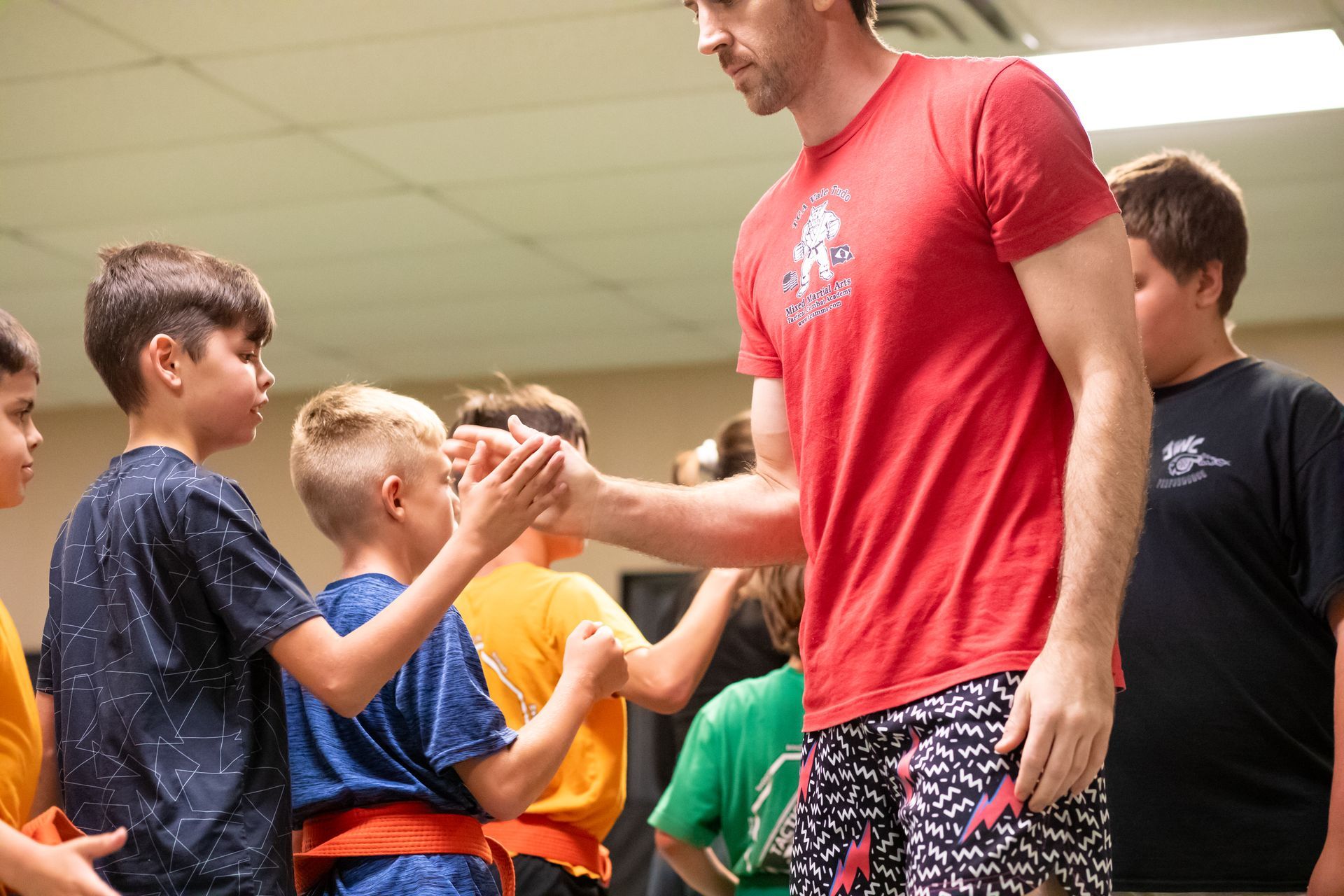
When parents ask us about Youth Martial Arts in East Chambersburg, the conversation usually circles back to confidence, focus, and anti-bullying. Jiu-Jitsu helps kids learn boundaries and body control in a structured environment where respect is non-negotiable.
We also keep it age-appropriate. Kids need clear rules, upbeat coaching, and a way to channel energy without turning class into chaos. You will see a lot of skill-building games, partner drills that teach cooperation, and simple techniques that reinforce posture and balance.
What we want your child to learn first
We prioritize skills that improve safety and decision-making:
- How to fall and get back up safely
- How to hold base and keep balance when pushed or pulled
- How to escape common pins with calm, repeatable movements
- How to use voice, posture, and awareness to avoid trouble early
- How to be a good partner, because character matters as much as technique
Over time, kids start carrying themselves differently. It is subtle at first, then it becomes obvious.
A practical weekly plan you can follow
Motivation is great, but a plan is better. If your schedule is tight, we recommend building around consistency and recovery. Here is a straightforward approach many students use to progress without burning out:
1. Train two days per week for the first eight weeks to learn core positions and basic escapes.
2. Add a short mobility routine at home twice per week, focusing on hips, shoulders, and neck comfort.
3. Keep a small notes list after class with two techniques and one question to revisit next time.
4. Roll with control and pick one goal per round, like “recover guard” or “maintain posture.”
5. Reassess at three months and consider adding a third class if your body feels good.
This kind of structure keeps you improving even when life gets hectic.
What to expect in your first classes
Your first classes should feel challenging but welcoming. We will help you learn the basic movements, explain class etiquette, and pair you with training partners who understand what it is like to be new. You do not need to be in shape to start. Getting in shape is part of the process, and it happens faster when you feel comfortable showing up consistently.
Gear questions come up a lot too. If you are starting in the gi, you will want a gi that fits and a belt, and you will need basic hygiene items like nail clippers and a clean training bag. If you are starting no-gi, a rash guard and grappling shorts are a good start. If you are unsure, ask us before you buy a bunch of stuff. Keeping it simple is usually the best move.
Take the Next Step
If you want a skill you can build for years, Jiu-Jitsu rewards steady effort, good coaching, and a room where you can train hard without feeling out of control. That is exactly what we aim to provide every day at Mason Dixon Jiu-Jitsu, here in East Chambersburg.
Check the website, look over the program options, and pick a schedule you can commit to without stress. When you train consistently, confidence stops being an idea and starts becoming something you can feel in your posture, your decisions, and the way you handle pressure at Mason Dixon Jiu-Jitsu.
Train with intention and see steady improvement by joining a Jiu-Jitsu class at Mason Dixon Jiu-Jitsu.