Jiu-Jitsu turns everyday training into a practical lab for communication, confidence, and shared responsibility.
In East Chambersburg, families often look for an activity that does more than burn energy after school. You want something that teaches kids and teens how to handle pressure, work with others, and make good decisions when nobody is handing out a script. That is where Jiu-Jitsu stands out, because progress on the mats depends on how you show up as a training partner and as a problem-solver.
We see leadership and teamwork grow in real time during class. Not in a cheesy, motivational-poster way, but through small moments: a student who helps a newer partner tie a belt, a teen who stays calm after a tough round, or a beginner who learns to speak up and ask questions. Over time, those moments stack up into real life skills you can take into school, sports, work, and relationships.
This article breaks down how our training in Martial Arts in East Chambersburg builds leaders, strengthens teamwork, and gives you a community where growth is expected and supported.
Why leadership shows up so naturally on the mats
Leadership is not only about being loud or in charge. In Jiu-Jitsu, leadership is usually quieter and more practical. It looks like staying composed when something is not working, adjusting your plan, and treating your partner with respect even when you are tired.
Because training is hands-on and interactive, you get constant feedback. If you rush, you get off-balance. If you ignore details, you leave openings. That kind of immediate cause-and-effect teaches responsibility faster than a lecture ever could. We build leadership by making sure students understand the why behind what we do, then giving them space to practice those choices under controlled pressure.
Mentorship is built into the room
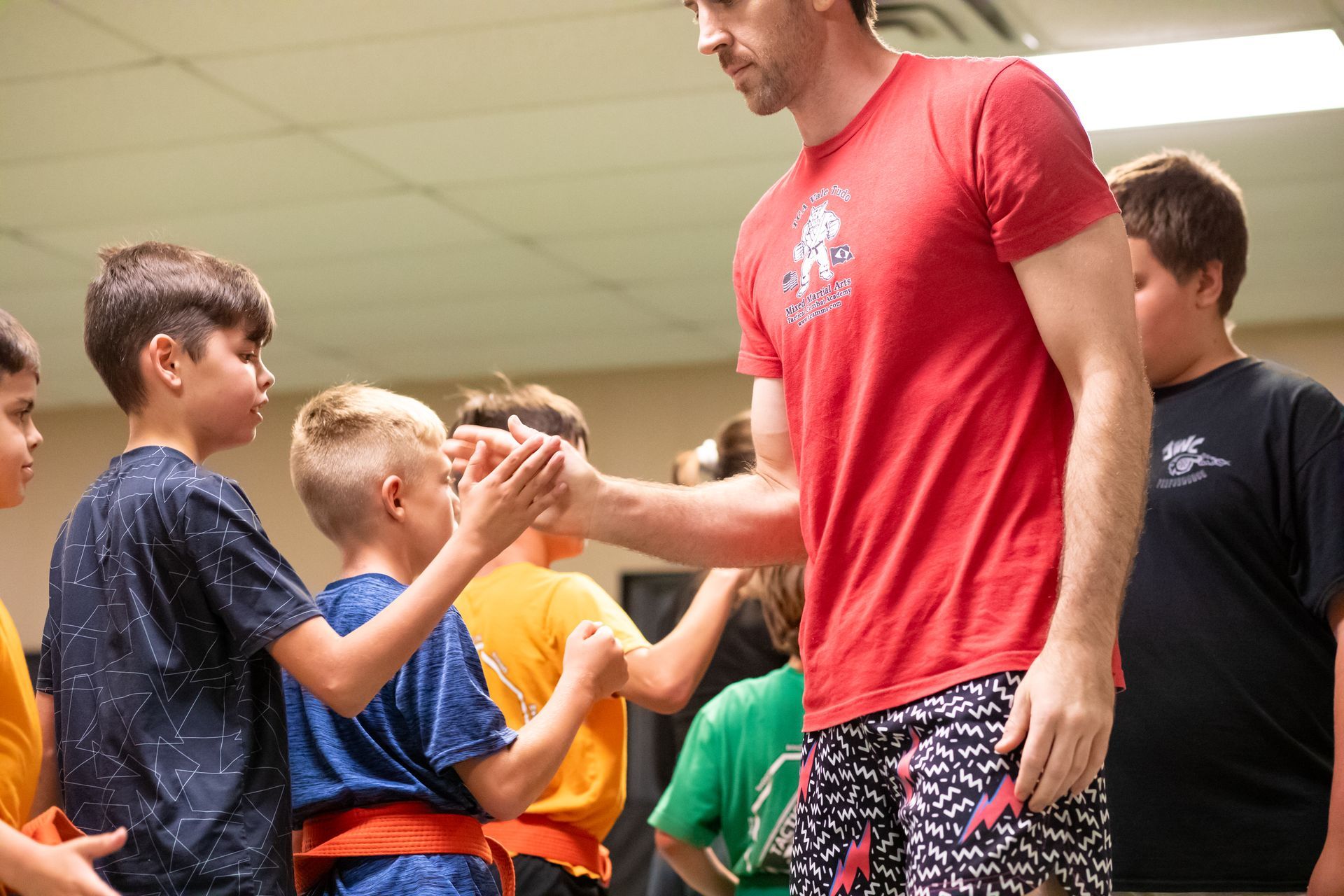
One of the fastest ways to develop leadership is to help someone else improve. In our classes, students naturally start mentoring as their comfort grows. Sometimes it is a higher-ranked student walking a beginner through a drill. Sometimes it is a teen encouraging a younger student who is frustrated. The point is simple: when you can explain a skill calmly and clearly, you start acting like a leader.
We also keep mentorship safe and structured. Nobody is expected to be perfect, and nobody is allowed to be careless. The tone matters. When students learn to correct a teammate without embarrassment or ego, that is a leadership win that carries over into group projects, sports teams, and eventually the workplace.
Decision-making under pressure becomes a habit
Jiu-Jitsu is often called human chess for a reason. You are constantly making decisions: Do you frame or shrimp? Do you posture or angle off? Do you slow down and stabilize, or do you move now and risk a scramble?
We train those decisions with progressive resistance. You learn technique first, then you apply it in drills, then you test it in sparring where everything is moving. That progression teaches students to think while tired, adapt to change, and stay calm when the first plan fails. In leadership terms, that is strategic thinking and stress management with real consequences, just without the real danger.
How teamwork develops through partner training
Teamwork in Jiu-Jitsu is not just a nice idea. It is required. You cannot train without a partner, and you cannot improve without trust. Even when you spar, you are cooperating on a deeper level by keeping each other safe and giving honest effort.
In Youth Martial Arts in East Chambersburg, teamwork is especially important because kids are still learning how to communicate, share space, and recover from mistakes without melting down. We use the structure of class to teach those skills in a steady, repeatable way.
Trust is earned through consistency
Trust is not a speech we give. It is built through routines: tapping early, respecting the tap, listening to coaching, and controlling intensity. When students learn that their partner will let go when they tap, anxiety drops and learning goes up. That creates a positive loop where students feel safer trying new things.
Over time, this kind of trust becomes social confidence. You start believing you can handle challenging situations because you have already handled hundreds of small ones in training, with teammates who cared enough to keep it productive.
Communication is more than talking
Some communication in Jiu-Jitsu is verbal, like asking, Can you show that again? or letting a partner know a grip is too tight. A lot is non-verbal: pressure, posture, timing, and body awareness. Students learn to read cues quickly, adjust without getting defensive, and give feedback in a respectful way.
That skill transfers cleanly to team environments. If your child plays a sport, works in groups at school, or just wants to navigate friendships better, learning to communicate clearly and calmly is a big deal.
The leadership skills we build on purpose
We do not leave leadership to chance. Our coaching approach is designed so that students practice responsibility, composure, and initiative in realistic ways. The mats are a controlled environment, but the lessons feel real because your choices matter in every round.
Here are a few leadership traits we intentionally reinforce in class:
• Accountability: You learn to own your position, your timing, and your reactions, then fix what needs fixing.
• Patience: Progress takes repetition, and we teach students how to stay steady instead of quitting when it gets hard.
• Humility with confidence: You can be proud of progress while staying open to correction and new ideas.
• Emotional control: Getting stuck happens, but we coach students to breathe, reset, and keep thinking.
• Respectful assertiveness: You learn to take initiative, ask for help, and advocate for safety without fear.
These are not abstract concepts. You can watch them grow week by week, especially in students who stick with training through the awkward beginner phase.
Teamwork skills that show up outside the gym
Teamwork is not only about being friendly. It is about being reliable, adaptable, and useful in a group. Jiu-Jitsu develops those traits because every class has shared structure: warmups, technique, partner drills, and live rounds. Students learn to follow instructions, coordinate with partners, and contribute to the pace of the room.
We also see teamwork growth in how students celebrate each other. When someone hits a technique for the first time, the room notices. When a student comes back after time off, we make space and help them rebuild. That sense of belonging is not fluffy. It is a real support system that makes hard work sustainable.
A simple example from a typical week
You might start a week working on a guard pass. Early rounds feel messy. By midweek, a student figures out how to control the hips better and shares that detail with a partner. Another student notices they keep getting off-balance and asks for feedback. The next class, the same group drills with sharper timing, and everybody improves faster because the room is collaborating.
That is teamwork in action: shared learning, honest effort, and a culture where helping a partner is part of your own progress.
Why Jiu-Jitsu works especially well for kids and teens
Kids and teens are still building identity, confidence, and emotional regulation. Jiu-Jitsu gives them a place where effort is visible and improvement is measurable. You cannot fake consistent training. You show up, you learn, you struggle a bit, and you get better. That process builds real self-trust.
Because technique matters more than size, the art is also surprisingly inclusive. Smaller students learn leverage and positioning instead of relying on strength. More athletic students learn control, pacing, and patience. Everyone gets challenged, which helps prevent the social pecking order that sometimes shows up in youth activities.
What parents tend to notice first
Parents often tell us the first changes show up at home and school, not just in physical ability. The biggest early wins are usually behavioral: better listening, more follow-through, and calmer responses when something does not go their way.
That makes sense. Our classes have clear expectations, consistent structure, and immediate feedback. Students learn that good choices lead to better outcomes, and that lesson is hard to unlearn in a good way.
How our class structure reinforces leadership and teamwork
We keep training organized so you always know what you are working on and why. That structure helps beginners feel oriented and helps experienced students stay sharp.
A typical class flow looks like this:
1. Warmup with movement patterns that support balance, mobility, and safe falling
2. Technique instruction with clear details and common mistakes to avoid
3. Partner drilling to build timing, control, and communication
4. Positional training to solve problems in smaller, focused scenarios
5. Live sparring with safety standards, coaching, and appropriate intensity
This format creates repeated opportunities for leadership. Students learn to be good partners during drilling, to stay composed in positional training, and to manage energy and attitude during sparring. If you are a parent watching from the side, it is pretty obvious when a student starts taking responsibility for their own growth.
Safety, confidence, and the mindset that supports both
Leadership and teamwork only flourish in an environment that feels safe. We take that seriously. We coach tapping early, respecting boundaries, and choosing appropriate intensity for the partner in front of you. Confidence built the right way is calm and controlled, not reckless.
We also teach students how to handle frustration. Getting stuck is part of the art. The goal is not to avoid discomfort, but to respond to it with thoughtfulness: breathe, frame, make space, and try again. That mental toughness is one of the most valuable takeaways from Martial Arts in East Chambersburg, because life does not always cooperate, either.
Take the Next Step
Leadership and teamwork do not appear overnight, but Jiu-Jitsu gives you a clear path to develop both through consistent practice, real accountability, and supportive training partners. If you want an activity in East Chambersburg that builds skill and character at the same time, our programs are designed to help you grow in a way you can actually feel week to week.
When you are ready to train in a community that values respect, resilience, and steady progress, we would love to welcome you to Mason Dixon Jiu-Jitsu and help you get started with a plan that fits your goals.
Become part of a respectful and motivated Jiu-Jitsu community at Mason Dixon Jiu-Jitsu.