
Jiu-Jitsu turns ordinary stress into a skill you can train, measure, and improve week after week.
Grit sounds like something you either have or you do not, but we see the opposite on the mats every day. In Jiu-Jitsu, progress is built through small, repeatable choices: showing up when you are tired, trying again after a tough round, and staying calm long enough to solve a problem. Research on Brazilian Jiu-Jitsu backs that up, with training linked to higher grit, resilience, self-control, and confidence over time.
Here in East Chambersburg, that matters. Life can feel like a steady stream of demands: school pressure, long workdays, family schedules, and the kind of stress that does not always have a neat off switch. Our classes give you a place to practice staying composed under pressure, then carrying that steadiness back into the rest of your week.
When you read about grit, it is easy to picture motivation speeches. We keep it practical. You learn how to breathe when you are pinned, how to keep moving when a plan fails, and how to reset after mistakes without spiraling. That is everyday grit, trained in real time.
What grit looks like on the mat, and why it transfers off the mat
Grit is not just stubbornness. In training, we define it as consistent effort, smart perseverance, and the ability to stay present even when the outcome is uncertain. That is why experienced practitioners tend to score higher in measures like perseverance and mental toughness, with higher ranks often showing stronger grit than beginners.
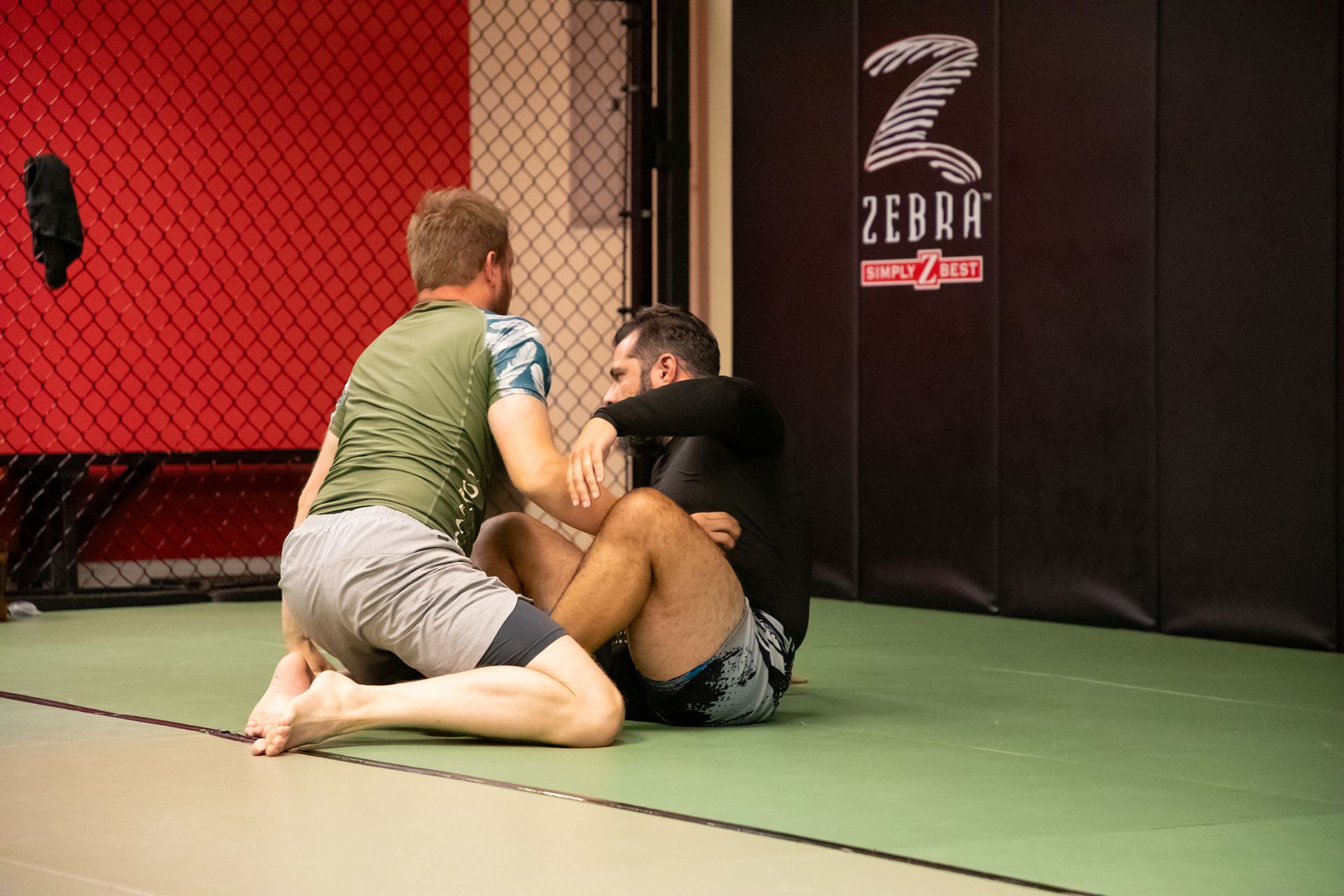
On the mat, the feedback is immediate. If you rush, you gas out. If you freeze, you get stuck. If you stay calm and make small adjustments, you escape. That loop builds a kind of problem-solving resilience that shows up later at work, at school, and at home, because you have rehearsed the habit of staying effective under pressure instead of reacting.
East Chambersburg has a blue-collar heartbeat. Many of us juggle physical jobs, early mornings, and responsibilities that do not pause just because we feel stressed. Jiu-Jitsu fits that reality because it rewards steady consistency more than talent. You do not need to be the strongest person in the room. You need to keep learning.
The science behind why Jiu-Jitsu builds mental toughness
We like motivation, but we trust results more. Studies on BJJ show training is associated with improvements in mental strength, self-efficacy, self-control, and life satisfaction, with advanced practitioners often reporting higher levels than newer students. That lines up with what we observe: the longer you train, the more you believe you can handle hard things, because you have proof.
Mental health outcomes are a big part of the conversation now, and for good reason. Research reports reductions in anxiety, depression, and PTSD symptoms among practitioners, and recent trends from 2021 to 2024 highlight BJJ as a promising support in psychosocial therapy settings, including sustained PTSD symptom reduction in some veteran and first responder groups. We are not a clinic, and we do not treat diagnoses in class, but we do provide something many people are missing: structured challenge, supportive coaching, and a consistent community.
One study-based stat that sticks with us is the social side: practitioners reporting a sense of community at extremely high rates. That matters because resilience is not only internal. It is also knowing you have a place where people notice when you show up and where effort is respected.
Why East Chambersburg needs a reliable outlet for stress and confidence
Stress here does not always look dramatic. Sometimes it is just constant: overtime, bills, kids needing rides, tests, phones buzzing, and never quite feeling caught up. Without a healthy outlet, stress tends to leak into everything, including sleep, patience, and focus.
Our training gives you a scheduled reset. You walk in, you warm up, you learn a technique, and you pressure-test it in a controlled way. For many students, that hour is one of the few times all week where attention narrows to one task: solve the problem in front of you. There is something grounding about that, even when it is challenging.
Confidence grows in a similar way. Research shows a large percentage of adult practitioners report increased confidence, and we see why. When you learn to escape bad positions and keep thinking under pressure, you start trusting your ability to adapt. That is a different kind of confidence than hype. It is quieter, and it sticks.
How our Jiu-Jitsu classes actually train everyday grit
A good class does not just make you tired. It teaches you a process for handling resistance. We build grit by combining technical learning with realistic practice, then scaling intensity so you can grow without burning out.
Pressure training without chaos
Grit gets built when training is hard enough to matter but structured enough to stay safe. We coach you through rounds so you learn how to manage pace, breathing, and decision-making. You do not need to “win” in practice. You need to learn how to keep working when things are not going your way.
Belt progression as a grit roadmap
Rank is not just a color. It is a record of consistency, skill development, and composure under pressure. Studies show higher ranks tend to correlate with stronger grit and resilience measures, and that makes sense because rank reflects time spent learning how to stay steady through setbacks.
In plain terms, your first months might be about simply not panicking. Later, you learn to build sequences. Over time, you start seeing patterns earlier and making better choices with less effort. That is grit becoming a skill, not a mood.
Youth Martial Arts in East Chambersburg: grit for kids who need focus and follow-through
Parents ask about focus more than almost anything else, and we get it. Kids are dealing with packed schedules, social pressure, and screens that pull attention in a hundred directions. Youth Martial Arts in East Chambersburg should do more than burn energy. It should teach attention control, emotional regulation, and respect in a way kids can actually practice.
Research trends show growing demand for youth programs that help with hyperactivity and externalizing behaviors, and studies indicate training can support self-control and emotional regulation without increasing aggression differences across ranks. That is important. Our goal is not to create “tough kids” who lash out. Our goal is to help your child become harder to rattle and quicker to reset.
In youth classes, grit often looks like:
• Trying a technique again after it did not work the first time
• Listening closely, then applying corrections without taking it personally
• Learning how to lose a position safely, then escape calmly
• Building respect through structure, not fear
• Taking responsibility for effort, even on off days
That last one is big. Kids start realizing effort is a choice. That lesson pays off in schoolwork, sports, and friendships.
Martial Arts in East Chambersburg for adults: stress relief you can measure
Many adults come in looking for fitness, and stay for what happens mentally. Jiu-Jitsu is a full-body workout, sure, but it is also a kind of moving puzzle. You are using your whole body while thinking two steps ahead, and that combination pulls you out of the mental loop of the day.
Physically, BJJ training is associated with improvements in cardiovascular health, muscular strength, endurance, and even support for injury rehabilitation when training is scaled appropriately. We emphasize smart training because the goal is not to get wrecked in week one. The goal is to build a practice you can keep for years.
If you want a simple way to think about it, adult grit training in Jiu-Jitsu usually develops in three layers:
1. Tolerance for discomfort, learning to stay calm when your lungs are working
2. Problem-solving under pressure, making decisions while tired
3. Identity-level consistency, showing up because it is part of who you are
That third layer is where everyday grit really shows up. You start handling hard conversations better. You stop quitting on tasks halfway through. You find yourself doing the next right thing more often, even when motivation is low.
A realistic time commitment, and what results you can expect
People want to know how fast grit builds. The honest answer is: you will feel benefits quickly, but the deeper changes come from consistency. Research suggests benefits scale with training volume, with some gains in self-control showing up in the shorter term and longer-term improvements in resilience and perseverance developing with experience.
For most new students, we recommend starting with 2 to 3 classes per week. That is enough frequency to learn steadily without feeling like training has taken over your life. If you can only make it twice a week, that is still real progress. If you train more, you will improve faster, but only if recovery and stress levels stay manageable.
What you might notice first
In the first few weeks, many students report better mood, improved energy, and a sense of accomplishment after class. Confidence often grows early too, because you are learning practical solutions and seeing yourself improve.
What tends to take longer
The deeper grit markers show up later: staying calm when you are behind, keeping a steady pace through fatigue, and responding to setbacks with curiosity instead of frustration. Those are learned skills, and they compound over months.
Common questions we hear about safety, confidence, and getting started
Does Jiu-Jitsu really build grit for everyday life?
Yes. Research shows experience and higher ranks correlate with increased grit and perseverance, and we see the transfer constantly. You learn to keep thinking under stress, and that habit follows you into work and school.
Is it safe for kids?
Safety is built into how we run class: supervision, clear rules, controlled intensity, and age-appropriate drilling. Studies also support youth training for confidence and focus, without meaningful increases in aggression differences across ranks.
What if I am out of shape or nervous?
That is normal. We meet you where you are. You can take breaks, ask questions, and build up at a pace that fits your body and your schedule. Most people are surprised by how quickly nerves settle once class starts.
Will this help my mental health?
Many practitioners report reduced anxiety, improved mood, and a stronger sense of belonging. Training is not a substitute for professional care when you need it, but it can be a powerful support: structure, community, and a reliable outlet for stress.
Take the Next Step
If you want a practical way to build grit for daily life in East Chambersburg, our mats give you a place to train it on purpose, not just hope it shows up when life gets hard. The techniques matter, but the bigger win is learning how to stay steady, solve problems, and keep improving without needing perfect conditions.
We built our programs at Mason Dixon Jiu-Jitsu to help you develop real skills and real resilience, whether you are looking for Youth Martial Arts in East Chambersburg, a challenging adult routine, or a healthier way to handle stress. When you are ready, we will help you start with a plan that makes sense for your goals and your schedule.
Start your Brazilian Jiu-Jitsu journey in a welcoming environment at Mason Dixon Jiu-Jitsu.