The fastest way to get better is simple: build unbreakable basics, then pressure-test them until they work on your tired days too.
Jiu-Jitsu looks complicated from the outside, but progress gets predictable once you focus on fundamentals and train with a plan. We see it every week: people start by collecting techniques, then they hit a wall, then they finally commit to the core movements and positions that make everything else easier. That shift is where confidence and real strength show up.
In East Chambersburg, the draw is practical. You want a skill that improves your fitness, teaches you to stay calm under pressure, and gives you something you can actually use. With Brazilian Jiu-Jitsu now sitting around 5 to 6 million practitioners worldwide and the US community estimated at 500,000 to 750,000, the art has grown fast for a reason: it works when you train it correctly and consistently.
This guide breaks down how we help you master Jiu-Jitsu fundamentals, how we build strength that carries over into everyday life, and how to train smart so you keep improving month after month.
What “Fundamentals” Actually Means in Jiu-Jitsu
Fundamentals are not beginner-only techniques. Fundamentals are the highest-percentage skills and decisions that keep showing up, whether you are brand new or years in. Think of them as your operating system: if it is clean and reliable, everything you learn later runs better.
The movement basics that make technique feel effortless
Before submissions, before fancy guards, you need movement that lets you stay connected and safe. We coach these pieces constantly because they pay you back forever:
• Shrimping to recover guard or create space when you are pinned
• Bridging to off-balance someone and start escapes
• Technical stand-ups to return to your feet without giving up control
• Hip heists and angles to keep your frames working instead of fighting strength
When your movement is sharp, you stop feeling like you are stuck under people. You start creating options, which is the real point.
The positions that decide most rounds
If you only learn five ideas in Jiu-Jitsu, learn how to survive and advance from the core positions. Positions are where self-defense, sport success, and strength-building overlap.
We center training around:
• Guard and guard retention so you can defend and re-attack
• Half guard as a practical hub for sweeps and stand-ups
• Side control escapes and top pressure so you can stabilize
• Mount control and mount escapes because it is a major “game over” position
• Back control, the highest-control finishing position in the art
Mastering fundamentals means you can identify where you are, what the threats are, and what the next safe step is.
Why Wrestling and Takedowns Matter More in 2025
Jiu-Jitsu is evolving. No-gi continues to dominate many modern formats, leg locks are now standard, and wrestling fundamentals are becoming non-negotiable. That trend is not just for competitors. It is also one of the best ways to build real-world strength because standing grappling forces posture, balance, and power.
Building a safer, stronger stand-up foundation
We approach takedowns with an emphasis on control and progression. You do not need to “win” takedown exchanges on day one. You need repeatable entries, correct head position, and the ability to bail safely if something goes wrong.
A strong stand-up base usually includes:
• Stance and motion so you can change levels without tipping forward
• A few reliable shots and setups you can drill under fatigue
• Clinch basics like pummeling and underhooks to control distance
• Takedown defense so you can sprawl, frame, and reset
If you train Adult Jiu-Jitsu in East Chambersburg with long-term improvement in mind, wrestling integration is one of the most efficient ways to upgrade your athleticism and your confidence at the same time.
A Fundamentals-First Blueprint You Can Follow for 12 Weeks
You do not need a complicated plan, but you do need consistency. We like simple cycles that keep you drilling, sparring with intention, and recovering like an adult with a schedule.
Here is a practical 12-week approach that fits most busy lives:
1. Weeks 1 to 4: Learn movement, frames, and two escapes from side control and mount
2. Weeks 5 to 8: Add guard basics, one sweep, and one guard pass you can repeat
3. Weeks 9 to 12: Layer in standing entries, clinch control, and positional sparring from bad spots
4. Every week: Do at least two rounds starting from a specific position, not just free sparring
5. Every week: Track one simple metric, like how often you escape mount within 60 seconds
This structure keeps your training grounded. It also makes it easier to feel progress, which matters more than people admit, especially around that common blue-belt plateau that shows up when training gets less focused.
How We Build Real-World Strength Without Turning Every Class Into a Workout
Jiu-Jitsu makes you strong, but not always in the way you expect. You build pressure tolerance, grip endurance, trunk stability, and the ability to produce force while breathing hard. That is real-world strength: usable strength.
Strength you can apply under stress
Sport strength is great, but we want strength that stays with you when the pace is messy. That comes from:
• Consistent drilling with correct posture and alignment
• Positional sparring where you start tired and still have to solve problems
• Learning to frame and connect your skeleton instead of “bench pressing” people off you
• Developing top pressure that is heavy without being frantic
When you can hold side control calmly, or escape mount without panic, you feel stronger even if the scale does not change much.
Hybrid training that supports Jiu-Jitsu instead of competing with it
If your goal includes body composition or performance, a simple strength plan works well alongside training. We usually recommend keeping it boring, in a good way: squat pattern, hinge pattern, push, pull, and loaded carries.
A realistic weekly template looks like:
• 3 Jiu-Jitsu sessions focused on fundamentals and positional rounds
• 2 strength sessions with moderate loads and perfect form
• 1 full rest day that you actually treat as rest
You will notice better posture, fewer nagging aches, and more gas in your rounds when your lifting supports your grappling instead of exhausting it.
Training Smarter With Data Without Getting Weird About It
Wearables and video review are everywhere now, and we like them for one main reason: they help you recover and avoid injury. In a growing sport with more people training hard year-round, staying healthy is a competitive advantage even if you never compete.
What to track if you want to keep it simple
You do not need spreadsheets. Pick one or two signals and pay attention:
• Sleep duration and consistency, because it affects learning and injury risk
• Resting heart rate trends, which often reflect fatigue and stress
• Training notes after class, like what position you got stuck in most
If you want to use a wearable, great. If you do not, also great. The point is learning when to push and when to dial it back so you can train again tomorrow.
No-Gi, Gi, and “Real-World” Application in East Chambersburg
We train for skill, not for costumes. Both gi and no-gi can build excellent fundamentals, and both can expose different weaknesses. The gi slows things down and teaches control, grips, and patience. No-gi speeds things up and forces clean positioning, wrestling transitions, and leg awareness.
Because Jiu-Jitsu in East Chambersburg attracts a mix of self-defense, fitness, and sport goals, we keep the focus on transferable principles:
• Control before submission
• Position before speed
• Escapes before offense
• Takedown awareness so you can manage the stand-up phase
Self-defense interest across the sport has shifted over time, with many people training mainly for fitness or competition now, but we still coach fundamentals in a way that respects real-life scenarios. Being able to stand up safely, hold top position, and disengage matters.
What to Expect in Our Adult Fundamentals Experience
Adult training has to work with real schedules. You might be coming from a desk job, a shift job, or a week that just got away from you. We design the experience so you can step in, learn something meaningful, and leave feeling like you improved, even if you are tired.
How a typical class flows
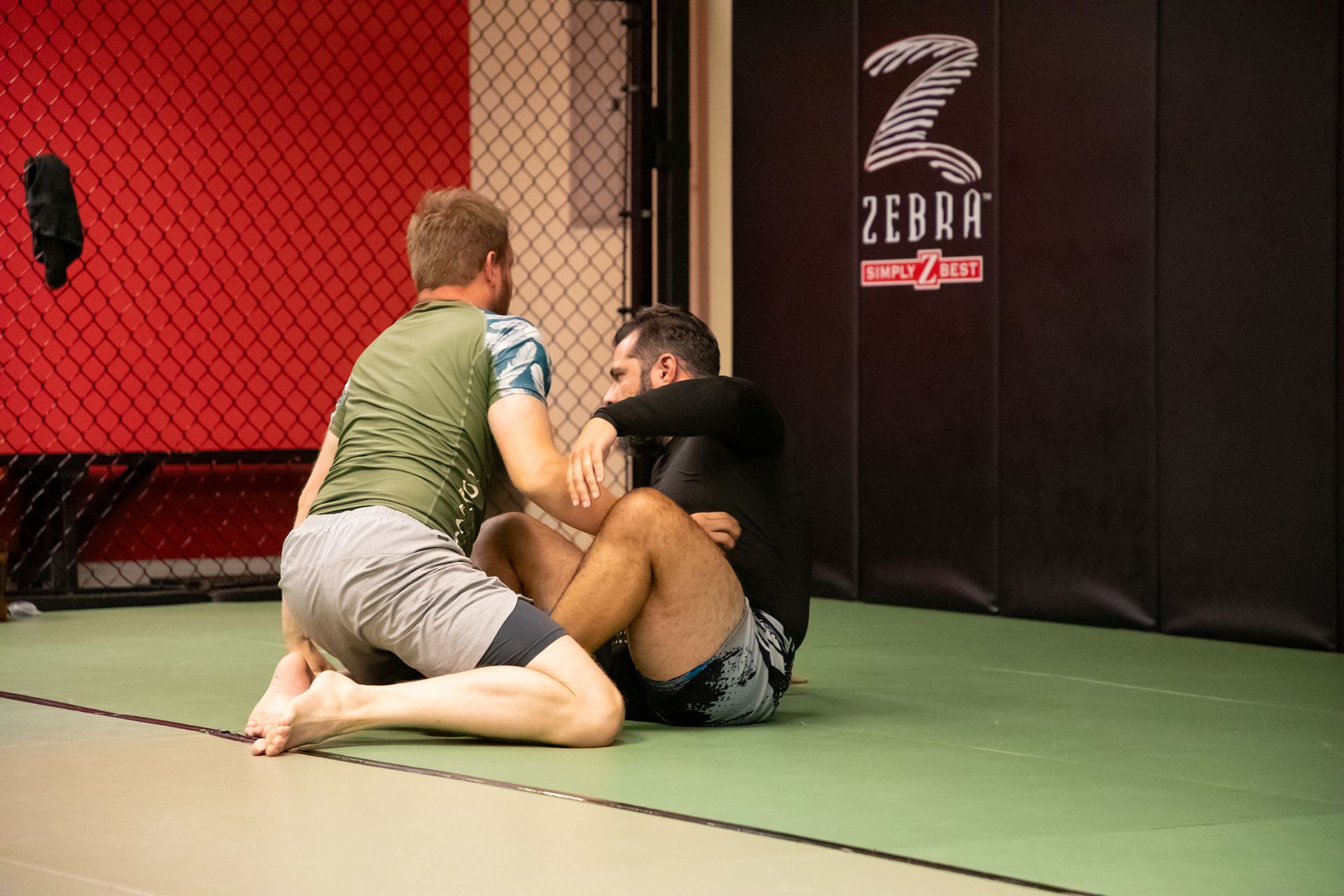
Most sessions include a warm-up that reinforces movement, a technical segment that stays anchored in core positions, and live training that is structured to match what you learned. We use positional rounds often because they speed up learning. Starting in side control or back control teaches urgency and clarity, and it is honestly less chaotic than open sparring when you are new.
Progress without ego
You will tap. You will get stuck. That is normal. The goal is to make your learning curve smoother by giving you repeatable frameworks: how to frame, where to put your head, when to move your hips, and how to breathe when someone is heavy on top. Over time, you feel calmer, and calm becomes your strength multiplier.
Common Roadblocks and How We Coach You Through Them
Most people do not quit because Jiu-Jitsu “does not work.” People stall because training gets random, recovery slips, or they start measuring progress the wrong way.
Plateau at the “I know some stuff” phase
Once you can survive a bit, it is tempting to chase new moves. We steer you back to fundamentals, but with higher standards: tighter frames, cleaner angles, better timing. Small details create big leaps.
Soreness and minor injuries
We emphasize controlled intensity and technical sparring so you can train consistently. Consistency beats heroic sessions. If something feels off, we adjust. Nobody improves while sitting out for months.
Feeling overwhelmed
We keep your goals simple. Win the first battle: posture. Win the second: frames. Win the third: hip escape. You stack wins, and suddenly you are not overwhelmed anymore.
Take the Next Step
If you want Jiu-Jitsu that builds dependable fundamentals and real-world strength, we keep the process clear: learn the core positions, drill with purpose, pressure-test in controlled rounds, and recover like it matters. That approach works whether your goal is fitness, self-defense readiness, or eventually competing.
At Mason Dixon Jiu-Jitsu, we coach Adult Jiu-Jitsu in East Chambersburg with a fundamentals-first structure that fits real schedules and real bodies. When you are ready, we will help you turn the basics into something you can rely on under pressure.
Build stronger grappling skills and improve your technique by joining a Jiu-Jitsu program at Mason Dixon Jiu-Jitsu.