The mats turn everyday stress into a simple, repeatable practice: breathe, think, move, improve.
Jiu-Jitsu looks like a physical skill from the outside, but what most people notice first is the mental shift. You start paying attention differently: to balance, to timing, to small mistakes you can fix next round. That kind of attention carries into school, work, and home in a surprisingly practical way.
In East Chambersburg, we see the same needs come up again and again: kids who want more confidence and follow-through, adults who want fitness that stays interesting, and families looking for an activity that builds character without needing a hype speech. Our classes are built around that reality, not a fantasy version of training.
Below, we’ll break down how Jiu-Jitsu in East Chambersburg helps build focus, fitness, and grit, what training actually feels like as a beginner, and how our programs support youth and adults who want measurable progress.
Why Jiu-Jitsu Builds Real Focus (Not Just “Pay Attention” Talk)
Focus is not a personality trait you either have or you don’t. In training, focus becomes a skill you practice under pressure, and that matters. When you’re learning a guard pass or defending a pin, you can’t scroll your brain somewhere else. Your mind has a job: solve the problem in front of you.
Training gives your brain a clear target
A big reason Jiu-Jitsu improves focus is that every round has immediate feedback. If your posture breaks, you feel it. If you forget to protect your neck, you learn quickly. That sounds intense, but it’s also oddly calming because the goal is clear and the distractions fade out.
Research trends in Brazilian Jiu-Jitsu show progressive gains in self-control, self-efficacy, and mental health as training experience increases, with advanced ranks showing the strongest results. That lines up with what we see daily: the longer you train, the steadier your attention becomes, especially when you’re tired or stressed.
You practice decision-making in real time
A lot of activities reward memorization. Our classes reward decision-making. You learn to recognize patterns, pick a response, and adjust when your first choice fails. That constant cycle builds problem-solving habits that show up elsewhere, like staying composed during a busy workday or handling a tough conversation without snapping.
Fitness That Actually Sticks: Strength, Cardio, and Mobility on the Mats
If you’ve tried starting a fitness routine before, you already know the hardest part is consistency. Our goal is to make training something you want to return to because it feels purposeful, not punishing.
Brazilian Jiu-Jitsu practitioners often show above-average cardiovascular fitness, with VO2 max values commonly reported around 42 to 52 mL/kg/min, plus improvements in strength, endurance, and flexibility that trend upward with experience. In simple terms: consistent training tends to build a well-rounded engine.
What a typical class does for your body
You’ll usually feel a mix of cardio and strength work without needing to “do cardio” in the usual boring way. Between drilling, positional training, and controlled sparring, you’re moving, resisting, stabilizing, and breathing with intention.
A single session can burn roughly 300 to 800 calories depending on intensity, body size, and how much sparring you do, but we don’t chase numbers for their own sake. We’re after durable fitness: joints that move well, lungs that don’t panic, and strength you can use.
Why mobility improves over time
Jiu-Jitsu demands mobility, but it also teaches it. You learn how to frame with your hips, rotate through your shoulders safely, and maintain base without cranking your spine around. As your technique gets cleaner, you often move with less strain and more efficiency, which is one of the reasons experienced practitioners tend to stay active long-term.
Grit You Can Measure: How Training Builds Resilience Over Time
People throw the word grit around a lot, but on the mat it becomes concrete. Grit is showing up when you’re not “in the mood.” It’s working through a frustrating position. It’s tapping, learning, and coming back smarter.
Recent studies in 2024 to 2025 highlight that Jiu-Jitsu training is linked with increasing resilience, perseverance, and mental toughness, and that higher ranks tend to score notably higher on those measures than newer students. The important part is that these benefits compound. Grit doesn’t plateau quickly when you keep training with intent.
You learn to stay calm in uncomfortable moments
One of the most underrated skills in Jiu-Jitsu is learning to breathe when you feel stuck. When you’re pinned, your body wants to rush. Training teaches you to slow down, frame, and make an escape plan. That pattern maps cleanly onto everyday life: stress comes up, you breathe, you take the next useful step.
You build confidence without aggression
A concern we hear sometimes is whether martial arts makes people more aggressive. The evidence we follow points the other direction: studies report decreases in aggression, hostility, anxiety, and depression, alongside major confidence improvements. In youth settings, parent-reported confidence gains can be as high as 96.4 percent, which is huge.
In our classes, we reinforce control as a habit. You learn to apply technique with care, respect taps immediately, and treat training partners like partners, not opponents. That culture is not optional. It’s the foundation.
What Your First Month of Jiu-Jitsu in East Chambersburg Typically Feels Like
Beginners usually want to know two things: Will I be totally lost, and will I get hurt. The honest answer is that you’ll feel new at first, but you won’t be left alone to figure it out, and we structure training to be progressive and safe.
Week 1: Learning how to move, not how to “win”
Early classes focus on basics: posture, base, how to fall safely, and how to tap. You’ll drill a small set of techniques so your body starts to recognize positions. The goal is not to be tough. The goal is to be teachable.
Weeks 2 to 4: Small wins start stacking up
You begin to notice patterns. Maybe your guard retention lasts longer. Maybe you escape side control one time per class instead of zero. These are small wins, but they’re real, and they build motivation in a grounded way.
If you’re worried about fitness, this is where you start breathing better and recovering faster. If you’re worried about confidence, this is where you realize you can handle discomfort and still think clearly.
Youth Martial Arts in East Chambersburg: Focus, Confidence, and Better Choices
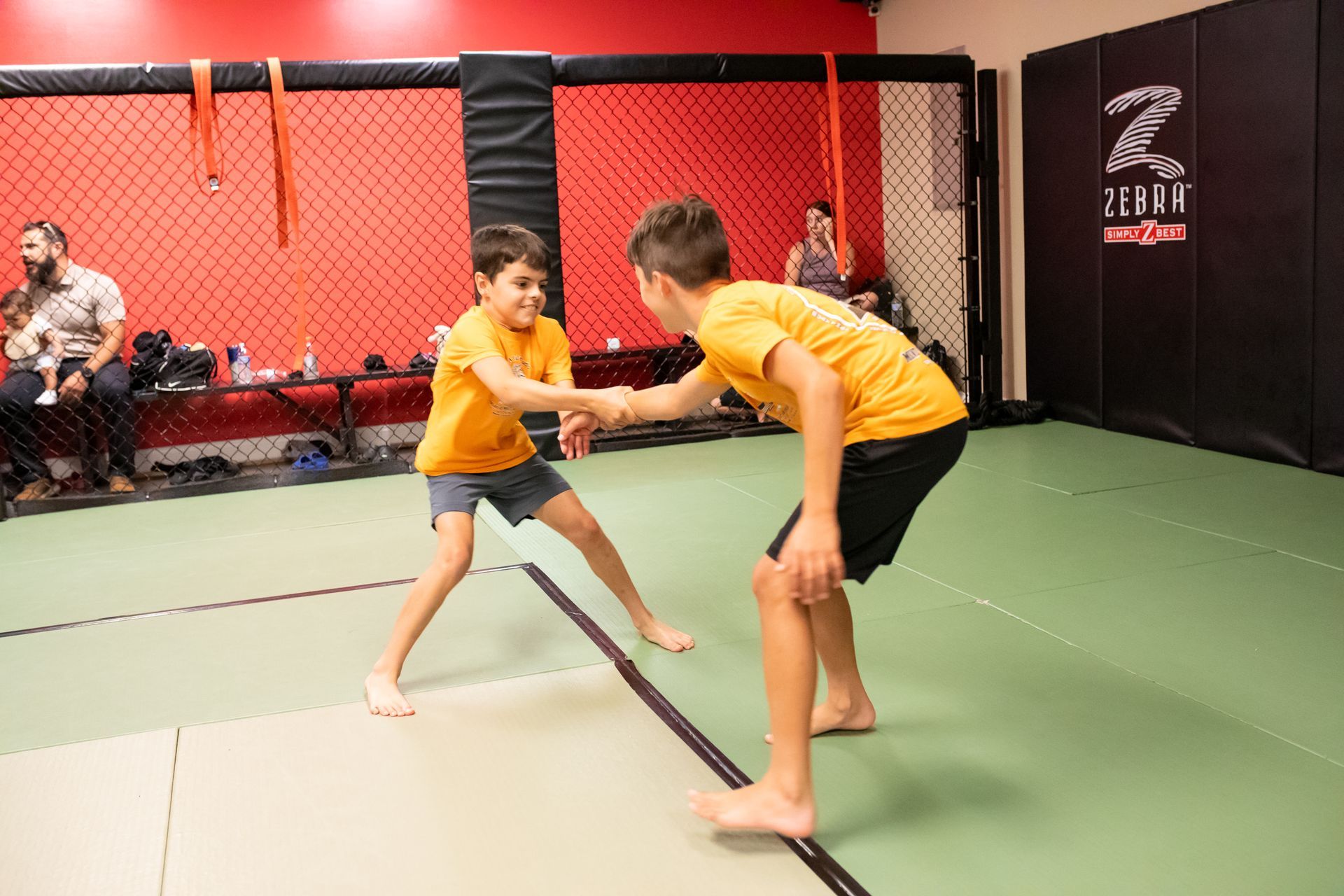
When families look for Youth Martial Arts in East Chambersburg, most aren’t looking for a trophy. You want a place where your child learns to listen, try hard, and handle frustration without melting down. We understand that. We build our youth training around skill development and personal responsibility, not chaos.
How kids learn discipline without feeling “talked at”
We keep instructions clear and consistent. Kids learn routines: line up, partner up, drill, reset, ask questions, try again. Over time, that structure turns into self-control. It’s not magic. It’s repetition done well.
Studies and survey-based reports show major boosts in confidence for youth in Jiu-Jitsu, often in the high 80s to mid 90s percent range. We also see improvements in empathy and cooperation because training requires respect and controlled intensity. You can’t improve if you treat people badly.
A practical link to academics and attention
Jiu-Jitsu is a thinking sport. Kids learn sequencing, timing, and problem-solving. That can support better focus in school because children get used to following steps, correcting mistakes, and staying engaged even when something is hard.
And yes, it’s physical. Kids move, sweat, and build coordination. But the deeper win is learning to persist.
How We Keep Training Beginner-Friendly and Safe
Safety is not a side note. It’s a system. We emphasize control, progressive intensity, and smart pairing so you can train consistently.
Here are a few ways we keep Jiu-Jitsu approachable, even if you feel out of shape or injury-prone:
• We teach tapping early and treat it as good training, not quitting
• We focus on technique-first learning so strength is not the main tool
• We build conditioning naturally through class structure, not punishment workouts
• We encourage mobility work and recovery habits that support joint health
• We guide sparring intensity so newer students can learn without panic
Research also suggests that, compared with striking-heavy training, grappling arts emphasize control and can be a solid option for people who want a challenging workout with less head-impact risk. Like anything active, injuries can happen, but smart training reduces risk a lot.
What You’ll Learn in Our Jiu-Jitsu Curriculum
Our curriculum is built to give you a clear path from beginner fundamentals to more advanced problem-solving. You don’t need to memorize a hundred moves. You need to understand positions, priorities, and a few high-percentage options.
In a typical progression, we focus on:
1. Positional foundations like guard, side control, mount, and back control
2. Escapes that help you stay calm and reset when you’re stuck
3. Control and pressure concepts so you can hold position safely
4. Submissions taught with precision and partner safety as the rule
5. Transitions that connect your techniques into a usable game
This structure is a big reason Jiu-Jitsu in East Chambersburg can be so effective for building grit. You can track your progress. You can feel it.
A Community Benefit People Don’t Expect
Fitness and self-defense are easy to understand. Community is the quiet benefit that sneaks up on you. Many practitioners report strong social bonds in training environments, and we see that here too: people learn names, encourage each other, and become consistent because others notice when you’re not there.
If you’re new to town, in a stressful season, or just tired of isolated workouts, training can be a solid reset. You show up, you do the work, you leave a little better.
Take the Next Step
If you want more focus, better conditioning, and the kind of grit that shows up when life gets loud, Jiu-Jitsu is a practical way to build it one class at a time. You don’t need a perfect starting point. You just need a willingness to learn, tap, and return.
That’s exactly what we coach every day at Mason Dixon Jiu-Jitsu, and we’ve designed our program in East Chambersburg to meet you where you are while still pushing you toward real progress you can feel on and off the mats.
New to Jiu-Jitsu? Start your journey by joining a class at Mason Dixon Jiu-Jitsu.