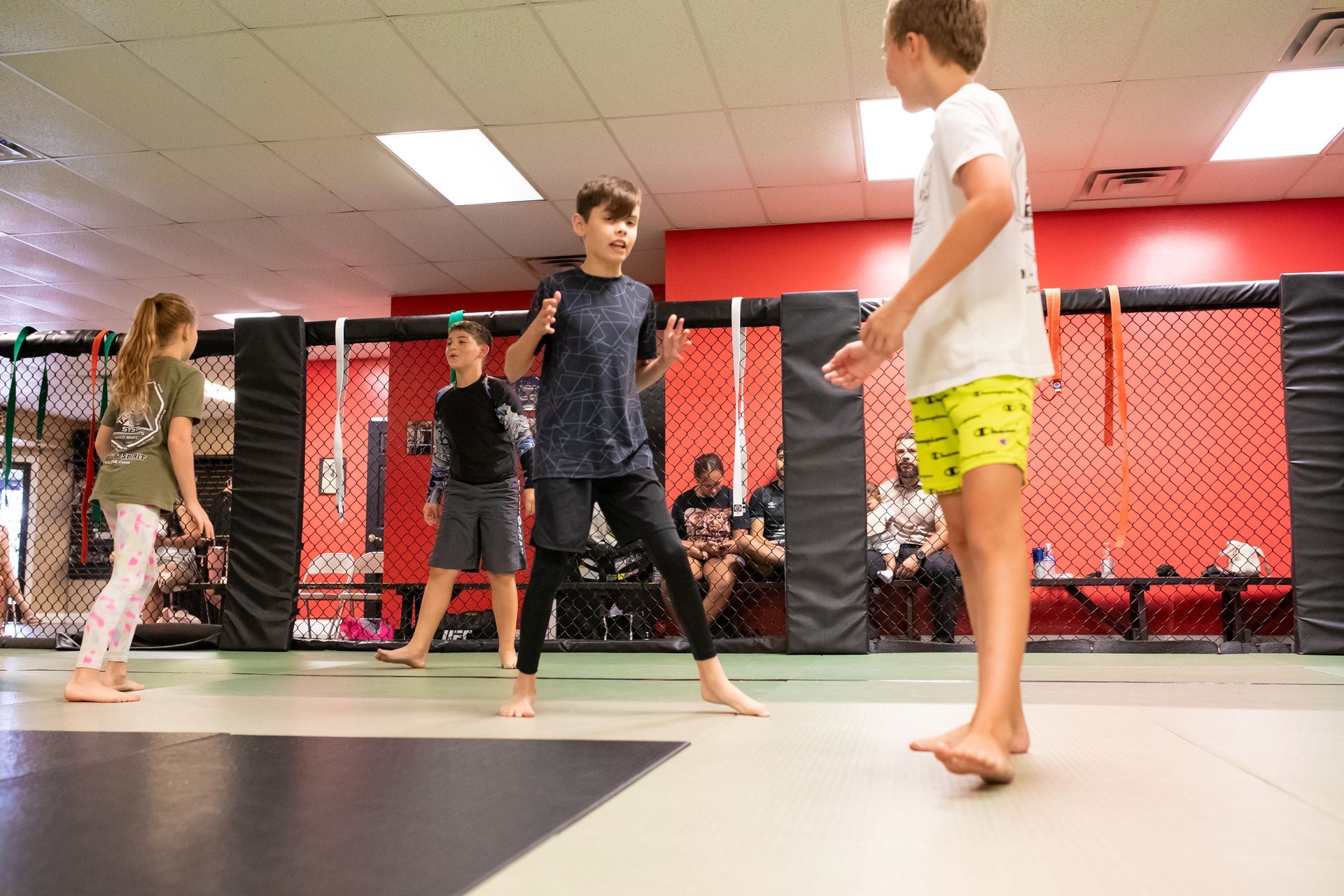
Youth Martial Arts gives kids a place to practice effort, learn from mistakes, and come back stronger the next class.
When parents ask us what Youth Martial Arts really teaches, we rarely start with punches, kicks, or takedowns. We start with something more useful long-term: the belief that skills are built, not gifted. Kids do not walk in confident, coordinated, and focused every day, and that is fine. What matters is having a structured way to improve.
In East Chambersburg, families are busy and kids juggle school, screens, and packed schedules. Youth Martial Arts works because it is consistent, progressive, and supervised, with clear expectations and a culture of respect. Research and parent-focused guidance also keep pointing to the same themes: better physical fitness and coordination, stronger self-control and emotional regulation, and healthier school-related behaviors when martial arts is taught well.
What a growth mindset looks like on the mats
A growth mindset sounds like a big phrase, but you have probably heard it at home already. It is the difference between your child saying, “I can’t do this,” and “I can’t do this yet.” In our classes, we coach that shift constantly, not with speeches, but with repetition and small wins.
Progress is supposed to feel a little uncomfortable
Kids learn fastest when the challenge is real but manageable. In Youth Martial Arts, that can mean trying a new movement pattern, learning how to balance while someone is gently resisting, or practicing a technique that feels awkward at first. The first attempt is rarely smooth. That is the point.
We normalize mistakes as part of training. When a child taps quickly, loses a position, forgets a step, or freezes for a moment, we treat it as information, not failure. With the right coaching, kids learn to stay calm, reset, and try again. That is growth mindset in action.
Feedback becomes a tool, not a threat
Many kids struggle with correction, especially if they tie performance to self-worth. Martial arts helps because feedback is immediate, specific, and practical. Instead of “be better,” kids hear things like “move your hips first,” “post your hand here,” or “take a breath before you try again.” Over time, kids stop taking correction personally and start using it like a map.
Why Youth Martial Arts is uniquely effective for building resilience
Plenty of activities build character, but Youth Martial Arts combines several growth-mindset ingredients in one place: structured progression, goal setting, accountability, and a safe way to test skills under pressure. That mix matters.
Studies and summaries in recent years connect youth martial arts participation with improvements in strength, speed, endurance, flexibility, balance, coordination, and motor skills. You see it when kids who used to trip over their own feet start moving with control. You also see the mental side: stress reduction, mindfulness, self-control, and even lower bullying behaviors when training emphasizes respect and supervision.
Belt progression turns effort into something kids can see
One reason kids stay engaged is that advancement systems make progress visible. A 2025 study looking at taekwondo describes the ranking journey as a built-in structure for goal setting, perseverance, integrity, and leadership. Even though styles vary, the principle is the same: show up, practice, improve, demonstrate skills, and earn the next step.
We like that model because it matches how kids learn best. Big goals are broken into smaller targets. Consistent effort counts. And the message stays steady: you earn progress through practice.
Youth Martial Arts in East Chambersburg: why local families care right now
East Chambersburg is full of families who want something practical after school. Not every child wants a highly competitive sport environment, and not every schedule can handle constant weekend tournaments. Many parents are looking for an activity that builds fitness and confidence while also improving behavior at home and focus at school.
Youth Martial Arts in East Chambersburg fits that need because it gives kids:
• A predictable routine that reduces after-school drift
• A physical outlet that helps regulate energy and mood
• A positive peer group with clear expectations for respect
• A healthier balance against too much screen time
• A skill-based environment where improvement is the win
This local relevance matters. When your child has a structured place to go a few days a week, evenings tend to go smoother. Homework feels less like a battle. Bedtime gets easier. Not every day, of course, but enough that you notice.
Physical benefits that support learning and confidence
Parents often notice physical changes first, sometimes within the first couple months. Better posture. More coordinated movement. A surprising willingness to try new things. That aligns with what broader martial arts education materials and health guidance report: improvements in fitness, coordination, balance, and motor development for kids who train consistently.
Coordination and body awareness reduce frustration
A child who struggles with coordination can get discouraged quickly, especially in school PE or fast-paced sports. Martial arts breaks movement down into teachable pieces and repeats them in a controlled setting. When kids learn where their hands and feet are supposed to go, they stop feeling “clumsy” and start feeling capable.
Strength and flexibility show up in everyday life
Youth Martial Arts develops functional strength and mobility, not in a bodybuilding way, but in a “my body works better” way. Kids learn to squat, bridge, crawl, rotate, and stabilize. Those basics help with injury prevention and general athleticism, but they also build confidence. Kids trust themselves more when movement feels stable.
Emotional regulation, self-control, and the “pause button”
One of the most meaningful parts of Martial Arts in East Chambersburg is how it supports emotional regulation. A lot of kids do not need more hype, they need a better pause button. Martial arts teaches kids to breathe, listen, and respond on purpose.
Recent medical and education-focused reviews often link martial arts training with mindfulness, stress reduction, and improved self-control when instruction emphasizes respect and safety. Parent-facing guidance from HealthyChildren.org also points to potential benefits for stress, physical fitness, school performance, and both motor and cognitive development. That is a big deal for families who feel like emotions are running the house right now.
What emotional regulation looks like during training
Emotional regulation is not silence or perfection. It is staying engaged when something is hard. It is noticing frustration before it takes over. It is learning how to lose a round, tap, or reset without melting down.
In class, we practice:
• Listening even when excited
• Waiting turns and respecting space
• Using controlled intensity instead of wild energy
• Handling small setbacks without quitting
• Returning to calm after exertion
Those are life skills wearing a martial arts uniform.
Bullying, boundaries, and confident social skills
Parents ask about bullying all the time, and the most honest answer is that Youth Martial Arts is not a magic shield. But it can change how a child carries themselves, responds to pressure, and sets boundaries. Research summaries also note associations between martial arts participation and reduced bullying behaviors, especially when the program reinforces respect, empathy, and accountability.
Confidence changes body language
Bullies tend to look for easy targets. When kids stand taller, make eye contact, and speak clearly, dynamics shift. We also teach kids to be respectful training partners, which translates into better peer interactions. Learning to cooperate in drills, take turns, and help teammates builds social confidence without forcing kids to be loud or outgoing.
Practical boundaries matter
Good coaching emphasizes that skills come with responsibility. Kids learn the difference between play and fighting, and they learn that using techniques outside class is never the goal. The goal is awareness, self-control, and the ability to stay safe.
What your child gains in the first 90 days
Parents deserve a practical timeline. Growth mindset is not built in a single class, but you can usually see changes within the first three months if attendance is consistent.
Here is what we aim for in a typical first 90 days of Youth Martial Arts:
1. Weeks 1 to 2: Comfort and routine
Your child learns how class works, how to line up, how to partner safely, and how to follow simple coaching cues.
2. Weeks 3 to 6: Foundational skills
Basic movement patterns improve, coordination starts clicking, and kids begin remembering sequences without constant reminders.
3. Weeks 7 to 10: Confidence under pressure
Kids practice techniques with light resistance, learn to stay calm in close contact, and recover faster after mistakes.
4. Weeks 11 to 13: Real ownership
You may hear your child explain a technique at home, set a personal goal, or show more patience when something feels difficult.
This is also the period when many parents notice better behavior carryover: more respect for rules, fewer emotional spikes, and a little more grit with schoolwork.
Common concerns parents have, answered plainly
Is Youth Martial Arts safe for kids?
It can be, when classes are structured, supervised, and age-appropriate. Safety is not an afterthought, it is built into coaching, partner selection, pacing, and clear rules. We focus on controlled training, not reckless intensity, and we teach kids to communicate and tap when needed.
What age should a child start?
Many programs serve a wide range, but industry trend summaries show kids are a central martial arts audience, with ages 7 to 12 especially common. In practical terms, readiness matters more than a specific number. If your child can follow basic instructions, participate respectfully, and stay engaged for class length, it is usually a good sign.
Does my child need to be athletic?
No. Youth Martial Arts is skill-based, not tryout-based. Athletic kids will still be challenged because technique and self-control are always part of the equation. Less athletic kids often thrive because progress is measurable and personal. We meet your child where your child is.
What should my child wear?
Most kids start with comfortable athletic clothing. If your child continues, we will guide you on uniform options based on the program and what is appropriate for training. Either way, we keep it simple and parent-friendly.
How we teach growth mindset on purpose, not by accident
Kids do not automatically learn resilience just because they are in a martial arts room. The coaching approach matters. We build growth mindset into class structure through three repeatable habits:
Clear goals, small steps
When kids know what success looks like today, confidence rises. We give one or two key focuses per segment, then build.
Consistent repetition with variations
Repetition builds competence. Variation builds adaptability. Together, kids learn that improvement is earned, and that skills hold up even when conditions change.
Respectful challenge and accountability
We keep standards high while staying supportive. Kids learn that effort is expected, but mistakes are allowed. That combination is what makes kids keep trying.
Take the Next Step
If you want Youth Martial Arts in East Chambersburg that builds confidence and real growth mindset skills, our team at Mason Dixon Jiu-Jitsu is ready to help your child start strong and stay consistent. We focus on structured progress, safe coaching, and a culture where kids learn to work through challenges instead of avoiding them.
Martial arts growth is not about becoming aggressive. It is about becoming capable, calm, and coachable. If that sounds like what your family needs right now, Mason Dixon Jiu-Jitsu is a practical next step for building both physical skills and the mindset that supports school, home, and friendships.
Ready to train? Join a Jiu-Jitsu class at Mason Dixon Jiu-Jitsu and start building your skills.