Jiu-Jitsu gives you a full body workout and a clearer head, and it does it without needing you to be a “gym person.”
If you want fitness that actually sticks, the missing ingredient is usually purpose. Jiu-Jitsu is physical, sure, but it is also problem-solving under pressure, in a controlled setting, with coaching and teammates who want you to improve. That combination is why so many adults keep showing up week after week.
In our adult program here in East Chambersburg, we see a consistent pattern: people start for strength or self-defense, and then they stay because life feels steadier. Energy improves. Stress gets easier to manage. Confidence stops being something you “work on” and starts becoming something you live.
Why adult Jiu-Jitsu works when other fitness plans fade
Most workout routines rely on motivation, and motivation is unreliable. Adult Jiu-Jitsu is different because your focus is built into the training. You are learning techniques, timing, balance, breathing, and how to stay calm while you work. Your mind has a job to do, which makes consistency much easier.
Research backs up what we watch happen on the mats. Brazilian Jiu-Jitsu training is associated with measurable improvements in cardiovascular health, muscular strength, endurance, flexibility, and mobility. It is also widely recognized for mental benefits like resilience, self-efficacy, self-control, and increased confidence over time. Long-term training is linked to lower psychological distress, and consistent practice has even been shown to reduce PTSD symptoms in veterans.
For busy adults in East Chambersburg, this matters. You do not need a perfect schedule or a perfect body to start. You need a repeatable routine and a safe place to build skills.
Strength you can use, not just strength you can measure
Strength in Jiu-Jitsu is functional. You are building your ability to hold posture, keep balance, control distance, and apply pressure in a smart way. You will feel it in your back, hips, core, and grip, but the bigger change is that your body starts working as one unit.
What “getting stronger” looks like on the mats
You might notice it in small, practical ways first. Your base feels steadier when someone tries to move you. You can get up from the floor more smoothly. You can keep your breathing under control for longer rounds. Those are real strength markers, and they carry over into everyday life, especially if you sit at work, lift at work, or just feel stiff more often than you want to admit.
We also scale the training so you can progress without beating up your joints. Jiu-Jitsu is often lower impact than people expect because success is built more on leverage and position than on explosive collisions.
Cardiovascular health and endurance without the boredom factor
A big reason adults quit cardio is simple: it gets boring. In a typical class, your heart rate rises and falls naturally through movement drills, positional rounds, and controlled sparring. You are focused on solving a live problem, so you do not spend the whole time staring at a clock.
We structure training so you build endurance gradually. Over time, most people notice that daily tasks feel easier. Stairs stop being a “thing.” Long workdays feel less draining. And you recover faster after physical effort, which is one of the most underrated wellness upgrades you can get as an adult.
Mobility and flexibility you do not have to force
A lot of adults assume flexibility is either something you are born with or something you suffer through stretching to achieve. Jiu-Jitsu tends to improve mobility in a more natural way because the movements require your hips, shoulders, and spine to work through meaningful ranges of motion, repeatedly, with attention to control.
That does not mean we throw you into extreme positions on day one. We build movement quality first: how to shrimp, how to bridge, how to frame, how to stand up safely. Those fundamentals improve mobility while also making you harder to control, which is a nice bonus.
A realistic note about soreness and adaptation
You will get sore at first. Most adults do. It is usually the “I used muscles I forgot I had” kind of soreness, not the “I broke myself” kind. We coach pacing, rest, and recovery habits so you can adapt without burning out. Consistency beats intensity here, and we keep that front and center.
Confidence that comes from repeated proof, not hype
Confidence is not a speech. It is evidence. Every time you learn a technique, troubleshoot it, and apply it with a resisting partner, you stack proof that you can do hard things. That is why so many adults report confidence gains through training, with studies showing a large majority noticing improved self-confidence.
In Brazilian Jiu-Jitsu, belt progression also reinforces motivation. You can track your skill growth across months and years, and that structure matters. Research comparing experience levels shows advanced practitioners tend to report higher resilience, grit, and life satisfaction, along with lower psychological distress. The point is not the belt itself. The point is what the belt represents: sustained practice and earned capability.
Stress management and mental clarity you can feel after class
Adults carry stress in predictable places: shoulders, jaw, lower back, and the part of your brain that refuses to shut off at night. Training gives you a pressure release valve that is healthier than doom-scrolling or “just powering through.”
There are a few reasons this works so well:
• Physical exertion helps regulate stress hormones and supports better sleep.
• Focused problem-solving crowds out rumination because your attention has a single task.
• Routine creates stability, especially when work or family life feels chaotic.
• Community support makes stress feel lighter, even when you do not talk about it much.
Recent research trends also highlight how consistent training, even twice per week, is strongly associated with resilience and focus gains. That lines up with what we encourage: show up, train with intention, and let the process do its job.
Practical self-defense for adults who want reality, not theatrics
Adult Jiu-Jitsu is not about pretending you are invincible. It is about learning how control works: distance, grips, balance, leverage, and how to escape bad positions. Those skills matter because real self-defense situations are messy, close-range, and fast.
We keep training grounded in practical mechanics. You learn how to protect yourself, how to manage pressure, and how to make smart decisions under stress. For many adults in East Chambersburg, that includes people in demanding roles like veterans and first responders, this kind of training can be especially meaningful because it builds capability without needing aggression or bravado.
And to be clear, research does not show increased hostility across belt levels. The goal is calm control, not anger.
What a typical adult class feels like
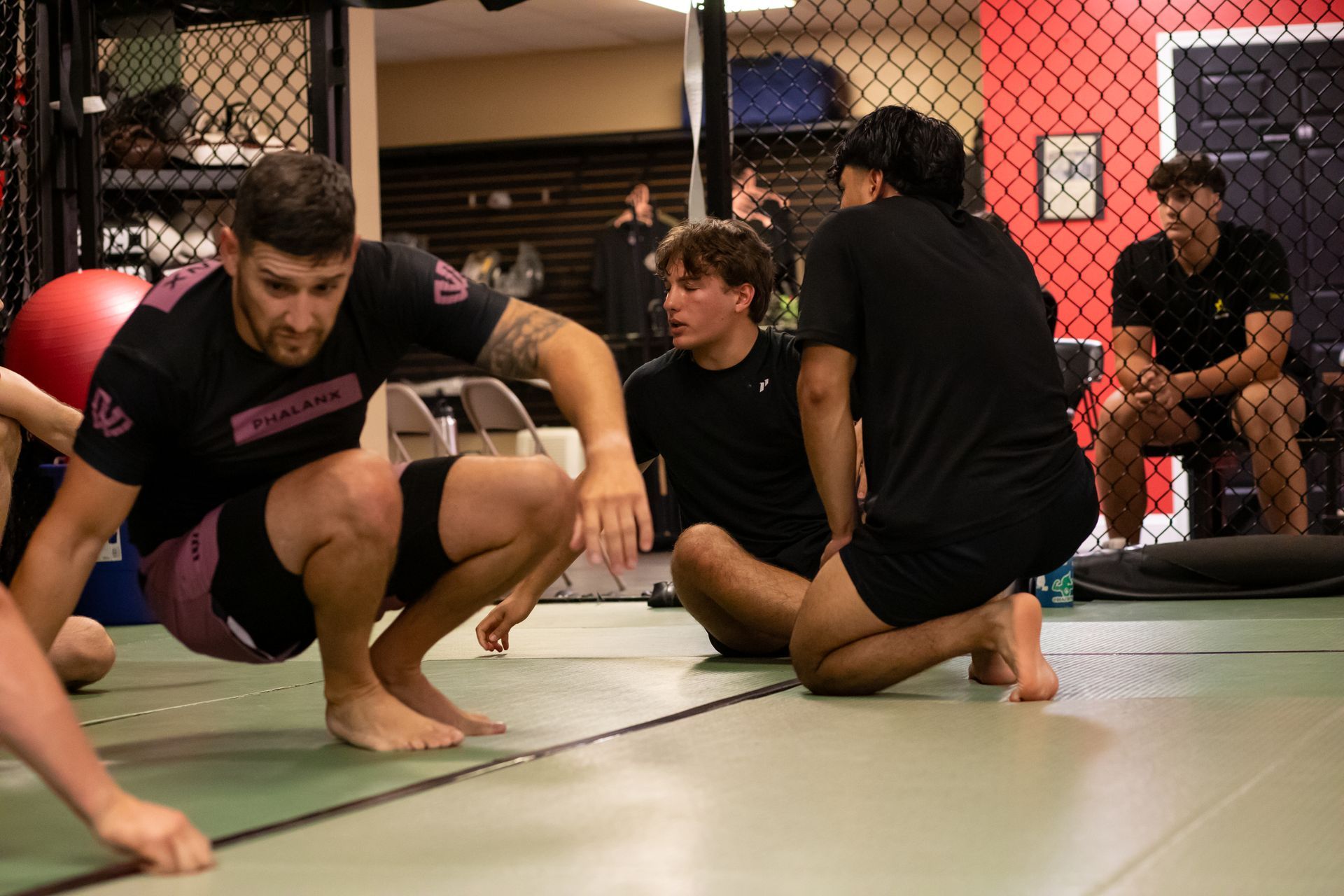
Walking into your first class can feel like stepping into a new world. That is normal. Our job is to make the learning curve feel doable. You will be coached, you will be partnered thoughtfully, and you will never be expected to “figure it out” alone.
Here is what most classes include:
• Warm-up movements that build coordination, joint readiness, and basic grappling mobility
• Technique instruction with details that make the move work for different body types
• Partner drilling to build timing and confidence without unnecessary intensity
• Live rounds that match your experience level, with safety and control emphasized
• Quick takeaways so you leave knowing what to practice next
Classes typically run 60 to 90 minutes, and we encourage most adults to train 2 to 3 times per week for noticeable progress. Twice weekly is often enough to feel changes in mood and resilience, while adding a third day can accelerate skill development and conditioning.
Your first months: what changes, and when
Adults like honest timelines. You are not going to become a different person overnight, but you will notice momentum faster than you might expect.
1. Weeks 1 to 4: You learn survival basics, breathing, and movement fundamentals, and many people feel immediate stress relief after class.
2. Months 2 to 3: Technique starts linking together, cardio improves, and you feel more comfortable during live rounds.
3. Months 4 to 6: Strength and endurance become more obvious, confidence is steadier, and training starts to feel like a real part of your identity.
4. Beyond 6 months: Skills deepen, your decision-making under pressure improves, and the mental benefits tend to compound with consistency.
Sustained practice matters. Research on mental health improvements, including PTSD symptom reduction, points toward continued training rather than one-off bursts of effort.
Safety, injury prevention, and training for the long haul
Adult bodies come with history: old sports injuries, tight hips, cranky shoulders, or that knee that has opinions about the weather. We respect that. Our coaching emphasizes controlled intensity, tapping early, and training partners working together instead of trying to “win practice.”
We also help you make smart adjustments. You can train hard without training reckless. You can build skill without grinding your joints into the floor. And you can take rest weeks when life gets busy without feeling like you are starting over.
That long-term approach is what turns Adult Jiu-Jitsu in East Chambersburg into a sustainable wellness practice, not just a short-term challenge.
Ready to Begin
If you want training that improves your fitness and also changes how you handle pressure, Jiu-Jitsu is hard to beat. We built our adult program in East Chambersburg around steady progression, practical skills, and a community that makes it easier to keep showing up even when your week is busy.
When you are ready, Mason Dixon Jiu-Jitsu is here with beginner-friendly coaching, a clear class schedule, and a safe way to build strength, confidence, and lasting wellness without needing to already be in shape.
Train with purpose and see progress by joining a Jiu-Jitsu class at Mason Dixon Jiu-Jitsu.